Category Archives: Uncategorized

Research – The effect of Thymus vulgaris on growth and biofilm formation of uropathogenic Escherichia coli

Academic Journal

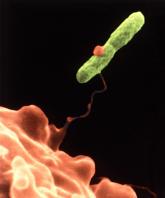
Currently, a problem related to public health is resistance to antibiotics because bacteria have been identified to be resistant. It has been reported that bacteria have developed resistance mechanisms to evade the effect of drugs, especially antibiotics. A resistance mechanism to antibiotics is biofilm formation. The biofilms are microbial communities embedded in an extracellular polymeric matrix and are ubiquitous in the microbial world. In recent years, there has been a special interest in studying new antimicrobial strategies to solve the great problem of resistance to antibiotics; thus, the use of essential oils could be an alternative to fight infections caused by biofilm forming bacteria. It has also been reported that essential oils have antiviral and antibacterial properties. In the present work, the effect of Thymus vulgaris on growth and biofilm formation of uropathogenic Escherichia coli was studied. This study demonstrated the strong effect of T. vulgaris essential oil on the growth and biofilm formation of uropathogenic E. coli.
Research – Marine Toxins: 5 Poisons Under the Sea

Pharmacytimes 

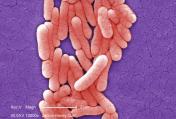
Marine toxins originate from microorganisms native to aquatic ecosystems. These molecules eventually find their way into the human gastrointestinal tract through concentrating and bioaccumulating in species such as mollusks, crustaceans, and various fish. Ingestion of marine toxins can generate foodborne illnesses and a constellation of neurologic and gastrointestinal manifestations accompanied by other symptoms.

Ciguatoxin

Ciguatera illness is caused by ciguatoxins, which are compounds that bioaccumulate in shallow, coastal water-dwelling fish.

Saxitoxin

Paralytic shellfish poisoning (PSP) is a foodborne illness brought on by saxitoxin, a chemical compound produced by cyanobacteria of freshwater and by dinoflagellates of marine water. As with ciguatoxin, saxitoxin reaches the human gastrointestinal tract through concentration in species that are higher up in the food chain.

Brevetoxin

Also a result of toxic algal blooms and mollusk consumption, neurotoxic shellfish poisoning (NSP) is thought of as a ‘milder’ case of the paralytic shellfish poisoning described above. Its cause is brevetoxin, a group of more than 10 lipid soluble polyether compounds.

Tetrodotoxin

Tetrodotoxin (TTX) is perhaps the most well known of the marine toxins. Its notoriety arises from the popularity of pufferfish.

Histamine

A red herring in the recognition of fish food poisoning is scombroid syndrome. This illness is commonly mistaken for fish allergy, but instead results from improper storage and transportation of fish belonging to the Scombroidiae family.

UK – Monolith (UK) Ltd recalls Pig’s Ears boiled-smoked vacuum because of the presence of Listeria monocytogenes

FSA

Product details

Product: Rokiskio Mesine Pigs Ears boiled-smoked vacuum
‘Use By’ date: All date codes
Batch code: All batches

No other Monolith (UK) products are known to be affected

Risk

The presence of Listeria monocytogenes in the product listed above

Symptoms caused by this organism can be similar to flu and include high temperature, muscle ache or pain, chills, feeling or being sick and diarrhoea. However, in rare cases, the infection can be more severe, causing serious complications, such as meningitis.

Some people are more vulnerable to listeria infections, including those over 65 years of age, pregnant women and their unborn babies, babies less than one month old and people with weakened immune systems.

Our advice to consumers

If you have bought any of the above product do not eat it. Instead, return it to the store from where it was bought for a full refund or phone Monolith (UK) Sales Team on 020 7540 0039

Action taken by the company

Monolith (UK) is recalling the above product. Point of sale notices will be displayed in all retail stores that are selling this product. These notices explain to customers why the products are being recalled and tell them what to do if they have bought the product. Please see the attached notice and photograph of the product concerned.

Canada – Cardamom pods sold by Community Natural Foods stores in Calgary, Alberta recalled due to Salmonella

CFIA

Recall details

Ottawa, March 14, 2018 – Community Natural Foods Ltd. is recalling cardamom pods sold in bulk from the marketplace due to possible Salmonella contamination. Consumers should not consume the recalled product described below.

The following product has been sold in bulk at Community Natural Foods stores located in Calgary, Alberta.

Recalled products

Brand Name Common Name Size Code(s) on Product UPC
None Cardamom pods Variable Sold in bulk from February 9, 2018
to March 7, 2018, inclusively
None

USA – Multistate Outbreak of Salmonella Agbeni Infections Linked to Pet Turtles, 2017 (Final Update)

CDC Salm2

Outbreak Advisory

76
Cases

19
States

30
Hospitalizations

0
Deaths

  • CDC and multiple states investigated a multistate outbreak of human Salmonella infections linked to contact with pet turtles.
  • A total of 76 people infected with the outbreak strain of Salmonella Agbeni were reported from 19 states.
    • Illnesses started on dates ranging from March 1, 2017 to December 1, 2017.
    • Of 63 people with available information, 30 were hospitalized. No deaths were reported.
    • 24 (32%) ill people were children younger than 5.
  • Epidemiologic and laboratory findings linked this outbreak of human Salmonella Agbeni infections to contact with turtles or their environments, such as water from a turtle habitat.
    • In interviews, ill people answered questions about contact with animals during the week before becoming ill. Twenty-three (38%) of the 60 people interviewed reported contact with turtles or their environments, such as water from a turtle habitat, before getting sick.
    • Of the 23 ill people who had contact with turtles, 14 (61%) reported contact with small turtles that had a shell length of less than four inches. They reported purchasing the turtle from a street vendor or receiving the turtle as a gift.
    • In 2015, state and local health officials collected samples from turtles at a street vendor. Whole genome sequencing(https://www.cdc.gov/pulsenet/pathogens/wgs.html) showed that the Salmonella Agbeni isolated from ill people in this outbreak was closely related genetically to the Salmonella Agbeni isolates from the turtles at the street vendor. This close genetic relationship means that illnesses in this outbreak were likely linked to turtles.
  • Whole genome sequencing(https://www.cdc.gov/pulsenet/pathogens/wgs.html) did not identify predicted antibiotic resistance in 43 of 44 isolates from ill people
    • One isolate from an ill person had predicted resistance to nalidixic acid and ciprofloxacin. The resistance in this isolate is unlikely to affect treatment for most outbreak-associated cases.
  • Testing of four outbreak isolates using standard antibiotic susceptibility testing(https://www.cdc.gov/narms/resources/glossary.html) methods by CDC’s National Antimicrobial Resistance Monitoring System (NARMS)(https://www.cdc.gov/narms/resources/glossary.html) laboratory did not show any resistance.
  • Do not buy small turtles as pets or give them as gifts.
  • All turtles, regardless of size, can carry Salmonella bacteria even if they look healthy and clean. These outbreaks are a reminder to follow simple steps(https://www.cdc.gov/Features/salmonellafrogturtle/) to enjoy pet reptiles and keep your family healthy.
  • This outbreak investigation is over. Illnesses could continue because people may not know they could get a Salmonella infection from contact with pet turtles.

Kyrgyzstan – mass food poisoning lands 14 in hospital – Clostridium botulinum

Xinhuanet 


BISHKEK, March 13 (Xinhua) — Fourteen people, including four children, were hospitalized after a mass botulism food poisoning outbreak in southern Kyrgyzstan, the Health Ministry said Tuesday.

It said three of them are in a serious condition. An epidemiological investigation has been conducted and all patients have received the anti-botulinum serum.

The first case of food poisoning in the city of Uzgen in the Osh region was reported on March 11. According to preliminary data, the poisoning occurred due to eating homemade canned vegetable salad.

USA – 17 Sickened In Food Poisoning Outbreak At Seattle Jewish Temples – Shigella

Patch.com 


SEATTLE, WA – At least 17 people have been sickened – and one hospitalized – in a food poisoning outbreak linked to food served recently at two Seattle Jewish temples, according to King County.

The illnesses stem from private parties at Temple Beth Am, 2632 NE 80th St., and Temple Beth Shalom, 6800 35th Ave. NE in early March. Both events were catered by Eric Gorbman Catering, 17725 28th Ave. NE in Lake Forest Park, according to King County. Attendees also brought their own food to share.

Two of the people sickened work for the caterer, and health officials believe they became ill after the events.

King County has confirmed that Shigella bacteria is behind at least one of the illnesses. Shigella causes gastroenteritis, and symptoms can last up to 7 days. Even after recovering, Shigella victims can still spread the bacteria and sicken others.

Research – Computers discover compounds that could reduce Listeria’s virulence

Science Daily  Listeria kswfoodworld food safety food poisoning

In a proof-of-concept study, researchers from North Carolina State University have pinpointed new compounds that may be effective in containing the virulence — or ability to produce disease — of Listeria, a well-known bacterium that can cause severe food poisoning and even death.

Listeria are bacteria most commonly found in soil. Humans come into contact with Listeria via contaminated meat or milk products and can contract listeriosis, which can lead to severe illness or death — particularly in very young, elderly and/or immunocompromised populations.

Denis Fourches, assistant professor of computational chemistry, postdoctoral researcher Melaine Kuenemann and Paul Orndorff, professor emeritus of microbiology, knew that inhibiting a particular enzyme of Listeria — known as glucose-1-phosphate uridylyltransferase (GalU) — led to dramatic modifications of the bacterial cell surface. These chemical modifications in turn rendered the Listeria much less virulent — in other words, less able to cause illness.

Japan – Japan restaurant chain ordered to pay damages over raw-meat food poisoning deaths – E.coli O-111

The Japan Times

The Tokyo District Court on Tuesday ordered restaurant chain operator Foods Forus Co. to pay ¥169 million ($1.58 million) to the families of three victims who died from food poisoning after eating raw meat at one of its barbecue restaurants in 2011.

While the court awarded damages to the plaintiffs, it ruled that the former president of Foods Forus, which is filing for special liquidation, was not guilty of gross negligence. The plaintiffs had sought around ¥209 million in damages and medical treatment expenses from the company and the former president.

Around 180 customers developed symptoms of food poisoning after dining at six Yakiniku-zakaya Ebisu restaurants in four prefectures — Kanagawa, Toyama, Ishikawa, and Fukui — in April 2011. A strain of E. coli, O-111, was found in many of the victims.

Five died due to illness. Nine plaintiffs, including the families of three who died after eating at the outlet in Tonami, Toyama Prefecture, sued the company and the former president in October 2014.


UK – Scotland- Legionella control in evaporative cooling systems

HPS Scotland legionellac

Evaporative cooling systems, such as cooling towers and evaporative condensers, are susceptible to colonisation by Legionella bacteria. Previous evidence has demonstrated that they can be responsible for sporadic outbreaks of infection, ranging in scale both in terms of numbers infected and severity. When such outbreaks occur, they frequently infect members of the public rather than workers and, in many cases, are a source of major public health concern.

Between 1 April 2013 and 31 August 2014, the Health and Safety Executive (HSE) inspected 1,906 premises with evaporative cooling systems. While the majority of sites required no enforcement, material breaches were found at 625 sites (33% of those inspected), including 409 Improvement Notices (INs) and 12 Prohibition Notices (PNs) served at 229 sites (12.0% of those inspected).

A recently published HSE Research Report analyses the underlying causes of breaches of health and safety compliance. The main ones were :

  • lack of training;
  • failure to maintain the cleanliness of cooling towers and the water within them;
  • absence of, or inadequate, risk assessments; and
  • absence of, or insufficiently detailed, written control schemes.

Further analysis looked into the reasons why cooling towers were not cleaned properly.
HSE considers that these results provide a valuable resource which can be used to focus future strategies to improve dutyholder compliance. Research Report 1118 ‘Legionella control in evaporative cooling systems: underlying causes of breaches in health and safety compliance’ can be accessed at http://www.hse.gov.uk/research/rrhtm/rr1118.htm.