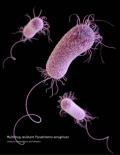
Category Archives: Pseudomonas aeruginosa

USA -Product Quest Manufacturing LLC Recalls All Nasal Products and Baby Oral Gels Manufactured at Florida Facility Due to Possible Microbial Contamination

FDA CDC Pseudomonas

Product Quest Manufacturing (“Product Quest”) announced its voluntary recall of Lot# 173089J of CVS Health 12 Hour Sinus Relief Nasal Mist due to a finding of microbial contamination identified as Pseudomonas aeruginosa. Out of an abundance of caution, Product Quest has decided to expand the recall to include all lots of nasal products and baby oral gels currently within expiration that were manufactured at the company’s Florida facility. There is no known microbial contamination associated with the nasal products and baby oral gels that are the subject of this expanded recall. This recall should be carried out to the retail level.

Risk Statement: Repetitive use of a nasal spray or other nasal product containing a gram-negative pathogen can potentially lead to colonization and subsequent infection which can be life threatening in certain patient populations, such as those with cystic fibrosis or immune-compromised individuals. Similarly, repetitive use of an oral gel product containing a pathogen can potentially lead to colonization and subsequent infection which can be life threatening in certain patient populations, including babies or very young children. To the best of Product Quest’s knowledge, the company has not received any reports of adverse events related to this recall to date.

The additional nasal and baby oral gel products included as part of this expanded recall are listed below in Attachment A. The products can be identified by checking the item code, product description, lot #, and expiration date, as listed below in Attachment A.

Product Quest is notifying its customers by oral and written communication and is arranging for return/replacement etc. of all recalled products. Consumers/distributors/retailers that have product which is being recalled should stop using the product and return it to the place of purchase.
USA -Homeopathic products recalled due to multiple bacterial contamination

Outbreak News Today

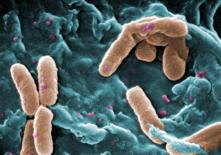
King Bio is voluntarily recalling four lots of Aquaflora Candida HP9, Lymph Detox, and Baby Teething liquids to the consumer level. During a routine inspection by the U.S. Food and Drug Administration, the products were found to contain microbial contaminants Pseudomonas brenneri, Pseudomonas fluorescens and Burkholderia multivorans.

Administration or use of drug  products with microbial contamination could potentially result in increased infections that may require medical intervention, and could result in infections that could be life threatening to certain individuals. King Bio has not received reports of injury or illness.

The Aquaflora HP9 product is used as a Candida control product. The Lymph Detox product is used for symptoms associated with lymphatic toxicity. The Baby Teething product is used for symptoms of teething pain, irritated gums, delayed teething, etc.

Product; UPC Lot Numbers Expiration Date Distribution
Aquaflora
Candida HP9 8
oz. liquid in a
carton
3-57955-80018-7 120217R
102017C
101017G
111417C
12/02/19
10/20/19
10/10/19
11/14/19
8,000 bottles
nationwide to
retail stores and
websites
King Bio
Lymph Detox
2 oz. liquid in a
carton
3-57955-50632-4 010118BE 01/01/20 276 bottles
nationwide to
retail stores and
websites
King Bio Baby
Teething 2 oz
liquid in a
carton
020118F 13 bottles
marked NOT
FOR RESALE

King Bio is notifying its distributors and customers by letter and is arranging for return and/or replacement. of all recalled products.  Consumers/distributors/retailers that have product which is being recalled should stop using/and contact King Bio prior to returning the product.

Research – Kitchen Towel As Risk Factor for Home Based Food Poisoning

Abstracts Online

Background: Cross contamination in the kitchen could contribute to home-based food poisoning. This study aimed at investigating the potential role of kitchen towels in cross contamination in the kitchen. Methods: A total of 100 kitchen towels were collected after one month of use. The bacteria were cultured and identified by standard biochemical tests. A questionnaire was also designed to investigate the potential risk factors which could affect the result. Results:  Bacterial growth was found in 49% of the kitchen towels and significantly increased by size of family, extended family and presence on children. Multipurpose towels had higher CFU than single use towels (1.31 x 10⁷ vs 6.60 x 10⁴; p<0.05) and humid towels had higher CFU than dry ones (4.8 x 10⁵ vs 0.5x 10⁵; p<0.05). The mean CFU from the towels was found to be 2.76 x 10⁵ and was significantly higher from the cotton towels (4.98 x 10⁵) compared to the nylon (1.64 x 10⁵) and mixture of both towels (1.89 x 10⁵). Out of the 49 samples which were positive for bacterial growth, 36.7% grew coliforms, 36.7% Enterococcus spp., 30.6% Pseudomonas spp., 28.6% grew Bacillus spp., 14.3% S. aureus, 4.1% Proteus spp., 2.0% coagulase negative Staphylococcus. Furthermore, S. aureus was isolated at higher rate from families of lower socio-economic status (p<0.05) and those with children (p<0.05). The risk of having coliforms was twice on humid towels than the dried ones. It was also noted that as the CFU increased, the detection rate of coliform, Enterococcus spp., Proteus spp. and Bacillus spp. also increased significantly. Furthermore, Enterococcus spp. and S. aureus were isolated at higher prevalence in bigger families (p<0.05). Diet was also found to be an important factor. Coliform and S. aureus were detected at significantly higher prevalence from families on non-vegetarian diets while a higher prevalence of Enterococcus species from the kitchen towels of vegetarian families. Conclusions: This study conclude that kitchen towels could be very important source bacterial contamination which could contribute to food poisoning. The multipurpose usage of kitchen towels should be discouraged.

USA – Pseudomonas Aeruginosa Bacteria Found In Saje Splish Splash Gentle Baby Wash

FDA pseud

Saje Natural Wellness is warning customers not to use Splish Splash Gentle Baby Wash, 8.5 fl. oz. and 1.7 fl. oz. (found in the Wee and Well Gentle Baby Care Kit) as it may contain the bacteria Pseudomonas aeruginosa. Pseudomonas aeruginosais an opportunistic pathogen that causes infection and results in bacteria in the blood, particularly in individuals with compromised immune systems.

The product being recalled is:

Brand Name & Product Name Product SKU Package Size Lot Number Expiry Date
Saje Natural Wellness Splish Splash Gentle Baby Wash 700552
(USA/Int’l)
8.5 fl. oz. 814020 All expiry dates
Saje Natural Wellness Splish Splash Gentle Baby Wash (found in Wee and Well Gentle Baby Care Kit) 700561
(USA/Int’l)
1.7 fl. oz. 814020 All expiry dates

The product is distributed in the United States through Saje retail locations in California, New Jersey, and New York. The product is also distributed through online sales across the United States and internationally.

Based on routine sample testing, one lot (814020) of Splish Splash Gentle Baby Wash 8.5 fl. oz. was found to contain the bacteria Pseudomonas aeruginosa.

There have not been any reported adverse reactions for this product in the United States to date.

Research – Cryptosporidium, Pseudomonas and Legionella responsible for most outbreaks in swimming venues including hotel swimming pools

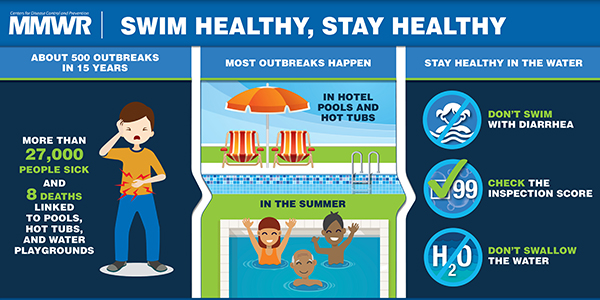
The figure is a visual abstract that details illnesses associated with recreational water and recommends how to stay healthy when swimming.

CDC-Outbreaks Associated with Treated Recreational Water — United States, 2000–2014

Outbreaks associated with exposure to treated recreational water can be caused by pathogens or chemicals in venues such as pools, hot tubs/spas, and interactive water play venues (i.e., water playgrounds). During 2000–2014, public health officials from 46 states and Puerto Rico reported 493 outbreaks associated with treated recreational water. These outbreaks resulted in at least 27,219 cases and eight deaths. Among the 363 outbreaks with a confirmed infectious etiology, 212 (58%) were caused by Cryptosporidium (which causes predominantly gastrointestinal illness), 57 (16%) by Legionella (which causes Legionnaires’ disease, a severe pneumonia, and Pontiac fever, a milder illness with flu-like symptoms), and 47 (13%) by Pseudomonas (which causes folliculitis [“hot tub rash”] and otitis externa [“swimmers’ ear”]). Investigations of the 363 outbreaks identified 24,453 cases; 21,766 (89%) were caused by Cryptosporidium, 920 (4%) by Pseudomonas, and 624 (3%) by Legionella. At least six of the eight reported deaths occurred in persons affected by outbreaks caused by Legionella. Hotels were the leading setting, associated with 157 (32%) of the 493 outbreaks. Overall, the outbreaks had a bimodal temporal distribution: 275 (56%) outbreaks started during June–August and 46 (9%) in March. Assessment of trends in the annual counts of outbreaks caused by Cryptosporidium, Legionella, or Pseudomonas indicate mixed progress in preventing transmission. Pathogens able to evade chlorine inactivation have become leading outbreak etiologies. The consequent outbreak and case counts and mortality underscore the utility of CDC’s Model Aquatic Health Code (https://www.cdc.gov/mahc) to prevent outbreaks associated with treated recreational water.

Hlavsa MC, Cikesh BL, Roberts VA, et al. Outbreaks Associated with Treated Recreational Water — United States, 2000–2014. MMWR Morb Mortal Wkly Rep 2018;67:547–551. DOI: http://dx.doi.org/10.15585/mmwr.mm6719a3

UK – Research – Guidance – Pseudomonas aeruginosa in Water Systems

Health Protection Scotland

Guidance on management of Pseudomonas aeruginosa in water systems

On 12 March, the UK Department of Health published an addendum to the Health Technical Memorandum 04-01 Water sources and potential Pseudomonas aeruginosa contamination of taps and water systems – Advice for augmented care units.

The document is concerned with controlling and minimising the risk of morbidity and mortality due to P. aeruginosa associated with water outlets and provides guidance on:

  • forming a Water Safety Group and developing water safety plans
  • assessing the risk to patients when water systems become contaminated with P. aeruginosa or other opportunistic pathogens
  • remedial actions to take when a water system becomes contaminated with P. aeruginosa
  • protocols for sampling, testing and monitoring water for P. aeruginosa.

The guidance is directed towards healthcare organisations providing patient care in augmented care settings, and is specifically aimed at estates and facilities departments, and infection prevention and control teams. [Source: DH News Release, 12 March 2013. http://www.dh.gov.uk/health/2013/03/pseudomonas-addendum]

In Scotland, the same issues have been addressed in Health Protection Scotland’s Guidance for neonatal units (NNUs) (levels 1, 2 & 3) adult and paediatric intensive care units (ICUs) in Scotland to minimise the risk of Pseudomonas aeruginosa infection from water. This is due for imminent publication with an accompanying CEL letter. SHTM 04-01 Parts A&B have also been amended to reflect this latest guidance and will be published on the Health Facilities Scotland website along with the new Part G (following a consultation period) at the end of March.