
Executive Summary
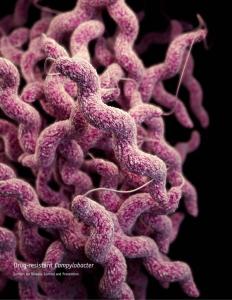
Campylobacter is the most common cause of bacterial gastroenteritis in the UK. Every
year there are an estimated 300,000 foodborne cases in the UK, of which more than half
are related to poultry meat.
Poultry is the main reservoir for Campylobacter and undercooked poultry presents a risk
to the consumer of becoming infected with Campylobacter, while thorough cooking kills
Campylobacter. Infection may also result as a consequence of cross-contamination
during preparation or storage of chicken.
Slaughterhouses are classified as either low-throughput (≤7.5 million birds per year) or
high-throughput (>7.5 million birds per year). Campylobacter levels are routinely
monitored in chicken carcases that are processed in high-throughput slaughterhouses.
Established process hygiene criteria (PHC) state the samples submitted by
slaughterhouses currently should not exceed 1,000 CFU/g Campylobacter in more than
30% of samples submitted. The microbiological criteria regulation is the same for high-
throughput and low-throughput slaughterhouses, however, testing is not currently carried
out in all low-throughput slaughterhouses due to the financial burden of routine testing.
This work was commissioned to assist the FSA to make a risk-based decision on
whether a tailored-made sampling regime for small-throughput slaughterhouses would be
appropriate.
We considered the whole pathway of the chicken from farm to fork using scientific
literature, data from own survey of Campylobacter in slaughterhouses, in addition to
business data and information regarding UK levels of infection from Campylobacter.
Overall, there was no significant difference between the proportion of highly
contaminated samples (>1,000 CFU/g) gathered from low and high-throughput
slaughterhouses. Using the number of chickens per year that are processed by low and
high-throughput slaughterhouses, we estimated that high-throughput slaughterhouses
contribute a significantly larger number of Campylobacter cases due to their volume.
Currently, most chicken on sale in the UK is produced in high-throughput plants. All else
being equal, small improvements to large plants will have a bigger impact on the overall
risk to the UK consumer population than large changes to a far smaller plants.
A number of uncertainties and evidence gaps were identified during this risk assessment.
We had no information as to the method in which the poultry were reared prior to arriving
at the slaughterhouse and are aware that evidence suggests that this can directly affect
Campylobacter levels at slaughter. Data on low-throughput abattoirs were only available
for a limited period of three months and at the end of slaughter. There was no information
available as to the onward processing of meat handled by slaughterhouses, and we
therefore assumed that low and high-throughput slaughterhouses contribute equally to
retail and hospitality etc. In addition, we assumed that only UK slaughtered chicken is
consumed in the UK.
In conclusion, with currently available data it is not possible to identify any difference
between the current per portion risk of Campylobacteriosis to consumers for low and
high-throughput slaughterhouses. We also conclude that the frequency of occurrence
of campylobacteriosis in the total UK population from chicken produced in low-
throughput slaughterhouses is medium and for high-throughput slaughterhouses, this is
high. The uncertainty associated with this frequency is medium. The risk assessment
concludes that the severity of Campylobacter infection is low, with low uncertainty.
This assumes that the proportion of the total domestic consumption of chicken meat
originating from low-throughput slaughterhouses does not change.
The current sampling regime requires samples to be taken once a week. If more than 15
out of 50 samples have high levels of Campylobacter, this is considered a failure and
mitigations need to be put in place. We predicted that if samples are taken once every
two weeks or once every 4 weeks instead, that would still allow us to identify some
slaughterhouses failing to comply with the 15/50 exceedance rate (71% and 57%,
respectively). However, identifying issues will take longer and may not detect some
failing slaughterhouses, and may affect behaviours in the plant, i.e. less frequent
sampling may affect standards during processing.
There is a lack of consistency in the application of sampling requirements in low-
throughput slaughterhouses and a lack of information on the corrective actions taken in
the event of an exceedance. Therefore, it is not possible to differentiate the effect on per-
portion risk of changes to current sampling requirements. However, due to the small
proportion of total poultry meat consumed in the UK that is produced at low-throughput
slaughterhouses, changes to the official sampling requirements at low-throughput
slaughterhouses are unlikely to result in a large change in the total number of cases of
campylobacteriosis in the UK population.

 FoodWorld