Monthly Archives: March 2014

Research Articles – Listeria – Bacillus cereus – Salmonella – E.coli O157 – Campylobacter

Science Direct –  Antimicrobial resistance of Listeria monocytogenes and Listeria innocua from meat products and meat-processing environment.

Science DirectBacillus cereus and Bacillus thuringiensis spores in Korean rice: Prevalence and toxin production as affected by production area and degree of milling.

Science Direct – Use of acetic and citric acids to control Salmonella Typhimurium in tahini (sesame paste).

Ingenta Connect – Survival of Salmonella during Baking of Peanut Butter Cookies.

Ingenta Connect – Thermal Resistance Parameters of Acid-Adapted and Unadapted Escherichiacoli O157:H7 in Apple-Carrot Juice Blends: Effect of Organic Acids and pH.

Mary Ann Leibert – Large-Scale Gaseous Acetic Acid Treatment to Disinfect Alfalfa Seeds Inoculated with Escherichia coli

Mary Ann Leibert – Advanced Oxidation Technology with Photohydroionization as a Surface Treatment for Controlling Listeria monocytogenes on Stainless Steel Surfaces and Ready-to-Eat Cheese and Turkey

– Researches Demonstrate Potential Routes of Transmission of Salmonella and Campylobacter in Turkeys.



UK – FSA Calls for Tender – Campylobacter in Scotland

FSA food_standards_agency_logo

Proposals are sought for research that investigates the factors affecting variations in Campylobacter disease rates in Scotland. Specifically the FSA is looking to commission research that will significantly improve our understanding whether deprivation continues to have a protective effect on the levels of Campylobacter infection and if so what factors are likely to be contributing to this effect. The FSA would like to know what factors are most likely to influence rates of Campylobacter infection in different socioeconomic groups in Scotland.

USA – USDA Closes Seattle Smokehouse – Listeria monocytogenes

Listeria Blog

The U.S. Food and Drug Administration recently ordered Jensen’s Old Fashioned Smokehouse Inc., a processor of smoked fish products in Seattle, Wash., to stop processing, preparing, packing, holding and distributing any food at or from its facility.

The order follows the FDA’s analysis of environmental samples collected during its most recent inspection of the company’s facility, which confirmed the presence of Listeria monocytogenes (L. mono) in the facility, including in food processing and storage areas.

USA – FDA Recall – Listeria monocytogenes – Salads

FDA FDA

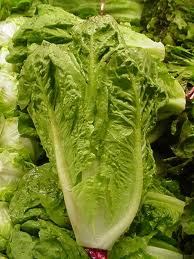
Fresh Express Incorporated has issued a recall of a limited number of cases of 10 oz. and 6oz. Italian Salad with the already expired Use-by Date of March 26 and a Product Code of H071A11A due to a possible health risk from Listeria monocytogenes. No illnesses have been reported in association with the recall and no other Fresh Express products are being recalled.

The company is confirming with retailers that the expired product has already been removed from store shelves and inventories in accordance with its strict procedures for products that have reached their expiration date.

Only Fresh Express Italian Salad with the specific Product Code of H071A11A and March 26 Use-by Date is included in the recall. Consumers who have the recalled product should not eat it but rather discard it. Consumers with questions may call Fresh Express at (800) 242-5472 during the hours of 8 a.m. to 7 p.m. EDT.

Although the product was already expired and no illnesses were reported, the company elected to issue a recall as a precaution when it learned a single sample in a random test had yielded a positive result for Listeria monocytogenes. Fresh Express is coordinating closely with regulatory officials.

USA – Illegally Manufactured Cheese – 100 Salmonella Cases

Food PoisoningJournal

Illinois Department of Public Health (IDPH) Director Dr. LaMar Hasbrouck is warning people about the dangers of consuming illegally manufactured cheeses. Health officials are reporting around 100 cases of salmonellosis in 13 counties believed to be linked to consumption of an illegally manufactured Mexican-style cheese. A sample of the cheese obtained from the home of a person who became ill tested positive for Salmonella. IDPH is working with local health departments to identify the manufacturer of the contaminated cheese.

Europe Research- Scientific Opinion on the risk posed by pathogens in food of non-animal origin. Part 2 (Salmonella and Norovirus in leafy greens eaten raw as salads)

EFSA Eurofins Food Testing UK

Leafy greens eaten raw as salads are minimally processed and widely consumed foods. Risk factors for leafy greens contamination by Salmonella spp. and Norovirus were considered in the context of the whole food chain including agricultural production and processing. Available estimates of the prevalence of these pathogens (together with the use of Escherichia coli as an indicator organism) in leafy greens were evaluated. Specific mitigation options relating to contamination of leafy greens were considered and qualitatively assessed. It was concluded that each farm environment represents a unique combination of numerous characteristics that can influence occurrence and persistence of pathogens in leafy greens production. Appropriate implementation of food safety management systems, including Good Agricultural Practices (GAP), Good Hygiene Practices (GHP) and Good Manufacturing Practices (GMP), should be primary objectives of leafy green producers. The relevance of microbiological criteria applicable to production, processing and at retail/catering were considered. The current legal framework does not include microbiological criteria applicable at primary production which will validate and verify GAP and GHP. It is proposed to define a criterion at primary production of leafy greens which is designated as Hygiene Criterion, and E. coli was identified as suitable for this purpose. A Process Hygiene Criterion for E. coli in leafy green packaging plants or fresh cutting plantswas considered andwill also give an indication of the degree to which GAP, GHP, GMP or HACCP programs have been implemented. A Food Safety Criterion for Salmonella in leafy greens could be used as a tool to communicate to producers and processors that Salmonella should not be present in the product. Studies on the prevalence and infectivity of Norovirus are limited, and quantitative data on viral load are scarce making establishment of microbiological criteria for Norovirus on leafy greens difficult.

© European Food Safety Authority, 2014

Research – Another Five Listeria – Five new species of Listeria (L. floridensis sp. nov, L. aquatica sp. nov., L. cornellensis sp. nov. L. riparia sp. nov., and L. grandensis sp. nov.)

IJSEM Eurofins Food Testing UK

Sampling of agricultural and natural environments in two US states (Colorado and Florida) yielded 18 Listeria-like isolates that could not be identified as previously described species using traditional methods. Using whole genome sequencing and traditional phenotypic methods we identified five new species, each with a genome wide average blast nucleotide identity (ANIb) of less than 85% to currently described species. Phylogenetic analysis based on 16S rDNA sequences and amino acid sequences of 31 conserved loci showed the existence of four well-supported monophyletic clades within the genus Listeria; (i) a clade representing L. monocytogenes, L. marthii, L. innocua, L. welshimeri, L. seeligeri and L. ivanovii, which we refer to as Listeria sensu stricto, (ii), a clade consisting of L. fleischmannii and two newly described species, L. aquatica sp. nov. (type strain FSL S10-1188T =DSM 26686T =BEI NR-42633T) and L. floridensis sp. nov. (type strain FSL S10-1187T =DSM 26687T =BEI NR-42632T), (iii) a clade consisting of L. rocourtiae, L. weihenstephanensis, and three new species, L. cornellensis sp. nov. (type strain TTU A1-0210T = FSL F6-0969T =DSM 26689T =BEI NR-42630T), L. grandensis sp. nov. (type strain TTU A1-0212T =FSL F6-0971T =DSM 26688T =BEI NR-42631T) and L. riparia sp. nov. (type strains FSL 10-1204T =DSM 26685T = BEI NR- 42634T), and a clade containing L. grayi. Genomic and phenotypic data suggest the novel species are nonpathogenic.

Europe – Antimicrobial resistance remains commonly detected in bacteria in humans, animals and food: EFSA -ECDC report

EFSA efsa

Bacteria most frequently causing food-borne infections, such as Salmonella and Campylobacter, show significant resistance to common antimicrobials, according to the EFSA-ECDC European Union Summary Report on antimicrobial resistance in zoonotic and indicator bacteria from humans, animals and food in 2012. Data show that combined resistance (co-resistance) to critically important antimicrobials remains low. While this means that treatment options for serious infections with these zoonotic bacteria are available in most cases, the fact that antimicrobial resistance was commonly detected is cause for concern.

USA – CDC – Salmonella Surveillance Data

Food Safety News

For the first time, the U.S. Centers for Disease Control and Prevention (CDC) is providing online surveillance data gathered over more than 40 years on 32 Salmonella isolates from people, animals and other sources.

CDC Link


USA – FDA Recall – Cheese Spread – Listeria monocyotgenes

FDA FDA

Oscars Smokehouse Inc. of Warrensburg, New York is recalling eleven (11) of its 7-oz. “CHEESE SPREADS” varieties marked with 3 digit lot numbers ranging from” 719-959” because they have the potential to be contaminated with Listeria monocytogenes:

-JALAPENO PEPPER CHEDDAR SPREAD, NET WT 7 OZS.
-CHEDDAR SPREAD & BLUE CHEESE, NET WT 7 OZS.
-CHAMPAGNE CHEDDAR SPREAD, NET WT 7 OZS.
-GARLIC CHEDDAR SPREAD, NET WT 7 OZS.
-PORT WINE CHEDDAR SPREAD, NET WT 7 OZS. -TANGY HORSERADISH CHEDDAR SPREAD, NET WT 7 OZS.
-PLAIN CHEDDAR SPREAD, NET WT 7 OZS.
-“MORE THAN” CHEDDAR SPREAD, NET WT 7 OZS.
-HICKORY SMOKED CHEDDAR SPREAD, NET WT 7 OZS.
-BACON & HORSERADISH CHEDDAR SPREAD, NET WT 7 OZS.
-BACON CHEDDAR SPREAD, NET WT 7 OZS.