Tag Archives: wildlife

USA – Youngstown Grape Distributors Inc. Recalls Happy Moose Juice Tropical Roots and Happy Moose Strawberry Fields Because of Possible Health Risk – HPP Failed

FDA

Company Announcement

Youngstown Grape Distributors Inc., a co-manufacturer for Happy Moose Juice, is voluntarily recalling Happy Moose Tropical Roots Juice (Lot# H240903-E BEST BY 12/02/2024) and Happy Moose Strawberry Fields (Lot# H240903-H, BEST BY 12/02/2024) because a portion of the production made did not complete the High Pressure Processing (HPP) treatment, which is used to prolong the product shelf-life, prevent spoilage, and significantly reduce the risk of pathogens such as SalmonellaListeria monocytogenes and diarrheagenic E. coli. Those organisms could lead to serious illness if consumed. Please refer to https://www.fda.gov/food/outbreaks-foodborne-illness/foodborne-pathogens for symptoms descriptions on the pertinent microorganisms.

It is important to note that there have been no reports of illness associated with these products to date. No other production codes or products are affected.

The products affected are indicated below:

Brand

Flavor

UPC (label)

Enjoy by Date / Bet by Date

Quantity produced

Happy Moose Tropical Roots 12 fl.oz 860012096503 12/02/2024 1,701 bottles
Happy Moose Strawberry Fields 12 fl.oz. 866175000388 12/02/2024 1,017 bottles

The products affected were sold in a 12 fl . oz. RPET plastic bottle shipped in 9ct. corrugated boxes to distributors. The “Enjoy by 12/02/2024” date is located on the bottom part of the bottle, below the label.

This recall has been initiated after complaints of spoiled juices were received.

Consumers who have purchased Happy Moose Juice Tropical Roots 12 fl oz, “Enjoy by: 12/02/2024” or Happy Moose Juice Strawberry Fields 12 fl oz, “Enjoy by: 12/02/2024” are urged to return them to the place of purchase for a full refund.

Consumers with questions may contact the company at 559-797-0252 between 8am and 4:30 pm PST.


Company Contact Information

Consumers:
 559-797-0252

Product Photos

Research – A Scoping Review of the Role of Wildlife in the Transmission of Bacterial Pathogens and Antimicrobial Resistance to the Food Chain

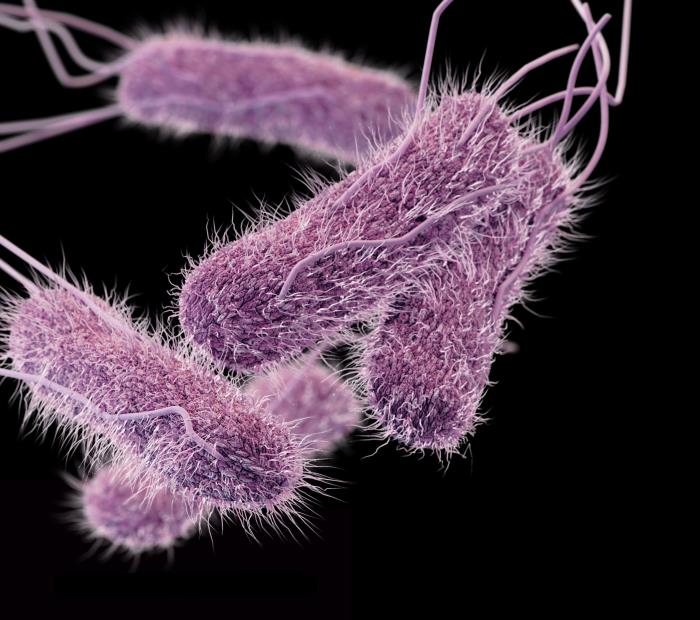
Wiley Online Library Salmonellaa

Wildlife can contribute to environmental contamination with bacterial pathogens and their transfer to the human food chain. Global usage and frequent misuse of antimicrobials contribute to emergence of new antimicrobial resistant (AMR) strains of foodborne pathogens. We conducted a scoping review of published research to identify and characterize the evidence on wildlife’s role in transmission of AMR and/or bacterial pathogens to the food chain. An advisory group (AG) of 13 North American experts from diverse disciplines was surveyed to solicit insight in the review scope, priority topics and research characteristics. A pre-tested search strategy was implemented in seven bibliographic databases (1990 to January 2013). Citations were relevance screened, and key characteristics on priority topics extracted independently by two reviewers. Analysis identified topic areas with solid evidence and main knowledge gaps. North America reported 30% of 866 relevant articles. The prevalence of five targeted bacterial pathogens and/or AMR in any pathogen in wildlife was reported in 582 articles. Transmission risk factors for selected bacteria or AMR in any bacteria were reported in 300. Interventions to control transmission were discussed in 124 articles and formally evaluated in 50. The majority of primary research investigated birds, cervids, rodents, feral pigs, opossums, E. coli (n = 329), Salmonella (n = 293) and Campylobacter (n = 124). An association between wildlife and transmission of bacterial pathogens and/or AMR to the food chain was supported in 122 studies. The scoping review identified a significant body of research on the role of wild birds in the prevalence and transmission of E. coli, Salmonella and Campylobacter. There was little research employing molecular methods contributing to the evidence concerning the importance and direction of transmission of wildlife/pathogen combinations. Given the advancements of these methods, future research should focus in this area to help prioritize future intervention studies and risk mitigation strategies.