USA -Shigella Outbreak hits Elk’s Lodge in Humboldt

Food Poison Journal

Humboldt County Department of Health & Human Services Public and Environmental Health officials are advising community residents who attended a dinner at the Elks Lodge in Eureka on Wednesday, Aug. 28, that they may have been exposed to Shigella. Attendees experiencing gastrointestinal (GI) issues should contact their primary care provider, as well as take steps not to spread the highly contagious infection.

Instances of Shigella infection are on the rise in the county after at least six individuals have tested positive for the illness since August.

The first cluster of three cases was identified in late-August. The individuals all appear to have been infected sometime in mid-August and a connection between the individuals could not be confirmed. Based on this information, Public Health sent out a Provider Alert to monitor for potential cases in case there was ongoing spread in the community.

Humboldt County Health Officer Dr. Candy Stockton said within the last 24 hours, staff was notified about three new confirmed cases and five suspected cases associated with the Aug. 28 event.

USA – FDA – Outbreak Investigation of Salmonella: Eggs (Sept 2024)

fda

Do not eat, sell, or serve recalled chicken eggs from Milo’s Poultry Farms and Tony’s Fresh Market. FDA’s investigation is ongoing.

Product

All types (conventional cage-free, organic, and non-GMO chicken eggs) and sizes (M, L, XL, Jumbo) of recalled chicken eggs supplied by Milo’s Poultry Farms, LLC in Bonduel, WI.

This recall covers all expiration dates for the following eggs:

  • All carton sizes and all egg types labeled with “Milo’s Poultry Farms”.
  • All carton sizes of “Tony’s Fresh Market” branded eggs.

Symptoms of Salmonella Infection:

Illness usually occurs within 12 to 72 hours after eating food that is contaminated with Salmonella, and the symptoms usually lasts four to seven days. Symptoms include diarrhea, fever, and abdominal cramps. Children younger than five, the elderly, and people with weakened immune systems are more likely to have severe infections.

Stores Affected

Recalled eggs were distributed to food service locations and retailers located in Wisconsin, Illinois, and Michigan. The firm has directly notified foodservice customers who received recalled product.

FDA will update this advisory as more information becomes available.

Status

Ongoing

Recommendation

  • Consumers, restaurants, and retailers should not eat, sell, or serve recalled chicken eggs produced by Milo’s Poultry Farms, LLC and distributed to restaurants and retailers in IL, WI, and MI.
  • Consumers, restaurants, and retailers who purchased or received recalled chicken eggs, including wholesale eggs, should carefully clean and sanitize any surfaces or containers that they touched.
  • Check your refrigerators for any recalled chicken eggs and throw them away. If you stored the eggs without the original packaging and can’t tell if it is part of the recall, throw them away.
  • Wash hands, utensils, and surfaces with hot, soapy water before and after handling raw eggs and raw egg-containing foods. Follow FDA’s safe handling and cleaning advice and use extra care in cleaning and sanitizing any surfaces and containers that may have come in contact with this product to reduce the risk of cross-contamination.
  • Contact your healthcare provider if you think you may have developed symptoms of a Salmonella infection, after eating eggs.

Denmark – Listeria in fish patties – Listeria monocytogenes

Foedevarestyrelsen

Image of Salling fish meatballs

Scanfish Danmark A/S is recalling Salling Frikadeller af Torsk & Salmon, as the bacterium Listeria monocytogenes has been detected in the product.

If you have the product, you should discard it or return it to the store where it was purchased.

Which food is recalled

Salling Meatballs of Cod & Salmon

Net weight: 340g

Last date of use: 27.09.24

EAN: 5703370 622166

Where is the product sold

The product is sold in: Føtex and Bilka stores throughout the country and online at BilkaToGo

Why is the product being recalled?

The bacterium Listeria monocytogenes has been detected in the fish patties. Infection with Listeria bacteria can cause flu-like symptoms, fever and headache and, in rare cases, gastrointestinal problems.

Read more about Listeria in food here

What should you do as a consumer?

The Danish Veterinary and Food Administration advises consumers to return the product to the store where it was purchased or to discard it. 

If you experience symptoms in connection with consuming the product, you should contact your own doctor.

Who recalls the product

Scanfish Danmark A/S

Industrihøjen 5

7730 Hørsholm

France – SARDINE FILLET – Histamine

Gov France

Product Category
Food
Product subcategory
Fishery and aquaculture products
Product brand name
SARDINE FILLET 40/60P FP ANE-FR 2KG
Model names or references
SARDINE FILLET 40/60P FP ANE-FR 2KG
Product identification
GTIN Batch Date
3581510003998 56290802284 Expiry date 05/09/2024
Packaging
Vacuum packaging 200 to 300 frames
Start/End of marketing date
From 08/31/2024 to 09/05/2024
Storage temperature
Product to be kept in the refrigerator
Geographic area of ​​sale
Regions: Pays-de-la-Loire
Distributors
U TEACHES

USA – Milo’s Poultry Farms, LLC., Recalls Eggs Because of Possible Health Risk – Salmonella

FDA

“Milo’s Poultry Farms, Organic Omega 3, Grade A Large, 18 eggs”

Milo’s Poultry Farms, LLC. of Bonduel, WI is recalling all “Milo’s Poultry Farms” and “Tony’s Fresh Market” branded eggs because these eggs have the potential to be contaminated with Salmonella, an organism which can cause serious and sometimes fatal infections in young children, frail or elderly people, and others with weakened immune systems. Healthy persons infected with Salmonella often experience fever, diarrhea (which may be bloody), nausea, vomiting and abdominal pain. In rare circumstances, infection with Salmonella can result in the organism getting into the bloodstream and producing more severe illnesses such as arterial infections (i.e., infected aneurysms), endocarditis and arthritis.

Milo’s Poultry Farms’ eggs were distributed in Wisconsin, Illinois, and Michigan through retail stores and foodservice distributors.

This recall includes:

  • All carton sizes and all egg types labeled with “Milo’s Poultry Farms.” This recall covers all expiration dates.
  • All carton sizes of “Tony’s Fresh Market” branded eggs, all expiration dates.
  • All cases of eggs for retail foodservice distribution, all expiration dates.

The recall was initiated after the FDA informed the company that environmental samples tested positive for the bacteria. FDA also conducted whole genome sequencing and found that the samples were related to an ongoing Salmonella outbreak investigation.

Milo’s Poultry Farms, LLC. has ceased production and distribution at this time and will undergo appropriate testing and sanitization of farms and processing equipment.

Consumers who have purchased “Milo’s Poultry Farms” eggs or “Tony’s Fresh Market” eggs are urged not to consume them. Consumers with questions may contact the company at (715) 758-6709.


Company Contact Information

Consumers:
 (715) 758-6709

USA – Eagle Produce LLC Recalls Whole Cantaloupe Because of Possible Health Risk – Salmonella

FDA

“KANDY, UPC number code 4050, sticker”

Eagle Produce LLC Scottsdale, AZ is initiating a recall of 224 cases of whole cantaloupe because they have the potential to be contaminated with Salmonella. Salmonella is an organism which can cause serious and sometimes fatal infections in young children, frail or elderly people, and others with weakened immune systems. Healthy people may experience fever, nausea, vomiting, diarrhea (which may be bloody), and abdominal pain. In rare cases the organism can get into the bloodstream and produce more severe illness such as arterial infections (i.e. infected aneurysms), endocarditis and arthritis.

The cantaloupe subject to the recall include:

Brand

Item Description

UPC Number Code

Lot Code

Kandy Whole Cantaloupe 4050 846468

The products were distributed between August 13th – 17th in Michigan, Missouri, Ohio, Texas and Virginia and sold in various retail supermarkets. The cantaloupes are identified with a red and white sticker with KANDY across the top and UPC number code, 4050 No other products or lot code dates are affected by this recall.

There have been no reported illnesses attributed to the recalled items to date.

The recall is the result of routine sample testing conducted by the State of Michigan which revealed the presence of Salmonella in cantaloupe sold at retail.

Customers who have purchased these products are urged not to consume the products and should dispose of them. Consumers may contact Eagle Produce LLC for further information at 1-800-627-8674 Monday – Friday 9 AM – 5PM PST. Consumers with concerns about an illness from consumption of this product should contact a health care provider.

The company is cooperating with the FDA regarding this recall.


Company Contact Information

Consumers:
Eagle Produce LLC
 1-800-627-8674

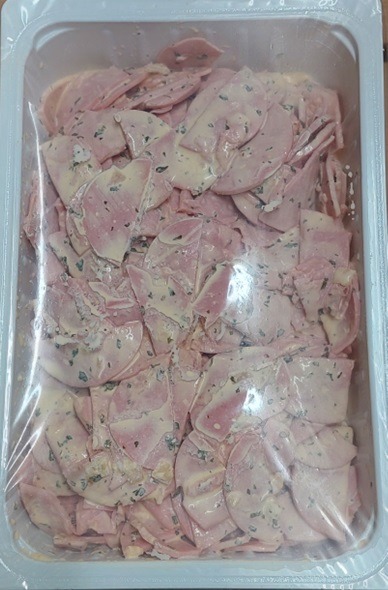
France – CHICKEN MERGUEZ – Salmonella

Gov France

Product Category
Food
Product subcategory
Meats
Product brand name
UNBRANDED
Model names or references
UNBRANDED
Product identification
GTIN Batch Date
0250910000000 All lots Expiry date 08/21/2024
02500910000000 All lots Expiry date 08/22/2024
Packaging
White shrink-wrapped trays
Start/End of marketing date
From 08/17/2024 to 08/22/2024
Storage temperature
Product to be kept in the refrigerator
Additional information
Product sold in self-service trays
Geographic area of ​​sale
CARREFOUR CABADY
Distributors
CANABADY CROSSROADS

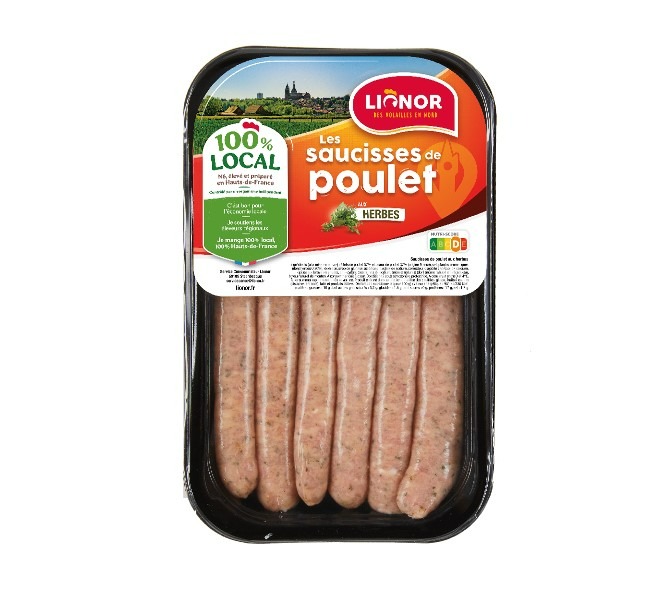
France – CHICKEN CHIPOLATAS – Salmonella

Gov France

Product Category
Food
Product subcategory
Meats
Product brand name
UNBRANDED
Model names or references
UNBRANDED
Product identification
GTIN Batch Date
0250125000000 All lots Expiry date 08/21/2024
0250125000000 All lots Expiry date 08/22/2024
Packaging
White shrink-wrapped trays
Start/End of marketing date
From 08/17/2024 to 08/22/2024
Storage temperature
Product to be kept in the refrigerator
Additional information
Product sold in self-service trays
Geographic area of ​​sale
CANABADY CROSSROADS
Distributors
CANABADY CROSSROADS

Research – Safeguarding produce from E. coli contamination

Phys Org

Leafy greens such as spinach and lettuce are among the most nutrient-packed foods we can eat—and some of the most prone to make us miserable, or worse. The pathogenic bacterium Escherichia coli O157:H7 causes millions of illnesses globally each year, health authorities say, including thousands of severe infections that can lead to kidney failure and even death.

The infections are often contracted from contaminated produce irrigated with water that contains animal waste runoff or grown in open fields where intruding wildlife leave feces.

To help address this challenge, a University of Maryland food safety expert is conducting microbial research to determine  for commercial growers who find evidence of wildlife faeces, or scat, in their fields.

Shirley Micallef, a professor in the Department of Plant Science and Landscape Architecture, recently concluded a series of field trials on Maryland’s Eastern Shore that examined how E. coli moves from scat to a lettuce crop following a rain event.

The results from the research, which involved other faculty and students in the College of Agriculture and Natural Resources, were recently published in the journal Frontiers in Plant Science.

Research – Climate change increases foodborne illness risk from raw produce

Science Daily

Climate change will increase the risk of the foodborne illness from Salmonella enterica, according to a new study. The research was published today in Applied and Environmental Microbiology, a journal of the American Society for Microbiology.

S. enterica causes disease in 1.2 million people in the United States every year.

In recent years, the most common route of infection has been the consumption of contaminated fresh produce.

Salmonella survives on multiple agricultural crops and persists in the soil for extended periods of time.

On plants, researchers have found that Salmonella exploits changes to the plant environment imparted by other organisms.

Plants infected with bacterial phytopathogens (organisms that cause disease in plants) result in increased persistence for this human enteric pathogen.

“It’s not surprising that a host is altered by disease. What’s interesting is how these changes affect other members of the bacteria community, in addition to the pathogen causing the disease. Furthermore, the impact of increased humidity on healthy plants also supported Salmonella‘s survival on plants, which would make climate change a food safety issue,” said corresponding study author Jeri Barak, Ph.D., a professor in the Department of Plant Pathology, University of Wisconsin-Madison.

“Controlling plant disease such as bacterial leaf spot of lettuce is also important for food safety. Climate change will increase the risk of foodborne illness from consumption of raw produce.”

Bacterial leaf spot caused by Xanthomonas hortorum pv. Vitians is a common threat to leafy green production.

In the new study, the researchers set out to investigate whether the fate of Salmonella is impacted by humidity or by timing of arrival during disease progress of bacterial leaf spot.

The researchers conducted experiments with lettuce with bacterial leaf spot and Salmonella. The experiments varied the days when plants were infected with X. Vitians and when S. enterica arrived in a water droplet on the leaf to mimic arrival via irrigation or splash dispersal from the ground.

The researchers also varied high and low humidity periods and how many days they waited after Salmonella was introduced to measure the internal Salmonella population.

These are Salmonella cells that have moved from the leaf surface to the leaf interior, where the bacteria is safe from solar UV exposure or post-harvest sanitization treatments.

The researchers found that bacterial leaf spot of lettuce caused by X. vitians can promote Salmonella survival and internalization within romaine lettuce. Salmonella‘s success is dependent on the timing of arrival during infection with bacterial leaf spot. If it arrives too early in bacterial leaf spot infection, the plant defense raised against the plant pathogen limits Salmonella growth and survival. Too late, and the host environment has succumbed to the plant disease which also curtails Salmonella growth and survival. High humidity exposure and the water-soaking symptom caused by X. vitians also enhance the ability of Salmonella to rapidly grow in lettuce, and climate change is predicted to increase humid periods.