Category Archives: Uncategorized

USA -Michigan Hepatitis A death toll now 25

Outbreak News Today

The Michigan Department of Health and Human Services (MDHHS) reported last week they continue to see an elevated number of hepatitis A cases in the state.

Since the beginning of the outbreak in August 2016 through February 14, 751 cases, including 609 hospitalizations have been reported. This includes 25 fatalities.

Macomb County has seen the most cases (210), followed by the city of Detroit (161), Wayne County (131) and Oakland County (99).

The public health response has included increased healthcare awareness efforts, public notification and education, and outreach with vaccination clinics for high-risk populations.

No common sources of food, beverages, or drugs have been identified as a potential source of infection. Transmission appears to be through direct person-to-person spread and illicit drug use. Those with history of injection and non-injection drug use, homelessness or transient housing, and incarceration are thought to be at greater risk in this outbreak setting. Notably, this outbreak has had a high hospitalization rate.
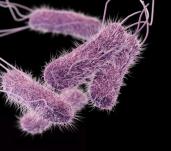
USA- Iowa Salmonella Case Counts Associated with Chicken Salad Sold at Fareway – Salmonella

Iowa.gov

*Confirmed Case Definition:

Persons with Salmonella Typhimurium (confirmed or visual match to Pattern JPXX01.0275) with illness onset since January 1, 2018 reporting consumption of chicken salad from Fareway (any store) in the 7 days prior to illness onset.

Probable Case Definition:

Persons that are epi linked to a confirmed case (all confirmed cases are laboratory confirmed)

OR

Persons who test positive by CIDT or culture (with serotype and PFGE pending) with illness onset since January 1, 2018 reporting consumption of chicken salad from Fareway (any store) in the 7 days prior to illness onset.

January 1, 2018 – February 16, 2018* Confirmed 28
Probable 66

UK – Scotland – First Report of the Presence of Hepatitis E Virus in Scottish-Harvested Shellfish Purchased at Retail Level.

NCBI

Shellfish samples (n = 310) purchased from local supermarkets were analysed for the presence of hepatitis E virus (HEV) by nested RT-PCR and real-time qRT-PCR. Overall, 2.9% of samples tested positive for the presence of HEV. Phylogenetic analysis of HEV sequences revealed all as being genotype 3 HEV. This is the first report of the detection of HEV in commercially sold shellfish in Scotland. These findings may encourage further research that will help address the gaps in the knowledge in respect to foodborne transmission of HEV in Scotland and the rest of the United Kingdom.

Information – The health hazards of eating raw oysters

KLFY

Vibrio Vulnificas.

It’s a flesh-eating bacteria found in raw seafood and even in brackish water.

Only 50% of those infected survive.

News Ten wanted to know just how big the risk is for Acadiana residents and what precautions people can take.

Do we know just how safe the coastal waters really are?

Texas resident Jeanette LeBlanc died last year after eating raw oysters in Louisiana.

Her wife Vicki Bergquist says her symptoms showed up quickly.

“About 36 hours later she started having extreme respiratory distress, had a rash on her legs and everything,” Bregquist recalls.

“I’ve taken care of several cases. Probably seven or eight in the last two years. Some, two or three, are frankly septicemic and the remainder had localized tissue infections and were treated and did well,” explains Dr. Nicolas Sells, director of infectious diseases of University Hospital and Clinics in Lafayette.

Nationwide, Vibrio infects 80 thousand people a year, causing 100 deaths.

It’s found anywhere along the U.S. coast, although the majority of cases tend to be around the Gulf Coast.

The Vibrio bacteria attacks the body in two ways: a skin infection that can spread to the rest of the body or septicemia, a bloodstream infection that produces blistering skin lesions.

USA – Salmonella Outbreak Linked to Coconut Tree Shredded Frozen Coconut Ends

Food Poisoning Bulletin 


The Salmonella outbreak that is linked to recalled Coconut Tree shredded frozen coconut is over, according to the Centers for Disease Control and Prevention (CDC). At least 27 people were infected with the outbreak strains of Salmonella I 4,[5],12:b:- or Salmonella Newport in nine states.

Information – Using Science to Find the Sources of Foodborne Illness Outbreaks

FDA

Every year, millions of Americans get sick from eating food contaminated with pathogens (e.g. harmful bacteria, parasites, viruses, etc.). To stop the spread of outbreaks, the U.S.

Food and Drug Administration (FDA), together with federal, state, and local partners, is increasingly using whole genome sequencing to track down sources of food contamination.

Applying this technology to food safety, something pioneered by FDA and the GenomeTrakr network, helps public health investigators identify contaminated foods and figure out how the pathogens entered the food supply.


Research – New compound may stop bacteria from causing sickness

Science Daily

study published in the Journal of Biological Chemistry is the first to describe a signaling pathway that affects communication — a process called quorum sensing — between Streptococcus bacteria cells.

This type of bacterium is responsible for illnesses like strep throat, scarlet fever, and some cases of soft tissue infections and pneumonia. In extreme cases, or when bacteria become resistant to antibiotics, these common but serious infections can lead to death.

The University of Illinois at Chicago researchers who wrote the paper have been studying Streptococcus bacteria and have hypothesized that quorum sensing pathways are ideal drug targets for manipulating bacterial activity and suppressing virulence.

Research – Pork juice promotes biofilm formation in Listeria monocytogenes

Wiley Online Library

Abstract

A total of 47 Listeria monocytogenes isolates were separated and identified from 153 retailed raw meat samples in Shanghai area with the highest contamination rate in pork meat (20.34%). Using multiplex PCR, these isolates were divided into 3 serogroups: 1/2a-3a, 1/2b-3b-7, and 1/2c-3c, and 1/2a-3a was predominant in these isolates. Calgary device was introduced to cultivate biofilm, and crystal violet staining and viable cell enumeration was used to determine the quantity of biofilm formation. Meat juices significantly impacted the biofilm formation, and L. monocytogenes had the highest biofilm-forming ability in pork juice. However, there was no significant difference on biofilm formation among different serotypes and sources. When cocultured in pork juice, the cell numbers of Salmonella enterica, Staphylococcus aureus, and L. monocytogenes had a significant decrease or decreasing tendency compared to monospecies biofilm, which revealed a competitive interaction among the three species.

Practical applications

It is aimed to investigate the biofilm formation by L. monocytogenes on plastic surface in different meat juices (beef, chicken, and pork) and the interaction among the multispecies biofilm of Salmonella, Staphylococcus aureus, and L. monocytogenes in pork juice. Meat juice was used as a simulation of the real condition in meat processing environment, and the result can give suggestions to meat industry to keep a close eye on raw pork product.

Research – Top 4 Food Safety Hazards for the Cannabis Industry

Cannabis Industry Journal

Aflatoxins on Cannabis Bud

Chemical Residues on Cannabis Plants

Pathogenic Contamination from Pest Infestations

Pathogenic Contamination Due to Improper Employee Handling

Research – Was Flint’s (USA) deadly Legionnaires’ epidemic caused by low chlorine levels in the water supply?

Science Mag Legionella_Plate_01

From 2014 to 2017, thousands of children people in Flint, Michigan, were exposed to dangerously high levels of lead after city officials began drawing water from a nearby river. But the dangers didn’t stop there: Residents also suffered the third largest outbreak of Legionnaires’ disease in U.S. history, with at least 87 people infected and 12 dead. Now, a new study adds support to the idea that a drop in chlorine levels in the water supply may have sparked the epidemic.

“It’s a high-quality study,” says Nicholas Ashbolt, an environmental microbiologist at the University of Alberta in Edmonton, Canada, who was not involved in the work. He says it’s “probably the first time” scientists have seen clear evidence of a relationship between chlorine levels and Legionnaires’ disease. But not all experts are convinced the relationship is straightforward.

The water from the Flint River was more corrosive than the region’s previous water sources thanks to a higher concentration of chloride, which can leach lead from pipes. But corrosive water can unleash other metals as well, including iron, which poses a double risk: It promotes the growth of bacteria, including Legionella pneumophila, which causes a severe and dangerous form of pneumonia, but also binds and inactivates chlorine, which is added to the water supply as a disinfectant.