Category Archives: Legionnaires’ disease

Germany – Legionnaires’ disease sickens five, kills 2 in Heilbronn

Outbreak News Today

CDC legionella

In Heilbronn District, in northern Baden-Württemberg, Germany, it is reported that five men and women have contracted Legionnaires’ disease and two have died.

The patients came from Obersulm, Ellhofen, Weinsberg and Löwenstein, health officials announced. Most of them are middle-aged and older men. The two deceased men had a previous illness and were 49 and 81 years old.

Health authorities are feverishly looking for the source of the contamination.

Experts from the Heilbronn health department are not assuming that contaminated drinking water is the cause of the infections. The sick lived in different places, there are several water suppliers. “The surrounding sewage treatment plants were also sampled,” said a spokeswoman for the dpa office. “We assume that the cause can be found in an evaporative cooling system.” The health department fears that there may be more cases.

USA – Minnesota DOH investigates Legionnaires’ disease associated with an Albert Lea hotel

Food Poison Journal

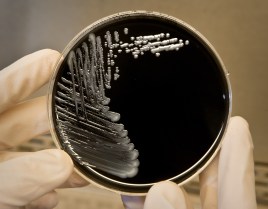
Legionella_Plate_01

State health officials investigating Legionnaires’ cases linked to Albert Lea hotel
Early evidence suggests source may be the spa; recent guests with undiagnosed symptoms should consult with their health care provider

Cases of Legionnaires’ disease associated with an Albert Lea hotel are prompting state health officials to warn anyone who stayed at the hotel in late June to seek medical care promptly if they are ill.

Minnesota Department of Health investigators have identified two laboratory-confirmed cases so far among people from unrelated groups who were at the Ramada by Wyndham Albert Lea and spent time in the pool/hot tub area around the last weekend of June.

Research – Legionella and Biofilms—Integrated Surveillance to Bridge Science and Real-Field Demands

MDPI

Legionella_Plate_01

Legionella is responsible for the life-threatening pneumonia commonly known as Legionnaires’ disease or legionellosis. Legionellosis is known to be preventable if proper measures are put into practice. Despite the efforts to improve preventive approaches, Legionella control remains one of the most challenging issues in the water treatment industry. Legionellosis incidence is on the rise and is expected to keep increasing as global challenges become a reality. This puts great emphasis on prevention, which must be grounded in strengthened Legionella management practices. Herein, an overview of field-based studies (the system as a test rig) is provided to unravel the common roots of research and the main contributions to Legionella’s understanding. The perpetuation of a water-focused monitoring approach and the importance of protozoa and biofilms will then be discussed as bottom-line questions for reliable Legionella real-field surveillance. Finally, an integrated monitoring model is proposed to study and control Legionella in water systems by combining discrete and continuous information about water and biofilm. Although the successful implementation of such a model requires a broader discussion across the scientific community and practitioners, this might be a starting point to build more consistent Legionella management strategies that can effectively mitigate legionellosis risks by reinforcing a pro-active Legionella prevention philosophy. View Full-Text

EU – Legionnaires’ disease – Annual Epidemiological Report for 2019

ECDC

Legionella_Plate_01

ECDC’s annual surveillance reports provide a wealth of epidemiological data to support decision-making at the national level. They are mainly intended for public health professionals and policymakers involved in disease prevention and control programmes.

Executive summary

  • Legionnaires’ disease remains an uncommon and mainly sporadic respiratory infection with an overall notification rate in 2019 for the EU/EEA of 2.2 cases per 100 000 population.
  • There is heterogeneity in notification rates between EU/EEA countries, with the highest rate reported by Slovenia (9.4 cases per 100 000 population).
  • The annual notification rate increased in recent years, from 1.4 in 2015 to 2.2 cases per 100 000 population in 2019.
  • There was a marginal decrease of less than 1% in the number of reported cases in 2019, compared with 2018.
  • Four countries (France, Germany, Italy, and Spain) accounted for 71% of all notified cases in 2019.
  • Males aged 65 years and above were most affected (8.4 cases per 100 000 population).
  • Only 10% of cases were culture-confirmed (10%) probably meaning that disease caused by Legionella species other than Legionella pneumophila is under-estimated.

Research – How Legionella makes itself at home

Science Daily

Scientists at UT Southwestern have discovered a key protein that helps the bacteria that causes Legionnaires’ disease to set up house in the cells of humans and other hosts. The findings, published in Science, could offer insights into how other bacteria are able to survive inside cells, knowledge that could lead to new treatments for a wide variety of infections.

“Many infectious bacteria, from listeria to chlamydia to salmonella, use systems that allow them to dwell within their host’s cells,” says study leader Vincent Tagliabracci, Ph.D., assistant professor of molecular biology at UTSW and member of the Harold C. Simmons Comprehensive Cancer Center. “Better understanding the tools they use to make this happen is teaching us some interesting biochemistry and could eventually lead to new targets for therapy.”

Tagliabracci’s lab studies atypical kinases, unusual forms of enzymes that transfer chemical groups called phosphates onto proteins or lipids, changing their function. Research here and elsewhere has shown that Legionella, the genus of bacteria that cause Legionnaires’ disease, is a particularly rich source of these noncanonical kinases. According to the Centers for Disease Control and Prevention, nearly 10,000 cases of Legionnaires’ disease were reported in the U.S. in 2018, though the true incidence is believed to be higher.

After identifying a new Legionella atypical kinase named MavQ, Tagliabracci and his colleagues used a live-cell imaging technique combined with a relatively new molecular tagging method to see where MavQ is found in infected human cells, a clue to its function. Rather than residing in a specific location, the researchers were surprised to see that the protein oscillated back and forth between the endoplasmic reticulum — a network of membranes important for protein and lipid synthesis — and bubble- or tube-shaped structures within the cell.

Further research suggests that MavQ, along with a partner molecule called SidP, remodels the endoplasmic reticulum so that Legionella can steal parts of the membrane to help create and sustain the vacuole, a structure that houses the parasite inside cells and protects it from immune attack.

Tagliabracci, a Michael L. Rosenberg Scholar in Medical Research and a Cancer Prevention & Research Institute of Texas (CPRIT) Scholar, says that he suspects other bacterial pathogens may use similar mechanisms to co-opt existing host cell structures to create their own protective dwellings.

This work was funded by NIH grants DP2GM137419, R01GM113079, T32GM008203-29, F30HL143859-01, Welch Foundation grants I-1911, I-1789, CPRIT grant RP170674, and Polish National Agency for Scientific Exchange scholarship PPN/BEK/2018/1/00431.

Denmark – Legionnaires’ disease in Denmark in 2020

SSI

Legionella_Plate_01    CDC legionella

278 cases of legionnaires’ disease were detected in Denmark in 2020. Of these, 94.6% had been infected in Denmark. That is the highest number ever.

The Statens Serum Institut (SSI) has issued the annual report on how many cases of Legionnaires’ disease (LS) were found in Denmark in 2020.

A total of 278 cases of LS, also known as legionella pneumonia, were detected. Of these, 165 were men (59.4%) and 113 women (40.6%).

Out of these, 39 patients died within 30 days after the disease had broken out or they had been hospitalized. It gives a mortality rate of 14%.

Almost 95% infected in Denmark

Out of the 278, 263 people were infected in Denmark. This corresponds to 94.6%. This is an increase of 25% compared to the average for the last three years, and thus the highest number ever.

“The increase in the number of infected in Denmark may be related to a higher test activity in 2020. It may be due to the fact that many hospitalized patients with suspected covid-19 have also been examined for legionella infection,” says head of department Søren Anker Uldum from SSI.

15 infected on travel

There are only 15 cases (5.4%) where people in 2020 were infected with LS when traveling abroad. In 9 cases, it was while traveling in Europe. 5 were infected while traveling in Asia and 1 traveling to the American continent.

The proportion of travel-related LS cases is usually 20-25%

“Due to the extensive travel restrictions in 2020 due to the Covid-19 pandemic, there has been very limited travel activity. This is probably the reason for the few travel-associated legionella cases in 2020 ”, says Søren Anker Uldum.

Read more

You can read more about Legionnaires’ disease here.

You can also see the annual statement for legionnaires’ disease in Denmark in 2020 here .

Legionella risks during the coronavirus pandemic

HSE

Legionella_Plate_01

Employers, the self-employed and people in control of premises, such as landlords, have a duty to protect people by identifying and controlling risks associated with legionella.

If your building was closed or has reduced occupancy during the coronavirus (COVID-19) pandemic, water system stagnation can occur due to lack of use, increasing the risks of Legionnaires’ disease.

You should review your risk assessment and and manage the legionella risks when you:

If the water system is still used regularly, maintain the appropriate measures to prevent legionella growth.

You can find out what Legionnaires’ disease is, where it comes from, how people get it and symptoms and treatment by reading our guidance What is Legionnaires’ disease?.

USA – Bacteria that causes Legionnaire’s disease found in N.J. prison water

NJ.com

Legionella A

New Jersey officials have found a potentially deadly bacteria in the water at one of New Jersey’s largest prisons, according to a staff memo obtained by NJ Advance Media.

Legionella was detected in a medical building at Northern State Prison in Newark, according to the document, and staff have since moved inmates out of the affected area. The bacteria causes Legionnaire’s disease, a form of pneumonia especially dangerous for people with compromised immune systems,

Research – Rapid Testing and Interventions to Control Legionella Proliferation following a Legionnaires’ Disease Outbreak Associated with Cooling Towers

MDPI

Legionella_Plate_01

Most literature to date on the use of rapid Legionella tests have compared different sampling and analytical techniques, with few studies on real-world experiences using such methods. Rapid tests offer a significantly shorter feedback loop on the effectiveness of the controls. This study involved a complex of five factories, three of which had a history of Legionella contamination in their cooling water distribution system. Multiple sampling locations were utilised to take monthly water samples over 39 months to analyse for Legionella by both culture and quantitative polymerase chain reaction (qPCR). Routine monitoring gave no positive Legionella results by culture (n = 330); however, samples were frequently (68%) positive by qPCR for Legionella spp. (n = 1564). Legionella spp. qPCR assay was thus found to be a good indicator of cooling tower system health and suitable as a routine monitoring tool. An in-house qPCR limit of 5000 genomic units (GU)/L Legionella spp. was established to trigger investigation and remedial action. This approach facilitated swift remedial action to prevent Legionella proliferation to levels that may represent a public health risk. Cooling tower operators may have to set their own action levels for their own systems; however, in this study, 5000 GU/L was deemed appropriate and pragmatic. View Full-Text

USA – Legionnaires’ Disease cluster reported in north New Jersey

Outbreak News Today

CDC legionella

Image CDC

The New Jersey Department of Health (NJDOH) is investigating a cluster of Legionnaires’ disease cases in Union County. The Department is aware of 14 confirmed cases of Legionnaires’ disease, including one death, among individuals who live in or spend time in the county.

The cases were reported to the Department between February 3 and February 26, 2021. The Department is working with the local health departments in Union County to investigate this cluster. The individual who died was a male resident of Union County in his late 60s.

“This is a continuing investigation. The risk to anyone who lives in Union County is very small,” said New Jersey Health Commissioner Judith Persichilli.  “Out of an abundance of caution, the Department recommends that individuals who live in Union County who become ill with pneumonia-like/respiratory symptoms, such as fever, chills, cough, shortness of breath, muscle aches, and headache visit their healthcare provider.”