
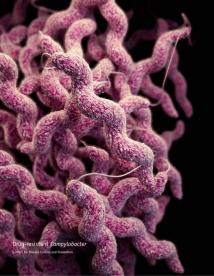
Image CDC
Gastrointestinal infection with Campylobacter plays a major role in the stunting of children in urban Bangladesh, say the authors of a new study.
The bacteria Campylobacter, which people get from contaminated food and drinks, can lead to severe diarrhoea. Infections of Campylobacter in children under the age of two years are especially frequent in developing countries. According to a WHO factsheet, Campylobacter diarrhoea’s duration and possible complications makes it highly important from a socio-economic perspective.
Stunting may result in neurodevelopmental delays and metabolic disorders later in life. It is a major global health challenge particularly in South Asia where 35 percent of all children are stunted. Worldwide, approximately 144 million children are stunted, according to the UN Children’s Fund.

 FoodWorld