
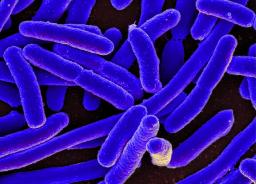
A new study shows that a kind of E. coli most associated with “travelers’ diarrhea” and children in underdeveloped areas of the world causes more severe disease in people with blood type A.
The bacteria release a protein that latches onto intestinal cells in people with blood type A, but not blood type O or B, according to a study led by researchers at Washington University School of Medicine in St. Louis. A vaccine targeting that protein could potentially protect people with type A blood against the deadliest effects of enterotoxigenic E. coli (Escherichia coli) infection.
“We think this protein is responsible for this blood-group difference in disease severity,” said senior author James Fleckenstein, MD, an associate professor of medicine at Washington University. “A vaccine targeting this protein would potentially protect the individuals at highest risk for severe disease.”
The study is published May 17 in The Journal of Clinical Investigation. The work was conducted in collaboration with investigators at Johns Hopkins University, the National Institutes of Health (NIH), and the Naval Medical Research Center.

 FoodWorld