Monthly Archives: November 2011

EFSA – Wants New Guidelines/Safety Measures on Sprouted Seeds

FnBnews has reported on the European Food Agency wanting new controls on sprouting seeds, I have just recently posted on the new Australian and NZ guidelines for sprouting seeds. Producers of sprouted seeds should tighten safety measures along the production chain as ready-to-eat food can cause large outbreaks of illness, the EU food safety agency said after thousands of people were hit by E.coli infection this year.

Australian Poultry Firm Fined – Listeria monocytogenes

An article in Food Production Daily has reported that an Australian Poultry Producer has been fined $AUD 250,000 for pre-cooked chicken contaminated with Listeria monocytogenes. The firm supplied the Australian Airline Virgin Blue with the chicken meat that was in sandwich wraps, 29 people were affected including one who gave birth prematurely.

Tesco’s Salad with a Dead Bird

Not strictly microbiology but as part of any microbiological control in a factory pest control should be high on the list, dead and decaying matter from any foreign body can be a microbiological issue.

This story which broke yesterday was in many newspapers below is a link to the Daily Mail article which has photo’s for you.

Changes to EU2073/2005 – Poultry Flocks, Sampling and Salmonella

There have been some changes to the EU2073 regarding poultry sampling and testing for Salmonella. There is extra emphasis on  Salmonella enteritidis and Salmonella typhimurium. Sections 12, 13, 14, 16 and Articles 1, 2 ,3 and the Annexes seem to be most relevant. 


Rapid Microbial Identification System – DNA Based – Life Technologies

I have not used this system but it may be of interest to some of you as technolgies advance it is always good to keep up with what is going on.

MicroSEQ® Rapid  Microbial Identification System

Go Molecular. The Answer is in the DNA


Accurate genotypic bacterial identification based on the 16S rRNA gene.

Accurate genotypic fungal identification based on the D2 region of the 26S rRNA gene

Easy workflow, high throughput, accurate results typically in less than five hours

Extensive database of over 2000 bacteria and over 1100 Fungal samples and regular updates

Access to BLAST and public database searches from your sequence

The correct identification first time, every time with high reproducibility and accuracy

Enables 21 CFR Part 11 compliance

Click here for more info or contact a technical specialist by clicking here.


Australian and New Zealand Food Standards Agency – Sprouting Seeds

The Australian and New Zealand Food Standards Agency have released a standard Proposal P1004 – Primary Production and Processing Standard for Seed Sprouts.

The objective of this Proposal is to reduce the incidence of foodborne illness from the consumption of seed sprouts while avoiding any unnecessary cost burden on industry and consumers.


Rapid Yeast and Mould Method – 48 Hours

Rapidmicrobiology Newsletter has reported on a new test method from a company called BioLumix which claims to be able to get Yeast and Mould results within 48 hours by CO2 detection.

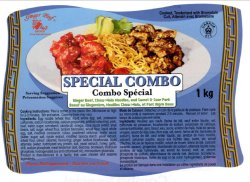
Canadian Ginger Beef RTE Combo – May contain Listeria monocytogenes

A release by the Canadian Food Inspection Agency (CFIA) has implicated that some Ginger Beef on sale in Canada has possibly been contaminated by Listeria monocytogenes.

OTTAWA, November 16, 2011 – The Canadian Food Inspection Agency (CFIA) and Ginger Beef Choice Ltd., EST 615 are warning the public not to consume the ready-to-eat Special Combo described below because the product may be contaminated with Listeria monocytogenes.

The affected product, Ginger Beef Choice brand Special Combo is sold in a 1 kg package bearing UPC 6 65075 22980 2 and Best Before date 2011 NOV 28.

This product was distributed to Costco stores in British Columbia, Alberta, Saskatchewan and Manitoba. No illnesses have been reported.


Botulinum Symptoms Awareness – FSA

The FSA is trying to heighten awareness to Botulinum symptoms in a follow-up to the two cases of botulinum poisoning that has happened in Glasgow in the last couple of days.

These are two links to further information.

FAQ’s Botulinum

HPA Scotland Statement.

FSA Warning – Some Lyod Grossman Sauces – Botulinum

The Food Standards Agency is advising people not to consume specific jars of Loyd Grossman Korma sauce. This is because of the risk of botulism poisoning.

Only one jar from the batch is known to have been contaminated with the bacteria Clostridium botulinum, which causes botulism, but the Agency is advising people not to eat products from this batch as a precautionary measure

The affected batch is:

  • 350g jars of Loyd Grossman Korma sauce with a ‘best before’ date of February 2013.
  • The sauce has a batch code of: 1218R 07:21.

Anyone who has any of the jars from this batch of Loyd Grossman Korma sauce should not eat it. No other batches of Loyd Grossman products are thought to be affected.

Two members of the same family who have contracted botulism and have eaten from a jar of this batch of sauce have been hospitalised in Scotland. The FSA will issue more information as it becomes available.