Tag Archives: institute of food research

Research – Clostridium difficile

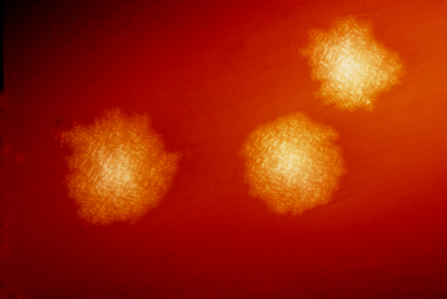
Institute of Food Research Clostridium_difficile_01

A recent article published by IFR’s Emeritus Fellow Dr Barbara Lund and Professor Mike Peck in the journal “Foodborne Pathogens and Disease” reviews the question whether food may be a route of Clostridium difficile infection (CDI).

C. difficile is a major cause of illness in patients in hospitals and healthcare settings and also occurs in the community. Transmission of CDI has long been considered to occur from person to person, but recent studies have shown that a high proportion of CDI cases cannot be matched to previous cases. It is highly likely, therefore, that other routes of transmission exist, of which food may be one.

Research – What Fuels Salmonella’s Invasion Strategy?

IFR Institute Salm2

Certain strains of Salmonella bacteria such as Salmonella Typhimurium (S. Typhimurium) are among of the most common causes of food-borne gastroenteritis. Other strains of Salmonella such as S. Typhi are responsible for typhoid fever, which causes 200,000 deaths around the world each year. Ensuring food is clear of contamination, and water is clean are key to reducing the effects Salmonella can have, but we also need more effective ways to combat Salmonella once it’s inside our bodies.

To address this the Institute of Food Research, strategically supported by the Biotechnology and Biological Sciences Research Council, has been studying S. Typhimurium bacteria to understand, not only how they transmit through the food chain, but why they are so effective and dangerous once inside us.


Research – IFR – Contact Killing of Salmonella Typhimurium by Human Faecal Bacteria

Institute of Food Research

Dr Carmen Pin, and PhD student Gaspar Avendaño-Perez at the Institute of Food Research, which is strategically funded by the Biotechnology and Biological Sciences Research Council, have recently found a novel mode of interaction between Salmonella, a foodborne pathogen, and the gut bacteria that leads to the inactivation of Salmonella. This interaction relies on Salmonella and the gut bacteria being in close proximity, or through cell to cell contact. This new way of interaction between the “good” and the” bad” bacteria may contribute to prevent intestinal colonization and infection by foodborne pathogens.

Research – Campylobacter Movement to Search for Food

Science DailyCampylobacter

Researchers at the Institute of Food Research on the Norwich Research Park have uncovered how the food-borne bacterial pathogen Campylobacter jejuni can change its swimming behaviour to find a location with more food.

Using a newly developed assay, the researchers found that Campylobacter balances the directions given by two different systems to either seek out more nutritious locations, or to find places where respiration is most efficient. Genetic tools were used to show that the system controlling swimming towards food overrides the other system, suggesting that the “need to feed” is the foremost concern for Campylobacter.