Category Archives: Uncategorized

Research -Farm to Fork Project Looks at Pathogen Transfer on Surfaces

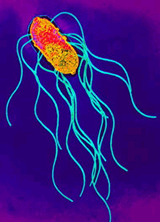
Food Poisoning Bulletin Salmonella kswfoodworld

A new study focusing on contact surface transfer of pathogens is halfway through its two year timeline. The research is being conducted at Virginia Tech. Dr. Laura Strawn, a produce safety Extension Specialist at that University is leading the project, along with Dr. Ben Chapman at NCSU and Dr. Michelle Danyluk at the University of Florida in Lake Alfred. The project is being funded by the Center for Produce Safety.

Their research is looking at potential pathogen contamination of cantaloupe in the food chain. The study is focusing on Salmonella and Listeria monocytogenes transfer.

Research -Hong Kong’s food safety center reports monthly, yearly data

Food Safety News

Hong Kong’s Center  for Food Safety (CFS), a unit of the Food and Environmental Hygiene Department has released the findings of its food safety report for December 2016 and surveillance information for 2016.

Only 13 of 9,800 food samples tested during December were found to be unsatisfactory, meaning the overall satisfactory rate for the month was 99.9 percent.

A spokesman for CFS reported about 1,100 food samples were collected for microbiological tests. Some 1,000 samples were taken for chemical tests and 7,700 — including about 7,300 taken from food imported from Japan — were collected to test radiation levels.

The microbiological tests covered pathogens and hygienic indicators, while the chemical tests were aimed at detecting pesticides, preservatives, metallic contaminants, coloring matters, veterinary drug residues and other contaminants.

USA -Seattle: Norovirus cluster investigated linked to raw oysters

Outbreak News Today

On 1/9/17, Public Health was notified of 4 cases of norovirus-like illness from the same meal party who had consumed raw oysters at Taylor Shellfish (located at 124 Republican St in Seattle) on 1/4/17. Two females and two males became ill 20-29 hours after consuming raw oysters with nausea, vomiting, diarrhea, abdominal cramps, headache, and body aches.

Research – Effect of Chitosan Physical Form on Its Antibacterial Activity Against Pathogenic Bacteria

mrsaWiley Online Library

Abstract

The antibacterial activity of chitosan (CS) nanospheres, in comparison with other physical forms, was investigated against Salmonella enterica serovar Typhimurium and Staphylococcus aureus, which are 2 foodborne harmful pathogens. Results showed that the antibacterial efficacy of CS nanospheres: (1) was superior to that displayed by CS in powder and solution form; (2) was higher against S. aureus than against Salmonella Typhimurium; and (3) was dependent on the temperature and pH of the medium depending on the strain. For S. Typhimurium, a higher activity was displayed at 37 °C, in which 99.9% of the population was eradicated independently of the pH, followed by 20 °C and 7 °C, in which acidic pH conditions favored a higher susceptibility of bacteria to the effect of CS. On the contrary, S. aureus was less susceptible to the pH and temperature conditions of the medium, and no statistical difference in the antibacterial effect was observed for pH 5.8 and 8.0 at 20 °C and 37 °C. However, at 7 °C a slightly higher activity was displayed at pH 5.8 than at 8.0.

Practical Application

Chitosan (CS) nanospheres are highly effective against pathogen bacteria including Salmonella Typhimurium and Staphylococcus aureus, which are commonly found in food spoilage. Contrary to other CS forms, CS nanospheres are potential candidates for incorporation into food packaging and food safety given their high antibacterial activity at pH and temperature conditions of food preservation.

Hong Kong -Consumers urged not to consume a batch of pork rillettes suspected to be contaminated with Listeria monocytogenes

CFS

The Centre for Food Safety (CFS) of the Food and Environmental Hygiene Department today (January 27) urged the public not to consume a batch of pork rillettes imported from France as the product was suspected to be contaminated with Listeria monocytogenes. The trade should also stop using or selling the product concerned immediately should they possess them.

A spokesman for the CFS said, “The CFS received a notification from the concerned French authorities that a batch of pork rillettes manufactured by Charcuterie Bordelaise, a French manufacturer, was suspected to be contaminated with Listeria monocytogenes and the manufacturer initiated a recall of the affected product. According to information provided by the concerned French authorities, a local importer Classic Fine Foods (Hong Kong) Limited had imported the affected product into Hong Kong.”

Product details are as follows:

Product name: Rillettes pur porc
Lot number: 17009044
Use-by date: February 7, 2017

The spokesman said that upon learning of the incident, the CFS immediately followed up with the importer concerned. According to information provided by the importer, it had imported 2.37 kilograms of the above-mentioned product. All the product has been sold out with no remaining stock. The importer has initiated a recall. Members of the public may call the company’s hotline at 2612 2066 during office hours for enquiries about the recall. The CFS is also tracing the distribution of the affected product.

“Listeria monocytogenes can be easily destroyed by cooking but can survive and multiply at refrigerator temperatures. Most healthy individuals do not develop symptoms or only have mild symptoms like fever, muscle pain, headache, nausea, vomiting or diarrhoea when infected. However, severe complications such as septicaemia, meningitis or even death may occur in newborns, the elderly and those with a weaker immune system. Although infected pregnant women may just experience mild symptoms generally, the infection of Listeria monocytogenes may cause miscarriage, infant death, preterm birth or severe infection in newborns,” the spokesman said.

The spokesman urged consumers who have bought the affected product not to consume it. The trade should also stop using or selling the product concerned immediately.

The CFS will alert the trade, continue to closely monitor the situation and take appropriate follow-up action. Investigation is ongoing.

Ends/Friday, January 27, 2017


UK -Curry lovers to receive huge payout after horrific food poisoning following a charity spice festival – Salmonella

MSN

Dozens of curry lovers are to share a £400,000 payout after horrific food poisoning .

They were among 400 people hit by diarrhoea, abdominal pain, vomiting and other problems following a charity spice festival.

About 50 who took part in a group action against the organisers are to receive settlements ranging from £1,200 to £29,000. Raw curry leaves used in chutney were contaminated by several bacteria which led to 29 confirmed cases of salmonella , an investigation by Public Health England and Newcastle City Council found.

Information -Qatar – Food safety tests soon in private labs

The Peninsula Qatar

Private laboratories will soon be allowed to conduct food safety tests in Qatar. Currently tests on food for human consumption are done by the Central Food laboratory under the Ministry of Public Health.

As part of ensuring the highest level of safety of both imported and local food, the central lab is set to adopt a number of new procedures, including a ‘Halal Laboratory’ system. With stringent quality controls, there is just less than 0.01% probability of inconsumable food entering the country, according to an expert.

“We will allow private laboratories to conduct human food tests, in the future. There are many who wish to open these private labs,” said Wasan Al Baker, Director of Food Safety and Environmental Health at the Ministry of Public Health (MoPH).

The food safety department had raised the issue to the Joint Human Food Control Committee which in turn adopted the proposed mechanism for the adoption of these laboratories in its meeting held on December 14, 2016.

“Presence of private food testing laboratories will greatly benefit importers by allowing them to conduct tests on samples of food that they want to import. It will help to ensure their compliance with the required specifications and standards before they start importing large shipments of such food. in case of a facility violates food regulations, an action will be taken to prevent it from happening again,” she said during an interview with Qatar News Agency.

India -Food poisoning: 30 children in hospital

Times of India

THRISSUR: In a suspected case of food poisoning, around 30 children were admitted to the Chalakudy taluk hospital on Sunday evening.
The children who showed symptoms like vomiting and stomach ache were taken to hospital following which most of them reported consuming the ice cream at a local temple

Research -Antibiotics make E.coli grow FASTER than if the bug were left alone

Mail Online

  • E.coli bacteria growth is stimulated by antibiotics, a study claims
  • Treating the bacteria with antibiotics multiplied them up to three times larger
  • When the drugs were taken away, the changes to the E.coli were not undone
  • Experts say bacteria can quickly rearrange their DNA to stop drugs from working


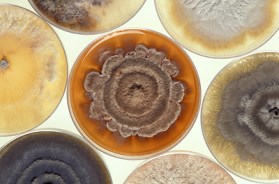
Research -Mycotoxin Contamination of Rice in China

MouldWIley Online

Mycotoxin contamination in rice is generally lower than in other cereals such as corn or wheat. However, over 65% of the population in China consumes rice as a staple food. Due to the diversity of the climate across China, the southern region is characterized by high temperatures and humidities, especially in rainy season. Such conditions are optimal for the growth of fungi. The accumulative and transferrable characteristics of fungi mycotoxins pose a great potential threat as confirmed by high incidences of liver cancer in the Yangtze delta region. Major mycotoxins identified in China are aflatoxins and ochratoxin A, as well as fumonisins. The contents of aflatoxin B1 (AFB1) in rice are varied among different provinces and regions and generally less than 5 μg/kg. Although high incidences of positive aflatoxins samples have widely been detected, few samples were detected as exceeding the national’s maximum residue limit (10 μg/kg). Limited information is available on risk assessment of human health hazards of mycotoxins in rice, children should be paid more attention to due to their having the highest mycotoxins exposure level, although the risks are generally at low levels from rice. Mycotoxins are mainly distributed in the outer layer of the paddy rice (also called rough rice, referring to whole rice grain with the hulls), and the AFB1 content in bran is 8.4 times greater than that in brown rice (hulled rice). Further investigation should focus on isolation and identification of mycotoxins-producing fungal strains, especially unknown mycotoxigenic fungal strains determination. Infection resistant rice breeding of mycotoxigenic fungal species may be a fundamental approach to guaranteeing rice safety in China