Category Archives: Uncategorized

RASFF Alerts – E.coli – Chilled Beef – Beet Root Sprouts – Ogbono

RASFF – enteropathogenic Escherichia coli (presence /25g) in chilled beef from Germany in Germany

RASFF–shigatoxin-producing Escherichia coli (stx1+; stx2+ CFU/g) in beet root sprouts from the Netherlands in Germany

RASFF–high count of Escherichia coli (2.4×10*3 MPN/g) in ogbono (Irvingia gabonensis) from Nigeria  in the UK

RASFF Alerts – Campylobacter – Chilled Whole Chicken

kswfoodworld rasff

RASFF – Campylobacter coli (up to 50000 CFU/g) and Campylobacter jejuni (100 CFU/g) in chilled whole chickens from France in Denmark

RASFF-Campylobacter jejuni (100; 400 CFU/g) in chilled whole chicken from France in Denmark

RASFF Alerts – Listeria monocyotgenes – Lily Mushrooms -Ham – BLT Sandwich – Smoked Salmon – Chilled Sausages


kswfoodworld rasff

RASFF – Listeria monocytogenes (1.6x10E4 CFU/g) in lily mushrooms from Thailand in the UK

RASFF-Listeria monocytogenes (presence /25g) in ham from Italy in Italy

RASFF-Listeria monocytogenes (presence /25g) in BLT sandwich from the Netherlands in the Netherlands

RASFF-Listeria monocytogenes (<10 CFU/g) in smoked salmon from Spain in Italy

RASFF-Listeria monocytogenes (<10 CFU/g) in chilled sausages for spreading from France in France


RASFF Alerts – Animal Feed – Salmonella – Dog Chews – Lamb Meal – Rapeseed Meal – Meat Meal

kswfoodworld rasff
RASFF-Salmonella (presence /25g) in dog chews from India in Germany 

RASFF-Salmonella enterica ser. Infantis (presence /25g) in lamb meal from New Zealand in Belgium
RASFF-Salmonella enterica ser. Tennessee (presence /25g) in rapeseed meal from Germany in Sweden
RASFF-Salmonella enterica ser. Infantis (presence /25g) in meat meal from Germany in Italy
RASFF-Salmonella enterica ser. Infantis (presence /25g) in lamb meal from New Zealand in Germany

Research – Effect of Cultured Celery Juice on Clostridium botulinum

Journal of Food Protection

Effect of Cultured Celery Juice, Temperature, and Product Composition on the Inhibition of Proteolytic Clostridium botulinum Toxin Production

Clostridium botulinum may be of concern in prepared refrigerated meals, for which strict cold chain management cannot be guaranteed. This study evaluated the effect of temperature, product composition, and cultured celery juice powder (CCJP) as a source of nitrite on the inhibition of botulinum toxin formation in two experimental (meat- and vegetable-based) prepared meals. Data obtained from the challenge study were compared with a published mathematical model to determine whether the model is fail-safe with regard to the tested meals. Treatments were inoculated with proteolytic C. botulinum, vacuum packaged, cooked at 90°C for 10 min, and assayed for botulinum toxin at appropriate intervals in samples stored at 10, 15, or 20°C for up to 8 weeks. None of the treatments stored at 10°C for 8 weeks supported toxin production by proteolytic C. botulinum. The addition of CCJP delayed toxin production by 1 and 3 weeks in cauliflower potatoes and in Dijon pork, respectively, stored at 15°C. Toxin production was delayed by 1 week at 20°C when CCJP was added to the cauliflower potatoes. This study found that the predictive model was fail-safe but was overly conservative for the experimental meals described. Finally, this study confirms that product composition, the addition of nitrite via CCJP, storage time, and temperature play important roles in the inhibition of toxin formation by proteolytic C. botulinum.

Canada – Old Coast Brocettes – Broccoli Florettes – E.coli 026

CFIA

Food Recall Warning – old Coast brand Broccettes – Broccoli Florettes recalled due to E. coli O26

Ottawa, August 3, 2017 – Costco Wholesale Canada Ltd. is recalling Gold Coast brand Broccettes – Broccoli Florettes from the marketplace due to possible E. coli O26 contamination. Consumers should not consume the recalled product described below.

Recalled products

Brand Name Common Name Size Code(s) on Product UPC
Gold Coast Broccettes – Broccoli Florettes 908 g 12 AU 2017<!– 7 35844 00033 5

Research – Europe’s Most Dangerous Pathogens: Climate Change Increasing Risks

Science Daily 

Entero

Image CDC


Europe’s most dangerous pathogens: Climate change increasing risks

The impact of climate change on the emergence and spread of infectious diseases could be greater than previously thought, according to new research by the University of Liverpool.

The study, published in Scientific Reports, is the first large-scale assessment of how climate affects bacterium, viruses or other microorganisms and parasites (pathogens) that can cause disease in humans or animals in Europe.

The results will help policy makers prioritise the surveillance for pathogens that may respond to climate change and, in turn, contribute to strengthening climate change resilience for infectious diseases.

USA – Amrita Health Foods Voluntary Recall – Amrita Health Bars – Listeria monocytogenes

FDA

Hudson Valley Foods, Inc. of Highland, NY has advised Amrita Health Foods of Pleasantville, NY that sunflower seeds and sunflower seed butter sold to the company for a short period of time have been recalled.

Amrita Health Foods is recalling a limited number of Amrita Bars because they have the potential to be contaminated with Listeria monocytogenes, an organism which can cause serious and sometimes fatal infections in young children, frail or elderly people, and others with weakened immune systems. Although healthy individuals may suffer only short-term symptoms such as high fever, severe headache, stiffness, nausea, abdominal pain and diarrhea, Listeria infection can cause miscarriages and stillbirths among pregnant women. No confirmed illnesses have been reported to public health authorities to date.

The recalled Amrita Bars were distributed across the country via retail stores, ecommerce and direct

Amrita Health Foods is recalling the following flavors of Protein bars produced from April 24th, 2017 – May 31st, 2017 with best buy dates of 04/24/2018 to 05/31/2018. The Best Buy dates are on the back of the package near the UPC code.

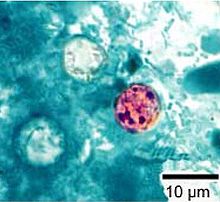
USA -Texas Cyclospora Outbreak Climbs to 160 Sick


Texas Cyclospora Outbreak Climbs to 160 Sick 220px-Cyclospora_cayetanensis_stained

Food Poisoning Bulletin

The Cyclospora outbreak in Texas has now sickened at least 160 people, according to the Texas Health and Human Services Department. There has been a cyclospora outbreak in the United States every summer for the past few years. Last year there was a downtick in cases, which the FDA has attributed to increased import inspections and import alerts.


Reseearch – Biofilm and Food Safety.

ask-bioexpert

Biofilm and food safety: What is important to know?

In nature, most bacteria do not exist as suspended (planktonic-free floating) cells. Bacteria live in a group (mass of bacterial cells) attached to each other and to surfaces, in a biofilm form.

A biofilm is as a complex community of microorganisms, embedded in self-created extracellular polymeric substances (EPS). Therefore, the biofilm is a microbial population adherent to each other and to surfaces or interfaces enclosed in the matrix. In this complex biofilm network of EPS, the bacterial cells perform less as individual cells and more as a collective living system, frequently creating channels to deliver nutrients and water to the cells located inside the biofilm.