Category Archives: Uncategorized

USA – Freshtex Produce Recalls “Valery” Maradol Papayas – Possible Salmonella

Freshtex Produce Recalls “Valery” Brand Maradol Papayas Due to Possible Health Risk

FDA

Freshtex Produce of Alamo, TX is voluntarily recalling “Valery” brand Maradol Papayas grown and packed by Carica de Campeche, because it has the potential to be contaminated with Salmonella, an organism which can cause serious and sometimes fatal infections in young children, frail or elderly people, and others with weakened immune systems. Healthy persons infected with Salmonella often experience fever, diarrhea (which may be bloody), nausea, vomiting and abdominal pain. In rare circumstances, infection with Salmonella can result in the organism getting into the bloodstream and producing more severe illnesses such as arterial infections (i.e., infected aneurysms), endocarditis and arthritis.

The Maradol Papayas was distributed to the State of Illinois from July 10 to July 13, 2017. However, the product may have been further distributed outside the state of Illinois.

Consumers can identify the Fresh papayas by the “Valery” name on the box and label grown and packed by Carica de Campeche.

No other papayas distributed by Freshtex Produce LLC are subject to the recall.

The recall was initiated after Freshtex Produce’s LLC, was notified by the FDA, on August 4, 2017, that other brands of Maradol Papayas from the farm, Carica de Campeche, had tested positive for Salmonella. As of today no illnesses have been reported from the Valery brand of Maradol Papayas but as a precaution the FDA recommended a recall of all Maradol Papayas imported in the month July from the Carica de Campeche farm.

USA – Good Food Concepts, LLC Recalls Beef Products Due to Possible E.coli O26 Contamination

FSIS USDA

Good Food Concepts, LLC. Recalls Beef Products Due To Possible E. Coli O26 Contamination

WASHINGTON, Aug. 7, 2017 – Good Food Concepts, LLC., a Colorado Springs, Colo. establishment, is recalling approximately 1,290 pounds of raw intact and non-intact beef because the products may be contaminated with E. coli O26, the U.S. Department of Agriculture’s Food Safety and Inspection Service (FSIS) announced today.

The raw intact and non-intact beef items were processed and packaged on Aug. 3 and Aug. 4, 2017. The following products are subject to recall: [View Labels (PDF Only)]

  • Various weights of individual packages of “CALLICRATE BEEF, Celebrate goodness, Celebrate life, Filet Mignon,” with lot code 170731CC.
  • Various weights of individual packages of “CALLICRATE BEEF, Celebrate goodness, Celebrate life, Brisket Flat,” with lot code 170731CC.
  • Various weights of individual packages of “CALLICRATE BEEF, Celebrate goodness, Celebrate life, Sirloin Tip,” with lot code 170731CC.
  • Various weights of individual packages of “CALLICRATE BEEF, Celebrate goodness, Celebrate life, Ribeye,” with lot code 170731CC.
  • Various weights of individual packages of “CALLICRATE BEEF, Celebrate goodness, Celebrate life, Stew Meat,” with lot code 170731CC.
  • Various weights of individual packages of “CALLICRATE BEEF, Celebrate goodness, Celebrate life, New York Strip,” with lot code 170731CC.
  • Various weights of individual packages of “CALLICRATE BEEF, Celebrate goodness, Celebrate life, Skirt Steak,” with lot code 170731CC.
  • Various weights of individual packages of “CALLICRATE BEEF, Celebrate goodness, Celebrate life, Top Sirloin,” with lot code 170731CC.

The products subject to recall bear establishment number “EST. 27316” inside the USDA mark of inspection. These items were shipped to retail locations, wholesale locations, and restaurants in Colorado Springs, Colorado.

The problem was discovered on Aug. 5, 2017 when plant management at Good Food Concepts, LLC notified FSIS in-plant inspection personnel that they tested a production lot of carcasses they received from the Callicrate Ranch on July 31, 2017. The carcass trimmings from the N60 analysis was positive for E. coli O26 and non-O157.

Many clinical laboratories do not test for non-O157 Shiga toxin-producing E. coli (STEC), such as STEC O26 because it is harder to identify than STEC O157. People can become ill from STECs 2–8 days (average of 3–4 days) after consuming the organism. Most people infected with STEC O26 develop diarrhea (often bloody), and vomiting. Some illnesses last longer and can be more severe. Infection is usually diagnosed by testing of a stool sample. Vigorous rehydration and other supportive care is the usual treatment; antibiotic treatment is generally not recommended.

Most people recover within a week, but, rarely, some develop a more severe infection. Hemolytic uremic syndrome (HUS) is uncommon with STEC O26 infection. HUS can occur in people of any age but is most common in children under 5 years old, older adults and persons with weakened immune systems. It is marked by easy bruising, pallor, and decreased urine output. Persons who experience these symptoms should seek emergency medical care immediately.

FSIS and the company are concerned that some product may be frozen and in consumers’ freezers.

Consumers who have purchased these products are urged not to consume them. These products should be thrown away or returned to the place of purchase.

FSIS routinely conducts recall effectiveness checks to verify recalling firms notify their customers of the recall and that steps are taken to make certain that the product is no longer available to consumers. When available, the retail distribution list(s) will be posted on the FSIS website at www.fsis.usda.gov/recalls.

Media and consumers with questions regarding the recall can contact Dave Anderson, Operations Manager, at (719) 322-5945

USA – Good Food Concepts, LLC Recalls Beef Products Due to Possible E.coli O26 Contamination

FSIS USDA

Good Food Concepts, LLC. Recalls Beef Products Due To Possible E. Coli O26 Contamination

WASHINGTON, Aug. 7, 2017 – Good Food Concepts, LLC., a Colorado Springs, Colo. establishment, is recalling approximately 1,290 pounds of raw intact and non-intact beef because the products may be contaminated with E. coli O26, the U.S. Department of Agriculture’s Food Safety and Inspection Service (FSIS) announced today.

The raw intact and non-intact beef items were processed and packaged on Aug. 3 and Aug. 4, 2017. The following products are subject to recall: [View Labels (PDF Only)]

  • Various weights of individual packages of “CALLICRATE BEEF, Celebrate goodness, Celebrate life, Filet Mignon,” with lot code 170731CC.
  • Various weights of individual packages of “CALLICRATE BEEF, Celebrate goodness, Celebrate life, Brisket Flat,” with lot code 170731CC.
  • Various weights of individual packages of “CALLICRATE BEEF, Celebrate goodness, Celebrate life, Sirloin Tip,” with lot code 170731CC.
  • Various weights of individual packages of “CALLICRATE BEEF, Celebrate goodness, Celebrate life, Ribeye,” with lot code 170731CC.
  • Various weights of individual packages of “CALLICRATE BEEF, Celebrate goodness, Celebrate life, Stew Meat,” with lot code 170731CC.
  • Various weights of individual packages of “CALLICRATE BEEF, Celebrate goodness, Celebrate life, New York Strip,” with lot code 170731CC.
  • Various weights of individual packages of “CALLICRATE BEEF, Celebrate goodness, Celebrate life, Skirt Steak,” with lot code 170731CC.
  • Various weights of individual packages of “CALLICRATE BEEF, Celebrate goodness, Celebrate life, Top Sirloin,” with lot code 170731CC.

The products subject to recall bear establishment number “EST. 27316” inside the USDA mark of inspection. These items were shipped to retail locations, wholesale locations, and restaurants in Colorado Springs, Colorado.

The problem was discovered on Aug. 5, 2017 when plant management at Good Food Concepts, LLC notified FSIS in-plant inspection personnel that they tested a production lot of carcasses they received from the Callicrate Ranch on July 31, 2017. The carcass trimmings from the N60 analysis was positive for E. coli O26 and non-O157.

Many clinical laboratories do not test for non-O157 Shiga toxin-producing E. coli (STEC), such as STEC O26 because it is harder to identify than STEC O157. People can become ill from STECs 2–8 days (average of 3–4 days) after consuming the organism. Most people infected with STEC O26 develop diarrhea (often bloody), and vomiting. Some illnesses last longer and can be more severe. Infection is usually diagnosed by testing of a stool sample. Vigorous rehydration and other supportive care is the usual treatment; antibiotic treatment is generally not recommended.

Most people recover within a week, but, rarely, some develop a more severe infection. Hemolytic uremic syndrome (HUS) is uncommon with STEC O26 infection. HUS can occur in people of any age but is most common in children under 5 years old, older adults and persons with weakened immune systems. It is marked by easy bruising, pallor, and decreased urine output. Persons who experience these symptoms should seek emergency medical care immediately.

FSIS and the company are concerned that some product may be frozen and in consumers’ freezers.

Consumers who have purchased these products are urged not to consume them. These products should be thrown away or returned to the place of purchase.

FSIS routinely conducts recall effectiveness checks to verify recalling firms notify their customers of the recall and that steps are taken to make certain that the product is no longer available to consumers. When available, the retail distribution list(s) will be posted on the FSIS website at www.fsis.usda.gov/recalls.

Media and consumers with questions regarding the recall can contact Dave Anderson, Operations Manager, at (719) 322-5945.

UK- Wales – Campylobacter Outbreak

Outbreak News Today Campylobacter


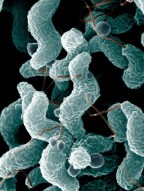
Health officials in Wales are reporting on a Campylobacter outbreak linked to unpasteurized or ‘raw’ cow’s milk produced at Penlan y Môr Farm near New Quay.

Visitors to the Royal Welsh Show in Builth Wells may have sampled or bought the milk, which was available there on Wednesday 26 July.

Public Health Wales, Hywel Dda University Health Board, the Food Standards Agency, and Ceredigion County Council are investigating four cases of Campylobacter linked with milk from Penlan y Môr farm. The four cases all consumed or bought the milk at Aberystwyth Farmer’s Market after 1 June 2017.

Campylobacter is the most common bacterial cause of diarrhoea in Wales and the UK. Public Health Wales is notified of between 3,000 and 4,000 cases of Campylobacter every year in Wales.

USA – Red Door Salmonella Outbreak Growing

Food Poisoning Bulletin

Elkhorn Logan Valley Public Health Department, along with Nebraska Department of Health and Human Services, is continuing to investigate an outbreak of salmonella in West Point. Gina Uhing, Health Director for Elkhorn Logan Valley Public Health Department reports that: “to date, there have been 22 confirmed cases and 6 probable cases.”

“All of the interviews that have been conducted with confirmed cases continue to show that dining at Red Door Coffee was a common factor,” Uhing said. “For that reason, a survey of restaurant patrons was initiated to help determine possible causes and sources of the illness.” Red Door Coffee owners and staff have been extremely cooperative and helpful throughout this process and all parties are focused on resolving this issue.

Anyone who ate at Red Door Coffee between July 14 – July 29 is asked to complete a brief survey that will help ELVPHD and DHHS in this process. The survey may be found
at: https://han.ne.gov/survey/rdc or by visiting the ELVPHD website at www.elvphd.org.

USA – Papaya Salmonella Outbreak at Least 109 Cases in 16 States

Food Poisoning Bulletin 


The deadly Salmonella Kiambu outbreak linked to papayas has now sickened at least 109 people in 16 states. That’s an increase of 64 more ill persons from the last update on July 21, 2017. Six more states have reported patients since then: Connecticut, Delaware, Michigan, North Carolina, Oklahoma, and Wisconsin.

USA – Maradol Papaya Cavi Recall – Salmonella

FDA kswfoodworld

Agroson’s LLC Recalls Maradol Papaya Cavi Brand Grown and Packed by Carica De Campeche Because of Possible Health Risk

Agroson’s LLC of Bronx, NY is recalling 2,483 boxes of Maradol Papaya Cavi Brand, grown and packed by Carica de Campeche, as a precaution because other brands that also buy from this farm have been tested positive for Salmonella, an organism which can cause serious and sometimes fatal infections in young children, frail or elderly people and others with weakened immune systems. Healthy persons infected with Salmonella often experience fever, diarrhea (which may be bloody), nausea, vomiting and abdominal pain. In rare circumstances, infection with Salmonella can result in the organism getting into the bloodstream and producing more severe illnesses such as arterial infections (i.e., infected aneurysms), endocarditis and arthritis.

Product was distributed to wholesalers in the following states NY, CT, and NJ, from July 16 to 19, 2017. This product was further to downstream customers, including retail consumers. The papayas were available for sale until July 31, 2017. Consumers can identify the papayas by PLU sticker, cavi MEXICO 4395.

Wholesalers can identify the product by codes found above the handle on the master carton, codes include: 3044, 3045 and 3050. The farm that grew the papayas is also listed on the upper left side of the master carton, CARICA DE CAMPHE.

No other papayas distributed by Agroson’s LLC are subject to the recall.

USA – 28 People Sick After Eating at a Nebraska Coffee Shop – Salmonella

Food Safety News

Almost 30 people sick after eating at Nebraska coffee shop

Twenty people who recently ate at the Red Door Coffee restaurant in Nebraska became sick and have been with confirmed Salmonella infections.

Another eight people who also ate at the cafe became sick with what authorities suspect is salmonellosis, according to the Elkhart Logan Valley Public Health Department. The department is seeking the public’s help to find the source of the bacteria.

“So far, all confirmed cases have one common factor, which is dining at Red Door Coffee in West Point,” according to an update posted by the local health department Thursday. “Red Door Coffee owners and staff are fully cooperating with the investigation.”

The outbreak update did not report dates of illness onset or whether any of the 28 sick people have required hospitalization. Investigators with the Nebraska Department of Health and Human Services are assisting local officials, but as of Thursday evening they were not suggesting any suspected root sources of the Salmonella bacteria.

RASFF Alerts – Aflatoxin – Groudnuts – Peanuts – Whole Red Chilli

kswfoodworld rasff

RASFF – aflatoxins (B1 = 5.1; Tot. = 5.1 µg/kg – ppb) in groundnuts without shell from China in Spain

RASFF-aflatoxins (B1 = 10; Tot. = 21.1 µg/kg – ppb) in peanut kernels from China in the UK

RASFF-aflatoxins (B1 = 8.6; Tot. = 9.1 µg/kg – ppb) in organic whole red chilli from India in the UK

RASFF-aflatoxins (B1 = 7.47; Tot. = 9.07 µg/kg – ppb) in peanuts without shell from Egypt in Romania

RASFF-aflatoxins (B1 = 14; Tot. = 30 µg/kg – ppb) in groundnuts from Argentina in the Netherlands

RASFF Alerts – Salmonella – Beef Liver – Chicken Sausages – Eggs – Sesame Seeds – Chicken Meat Preparation – Raw Milk Reblochon

kswfoodworld rasff

RASFF – Salmonella enterica ser. Typhimurium (1 out of 5 samples /25g) in frozen beef liver from the Netherlands in Bugaria

RASFF-Salmonella enterica ser. Typhimurium (presence /25g) in frozen chicken sausages from Belgium, with raw material from the Netherlands in Belgium

RASFF-Salmonella enterica ser. Typhimurium in eggs from Spain in France

RASFF-Salmonella (presence /25g) in hulled sesame seeds from India in Switzerland

RASFF-Salmonella (presence /25g) in frozen chicken meat preparation from Brazil in the Netherlands

RASFF-Salmonella (presence /25g) in raw milk reblochon from France in France