Category Archives: Uncategorized

USA – Salmonella Kiambu – Salmonella Thompson – Maradol Papaya’s

CDC kswfoodworld

Multistate Outbreak of Salmonella Kiambu and Salmonella Thompson Infections Linked to Imported Maradol Papayas

  • The outbreak investigation has expanded to include another strain of Salmonella.
  • Sixty-four more ill people from 15 states were added to this investigation since the last update on July 21, 2017.
  • Six more states have reported ill people: Connecticut, Delaware, Michigan, North Carolina, Oklahoma, and Wisconsin
  • Laboratory tests showed that the strain of Salmonella Thompson isolated from papayas collected in Maryland is closely related genetically to clinical isolates from ill people.
  • FDA tested other papayas imported from Mexico and found they were contaminated with several types of Salmonella.

Information – Vibrio vulnificans

Outbreak News Today Vibrio_vulnificus_01a

Vibrio vulnificus: An interview with Dr Judy Stone.

Here in the state of Florida, dozens of confirmed cases of the bacterial infection caused by Vibrio vulnificus occur annually, along with dozens more in the other Gulf states.

My guest, Infectious Disease specialist, a Forbes contributor, Judy Stone, MD said in a recent piece, “Infections from Vibrio vulnificus are a summer staple, and are increasing along with global warming.”

Dr. Stone joined me to discuss Vibriosis caused by Vibrio vulnificus and the effects of warming seawaters on it’s presence in more parts of the world.

Research – 2016 Outbreak in Raw Milk – E.coli

Food Poisoning Bulletin

An E. coli outbreak associated with raw milk that occurred in March 2016 was announced at the Virginia Department of Health Field Epidemiology Seminar, held on June 2, 2017 in Fredericksburg, Virginia. Daniel Ferrell, MPH, District Epidemiologist for the Rappahannock-Rapidan Health district presented the information.

Research – Effect of Equlibrated pH and Indigenous Spoilage Micro-organisms on the Inhibition of Proteolytic Clostridium botulinum Toxin Production in Experimental Meals Under Temperature Abuse

Journal of Food Protection

Effect of Equilibrated pH and Indigenous Spoilage Microorganisms on the Inhibition of Proteolytic Clostridium botulinum Toxin Production in Experimental Meals under Temperature Abuse

Clostridium botulinum is a foreseeable biological hazard in prepared refrigerated meals that needs to be addressed in food safety plans. The objective of this study was to evaluate the effect of product composition and storage temperature on the inhibition of botulinum toxin formation in nine experimental meals (meat, vegetable, or carbohydrate based). Treatments were inoculated with proteolytic C. botulinum, vacuum packaged, cooked at 90°C for 10 min, and assayed for botulinum toxin in samples stored at 25°C for up to 96 h for phase 1, or at 25°C for 12 h and then transferred to 12.5°C for up to 12 and 6 weeks in phases 1 and 2, respectively. For phase 1, none of the treatments (equilibrated pH 5.8) supported toxin production when stored at 25°C for 48 h, but toxin production was observed in all treatments at 72 h. For the remaining experiments with storage at 12.5°C, toxin production was dependent on equilibrated pH, storage time, and growth of indigenous spoilage microorganisms. In phase 1, no gross spoilage and no botulinum toxin was detected for any treatment (pH ≤5.8) stored at 12.5°C for 12 weeks. In phase 2, gross spoilage varied by commodity, with the brussels sprouts meal with pH 6.5 showing the most rapid spoilage within 2 weeks and botulinum toxin detected at 5 and 6 weeks for the control and cultured celery juice treatments, respectively. In contrast, spoilage microbes decreased the pH of a pH 5.9 beef treatment by 1.0 unit, potentially inhibiting C. botulinum through 6 weeks at 12.5°C. None of the other treatments with pH 5.8 or below supported toxin production or spoilage. This study provides validation for preventive controls in refrigerated meals. These include equilibrated product pH and storage temperature and time to inhibit toxin formation by proteolytic C. botulinum, but the impact of indigenous microflora on safety and interpretation of challenge studies is also highlighted.


USA – Comfy Cow Recalls Pints of Ice Cream Due to Potential E.coli Contamination

The Comfy Cow Recalls Pints of Ice Cream Due To Possible E. Coli Contamination and/or High Coliform Counts

FDA ecoli

The Comfy Cow is recalling pints of Banana Puddin Y’all, Chocolate Squared2, Cookies and Cream, Cow Trax, Double Fold Vanilla, Georgia Butter Pecan, Intense Dark Chocolate, Salted Caramel, Strawberry Fields Forever due to a potential contamination of E. coli. E. coli bacteria can cause diarrhea and dehydration. Most people who are infected recover, but the bacteria can be deadly.

On 07/19/2017 the firm was notified through internal firm product sample testing that pints of Banana Puddin Y’all, Chocolate Squared2, Cookies and Cream, Cow Trax, Double Fold Vanilla, Georgia Butter Pecan, Intense Dark Chocolate, Salted Caramel, Strawberry Fields Forever were either positive for E. coli or showed high counts of coliform.

No illnesses have been reported to date.

Research – Determination of Optimum Santiser Levels for Prevention of Salmonella Cross-contamination of Mature Round Tomatoes in a Laboratory Fume Model

Journal of Food Protection 


Determination of Optimum Sanitizer Levels for Prevention of Salmonella Cross-Contamination of Mature Round Tomatoes in a Laboratory Model Flume System

Salmonella has been reported to be involved in several foodborne illness outbreaks, many of which resulted from consumption of raw tomatoes. This research aimed to optimize and evaluate the concentration of free chlorine (hypochlorous acid [HOCl]) used as a sanitizer to prevent cross-contamination of tomatoes inoculated with a cocktail of five rifampin-resistant Salmonella enterica serovars in a laboratory-based model flume system. Organic load, prepared using sterilized Scotts Premium Topsoil, was added in different quantities to the flume wash water to simulate real-world packinghouse conditions. In a typical packinghouse operation utilizing a recirculating flume system, the organic matter washed from tomato surfaces accumulates over time. In this study, different concentrations (0, 25, 50, 75, and 100 ppm) of HOCl were used as sanitizers under three organic load conditions (0, 650, and 1,000 mg/L chemical oxygen demand). Results showed that 100 ppm of HOCl was necessary to prevent Salmonella cross-contamination of uninoculated tomatoes in the model flume system in the presence of organic loading. Also, when treated with 100 ppm of HOCl, Salmonella levels were reduced by >4.5 log CFU per tomato from inoculated tomatoes in the presence of organic load. At 75 ppm of HOCl, Salmonella cross-contamination was prevented, but only in the absence of organic loading. In studies in which plate counts were negative, whole tomato enrichment studies were performed. No cross-contamination of uninoculated tomatoes was recorded when 100 ppm of HOCl was used, even in the presence of high organic load (1,000 mg/L chemical oxygen demand). Although sanitizer application reduces contamination on tomato surfaces, the primary function of sanitizers in the wash water is to prevent cross-contamination.

Research – Validation of Thermal Lethality against Salmonella enterica in Poultry Offal During Rendering

Validation of Thermal Lethality against Salmonella enterica in Poultry Offal during Rendering

Journal of Food Protection kswfoodworld Salmonella

Recent outbreaks of human disease following contact with companion animal foods cross-contaminated with enteric pathogens, such as Salmonella enterica, have resulted in increased concern regarding the microbiological safety of animal foods. Additionally, the U.S. Food and Drug Administration Food Safety Modernization Act and its implementing rules have stipulated the implementation of current good manufacturing practices and food safety preventive controls for livestock and companion animal foods. Animal foods and feeds are sometimes formulated to include thermally rendered animal by-product meals. The objective of this research was to determine the thermal inactivation of S. enterica in poultry offal during rendering at differing temperatures. Raw poultry offal was obtained from a commercial renderer and inoculated with a mixture of Salmonella serovars Senftenberg, Enteritidis, and Gallinarum (an avian pathogen) prior to being subjected to heating at 150, 155, or 160°F (65.5, 68.3, or 71.1°C) for up to 15 min. Following heat application, surviving Salmonella bacteria were enumerated. Mean D-values for the Salmonella cocktail at 150, 155, and 160°F were 0.254 ± 0.045, 0.172 ± 0.012, and 0.086 ± 0.004 min, respectively, indicative of increasing susceptibility to increased application of heat during processing. The mean thermal process constant (z-value) was 21.948 ± 3.87°F. Results indicate that a 7.0-log-cycle inactivation of Salmonella may be obtained from the cumulative lethality encountered during the heating come-up period and subsequent rendering of raw poultry offal at temperatures not less than 150°F. Current poultry rendering procedures are anticipated to be effective for achieving necessary pathogen control when completed under sanitary conditions.


Portugal – Botulism Outbreak Reported in Northern Portugal

Outbreak News today

Botulism outbreak reported in northern Portugal

Portugal health officials have confirmed a small botulism outbreak in the northeastern region of  the country, according to a report posted on ProMED-Mail.

The author of the post states  that four cases of food-borne botulism related to the consumption of homemade smoked ham in mid- July were confirmed in Bragança district.

Apologies for Double Posts

Apologies for the double posts I am afraid WordPress is being temperamental this Morning!

USA – Freshtex Produce Recalls ” Valery” Maradol Papayas – Possible Salmonella

Freshtex Produce Recalls “Valery” Brand Maradol Papayas Due to Possible Health Risk

FDA

Freshtex Produce of Alamo, TX is voluntarily recalling “Valery” brand Maradol Papayas grown and packed by Carica de Campeche, because it has the potential to be contaminated with Salmonella, an organism which can cause serious and sometimes fatal infections in young children, frail or elderly people, and others with weakened immune systems. Healthy persons infected with Salmonella often experience fever, diarrhea (which may be bloody), nausea, vomiting and abdominal pain. In rare circumstances, infection with Salmonella can result in the organism getting into the bloodstream and producing more severe illnesses such as arterial infections (i.e., infected aneurysms), endocarditis and arthritis.

The Maradol Papayas was distributed to the State of Illinois from July 10 to July 13, 2017. However, the product may have been further distributed outside the state of Illinois.

Consumers can identify the Fresh papayas by the “Valery” name on the box and label grown and packed by Carica de Campeche.

No other papayas distributed by Freshtex Produce LLC are subject to the recall.

The recall was initiated after Freshtex Produce’s LLC, was notified by the FDA, on August 4, 2017, that other brands of Maradol Papayas from the farm, Carica de Campeche, had tested positive for Salmonella. As of today no illnesses have been reported from the Valery brand of Maradol Papayas but as a precaution the FDA recommended a recall of all Maradol Papayas imported in the month July from the Carica de Campeche farm.

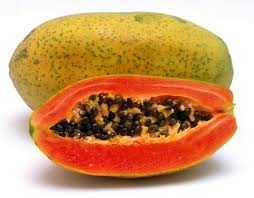
Freshtex Produce of Alamo, TX is voluntarily recalling “Valery” brand Maradol Papayas grown and packed by Carica de Campeche, because it has the potential to be contaminated with Salmonella, an organism which can cause serious and sometimes fatal infections in young children, frail or elderly people, and others with weakened immune systems. Healthy persons infected with Salmonella often experience fever, diarrhea (which may be bloody), nausea, vomiting and abdominal pain. In rare circumstances, infection with Salmonella can result in the organism getting into the bloodstream and producing more severe illnesses such as arterial infections (i.e., infected aneurysms), endocarditis and arthritis.

The Maradol Papayas was distributed to the State of Illinois from July 10 to July 13, 2017. However, the product may have been further distributed outside the state of Illinois.

Consumers can identify the Fresh papayas by the “Valery” name on the box and label grown and packed by Carica de Campeche.

No other papayas distributed by Freshtex Produce LLC are subject to the recall.

The recall was initiated after Freshtex Produce’s LLC, was notified by the FDA, on August 4, 2017, that other brands of Maradol Papayas from the farm, Carica de Campeche, had tested positive for Salmonella. As of today no illnesses have been reported from the Valery brand of Maradol Papayas but as a precaution the FDA recommended a recall of all Maradol Papayas imported in the month July from the Carica de Campeche farm.