Tag Archives: food production

Research – Inactivation of Foodborne Microorganisms Using Engineered Water Nanostructures (EWNS)

Environmental Science and Technology iStock_000012710183Small

Foodborne diseases caused by the consumption of food contaminated with pathogenic microorganisms or their toxins have very serious economic and public health consequences. Here, we explored the effectiveness of a recently developed intervention method for inactivation of microorganisms on fresh produce, and food production surfaces. This method utilizes Engineered Water Nanostructures (EWNS) produced by electrospraying of water vapor. EWNS possess unique properties; they are 25 nm in diameter, remain airborne in indoor conditions for hours, contain Reactive Oxygen Species (ROS) and have very strong surface charge (on average 10e/structure). Here, their efficacy in inactivating representative foodborne bacteria such as Escherichia coli, Salmonella enterica, and Listeria innocua, on stainless steel surfaces and on organic tomatoes, was assessed. The inactivation was facilitated using two different exposure approaches in order to optimize the delivery of EWNS to bacteria: (1) EWNS were delivered on the surfaces by diffusion and (2) a “draw through” Electrostatic Precipitator Exposure System (EPES) was developed and characterized for EWNS delivery to surfaces. Using the diffusion approach and an EWNS concentration of 24 000 #/cm3, the bacterial concentrations on the surfaces were reduced, depending on the bacterium and the surface type, by values ranging between 0.7 to 1.8 logs. Using the EPES approach and for an aerosol concentration of 50 000 #/cm3 at 90 min of exposure, results show a 1.4 log reduction for E. coli on organic tomato surfaces, as compared to the control (same conditions in regards to temperature and Relative Humidity). Furthermore, for L. innocua, the dose–response relationship was demonstrated and found to be a 0.7 and 1.2 logs removal at 12 000 and 23 000 #/cm3, respectively. The results presented here indicate that this novel, chemical-free, and environmentally friendly intervention method holds potential for development and application in the food industry, as a “green” alternative to existing disinfection methods.
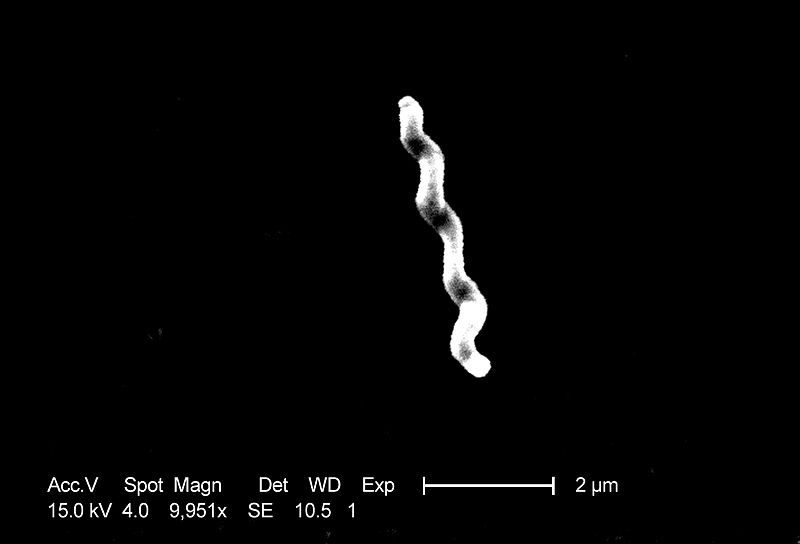
Research – Does Campylobacter jejuni Form Biofilms in Food-Related Environments?

American Society for Microbiology Campylobacter_jejuni_01

Campylobacter jejuni is one of the most frequent causes of bacterial gastrointestinal food-borne infection worldwide. This species is part of the normal flora of the gastrointestinal tracts of animals used for food production, including poultry, which is regarded as the primary source of human Campylobacter infections. The survival and persistence of C. jejuni in food processing environments, especially in poultry processing plants, represent significant risk factors that contribute to the spread of this pathogen through the food chain. Compared to other food-borne pathogens, C. jejuni is more fastidious in its growth requirements and is very susceptible to various environmental stressors. Biofilm formation is suggested to play a significant role in the survival of C. jejuni in the food production and processing environment. The aims of this minireview were (i) to examine the evidence that C. jejuni forms biofilms and (ii) to establish the extent to which reported and largely laboratory-based studies of C. jejuni biofilms provide evidence for biofilm formation by this pathogen in food processing environments. Overall existing studies do not provide strong evidence for biofilm formation (as usually defined) by most C. jejuni strains in food-related environments under the combined conditions of atmosphere, temperature, and shear that they are likely to encounter. Simple attachment to and survival on surfaces and in existing biofilms of other species are far more likely to contribute to C. jejuni survival in food-related environments based on our current understanding of this species.


Bespoke Vegetable Wash – Increased Shelf Life

Food Production Daily

German company Food Freshly has begun offering processors a bespoke formula wash for fresh foodstuffs that it claims will keep them germ free and extend their shelf life.

Company Website

Aflatoxin in Chocolate

Food Production Daily

Researchers in Brazil have found high levels of the potentially lethal contaminant aflatoxin in chocolate and say constant monitoring is required.

Full Report Science Direct