Category Archives: Uncategorized

UK – Scotland – Food Standards Scotland statement on the release of the Dunsyre Blue E. coli O157 Incident Management Team report

Food Standards Scotland

29 March 2017

Food Standards Scotland, as a member of the Incident Management Team involved in producing the report issued by Health Protection Scotland today (29 March), fully supports the report’s findings.

The report concludes that Dunsyre Blue cheese was the source of the E. coli O157 outbreak in the summer of 2016 which led to 17 people being hospitalised and sadly, one fatality.

The outbreak led to further investigations of cheese produced by Errington Cheese Ltd and of the production processes in place at the time. The report concludes that:

“Potentially pathogenic E. coli were able to enter and survive the cheese production process at the food business. Positive results were obtained for cheese produced over a period of four months, indicating a systematic potential for STEC to enter the process and contaminate final products. 


Canada – E. coli Outbreak Linked to Robin Hood Flour Sickens 25 in Canada March 29, 2017 by News Desk Leave a Comment

ecoliFood Poisoning Bulletin

An E. coli O121 outbreak linked to Robin Hood flour in Canada has sickened at least 25 people, according to the Public Health Agency of Canada. All patients identified in this outbreak have samples with E. coli bacteria that match genetically. This outbreak is reminiscent of the 2016 E. coli outbreak in the United States linked to General Mills flour. And it’s another reminder that flour is a raw agricultural product, can be contaminated with pathogenic bacteria, and should never be eaten raw.


Research – Nuggets of Wisdom: Salmonella Enteritidis Outbreaks and the Case for New Rules on Uncooked Frozen Processed Chicken

Journal of Food Protection

In 2014 and 2015, three Canadian Salmonella serotype Enteritidis outbreak investigations implicated uncooked, frozen, processed chicken products produced at the same establishment, namely establishment A. In November 2014, a sustained increase in the number of reported domestically acquired Salmonella Enteritidis cases in Ontario led to the first outbreak investigation, which implicated uncooked, frozen, processed chicken products produced at establishment A. In June 2015, the identification of pulsed-field gel electrophoresis patterns that had not been previously reported in Canada led to a national Salmonella Enteritidis investigation. Of 51 cases reported nationally, 35 were from Ontario. Uncooked, frozen, processed chicken products produced at establishment A were identified as the source of the outbreak, and public health action was taken as a result of this second investigation. In September 2015, a sustained increase in the number of domestically acquired Salmonella Enteritidis PT13a cases in Ontario led to a third outbreak investigation, which identified a total of 36 PT13a cases. Uncooked, frozen, processed chicken products produced at establishment A were again identified as the source of the outbreak. Outbreaks have been linked to uncooked, frozen, processed chicken products since the late 1990s. Information collected during the three outbreak investigations, and from other jurisdictions, suggests that the breaded and prebrowned appearance of the product, as well as factors related to product packaging and marketing, result in consumer misperception that this raw product is cooked. This misperception may result in mishandling and improper cooking. The three outbreaks described in this article highlight the potential ongoing risks to consumers from these products and support interventions to prevent contamination at the source level and infection at the consumer level.

Research – Prevalence and Antimicrobial Susceptibility of Enterobacteriaceae Isolated from Retail Pepper in Vietnam

Entero

CDC Photo

Journal of Food Protection


To investigate the microbial quality of retail pepper in Vietnam, the enumeration and detection of Enterobacteriaceae and the screening of cefotaxime (CTX)–resistant coliforms were performed by using 84 commercial samples. Although Enterobacteriaceae were isolated from 78 samples, the number of Enterobacteriaceae was lower than 1.0 log CFU/g in 46 samples. For the detection of Enterobacteriaceae with the International Organization for Standardization methods, Salmonella spp., Escherichia coli, Klebsiella pneumoniae, Cronobacter sakazakii, and Enterobacter cloacae complex were isolated from 5, 12, 36, 19, and 30 samples, respectively. During screening of CTX-resistant coliforms, K. pneumoniae, C. sakazakii, and E. cloacae complex were isolated from 8, 1, and 21 samples, respectively. Seven K. pneumoniae and seven E. cloacae complex isolates obtained in the screening of CTX-resistant coliforms were resistant to at least one of the three third-generation cephalosporins (CTX, ceftazidime, and cefpodoxime). Moreover, one E. cloacae complex cluster IV and all K. pneumoniae isolates were positive for extended-spectrum β-lactamase genes or plasmid-mediated AmpC β-lactamase genes or both. Additionally, two extended-spectrum β-lactamase–producing K. pneumoniae isolates and one AmpC β-lactamase–producing E. cloacae complex cluster IV isolate were positive for the plasmid-mediated quinolone resistance determinants and also had amino acid alterations in the quinolone resistance–determining regions of GyrA and ParC. Furthermore, 10 E. cloacae complex isolates were positive for the plasmid-mediated fosfomycin resistance gene fosA. As pepper is often consumed without a heating process, the possible spread to humans of foodborne, opportunistic, and nosocomial infection pathogens or resistance genes from foods prepared or seasoned with pepper cannot be excluded. Therefore, it is necessary to handle pepper by using hygienic conditions during the cultivation, harvesting and processing steps.

Canada – Robin Hood brand All Purpose Flour, Original recalled due to E. coli O121

CFIA

Ottawa, March 28, 2017 – Smucker Foods of Canada Corp. is recalling Robin Hood brand All Purpose Flour, Original from the marketplace due to possible E. coli O121 contamination. Consumers should not consume the recalled product described below.

Recalled products

Brand Name Common Name Size Code(s) on Product UPC
Robin Hood All Purpose Flour, Original 10 kg Lot codes containing
BB/MA 2018 AL 17
and 6 291 548
0 59000 01652 8

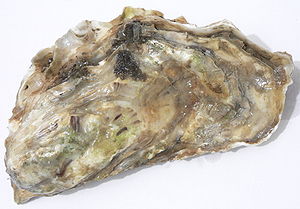
Canada – B.C. oyster industry reeling after more than 300 consumers fall ill

The Province Vibrio

The federal government has closed oyster farming at seven diverse locations in southern B.C. waters, and several other commercial growers have voluntarily stopped selling amidst the worst norovirus outbreak to ever hit the industry.

To date, a total of 304 illnesses have been reported in B.C., Alberta, and Ontario from eating raw or undercooked oysters from the West Coast, said Darlene Winterburn, executive director of the Comox-based B.C. Shellfish Growers’ Association.

USA – The Crab Pot Foodborne illness outbreak investigation – Norovirus

King County

Food Borne Illness - Norovirus -CDC Photo

CDC photo


Public Health investigated an outbreak of gastroenteritis with nausea, vomiting and diarrhea associated with The Crab Pot restaurant located at 1301 Alaskan Way, Seattle. Five people from the same meal party became ill after eating at the restaurant on 3/4/2017. We do not have laboratory confirmation of the etiology, but symptoms are suggestive of norovirus. Often in norovirus outbreaks no laboratory testing is done.

Public Health learned of the outbreak late on Monday 3/6/17. No additional reports have been received. As part of the Public Health investigation, Environmental Health inspectors visited the restaurant on both 3/8/17 and 3/9/17. The restaurant worked cooperatively with Public Health, and we discussed norovirus control measures with the person in charge. During the field inspection, we identified a violation related to improper handwashing facilities which is a risk factor for spreading norovirus. No ill food workers have been identified and the restaurant completed appropriate cleaning and disinfection of the facility. A follow-up visit will occur within 14 days to ensure all violations have been corrected.

USA – Possible Case Of Food Poisoning Sends 13 To Hospital In Inland Empire

CBS Local LA

YUCAIPA (CBSLA.com) — A possible case of food poisoning sent 13 people to the hospital in the Inland Empire.

The incident unfolded at the Oak Glen Christian Conference Center in Yucaipa on Oak Glen Road near Clearwater Drive.

Firefighters say people reported feeling ill around 8:30 p.m., prompting ambulances to line up outside of the center on Saturday night.

The total number of people who got sick is now up to 47 according to the San Bernardino County Health Department. Symptoms included nausea, vomiting and diarrhea. Everyone is doing much better according to a church spokesman.

Research – Limitations of Immunomagnetic Separation for Detection of the Top Seven Serogroups of Shiga Toxin–Producing Escherichia coli

Journal of Food Protection

Shiga toxin–producing Escherichia coli (STEC) strains are foodborne pathogens that negatively impact human health and compromise food safety. Serogroup O157 is the most frequently isolated and studied STEC serogroup, but six others (O26, O45, O103, O111, O121, and O145) have also been identified as significant sources of human disease and collectively have been referred to as the “top six” pathogenic serogroups. Because detection methods for non-O157 serogroups are not yet refined, the objective of this study was to compare the effectiveness of immunomagnetic separation (IMS) for recovery of serogroup O157 isolates with that for each of the top six E. coli serogroups in pure and mixed cultures of STEC at 103 to 107 CFU/mL. After serogroup-specific IMS, DNA was extracted from cultured isolates to analyze the specificity of each IMS assay using conventional and quantitative PCR. In pure cultures, DNA copy number obtained after IMS was lower for O111 and O157 (P < 0.01) than for other serogroups. Based on quantitative PCR (qPCR) analyses, specificity was reduced for all IMS assays when STEC isolates were mixed at 7 log CFU/mL, although the O157 IMS assays recovered only O157 over a wider range of concentrations than did assays for non-O157 serogroups. At the lowest dilution tested, conventional PCR was specific for all serogroups except O121 and O145. For these two serogroups, no dilution tested recovered only O121 or O145 when evaluated with conventional PCR. Refinements to IMS assays, development of selective media, and determination of optimal enrichment times to reduce background microflora or competition among serogroups would be especially beneficial for recovery of O111, O121, and O145 serogroups to improve STEC detection and isolation.

Egypt – Egypt suspends school lunches after mass food poisoning

ABC

An outbreak of food poisoning has sickened thousands of Egyptian schoolchildren this month, figures showed Thursday, sending parents rushing to hospitals and leading the Education Ministry to temporarily suspend its school lunch program.

Egypt saw 4,650 suspected food poisoning cases in schools nationwide in March alone, the Cabinet said in a statement carried by state-run news agency MENA, compared to some 300 cases previously reported since the beginning of the academic year in September.

In a single incident last week in the southern city of Sohag, at least 3,353 students were affected. Similar outbreaks have taken place this week in other governorates, though on a much smaller scale, including in the canal city of Suez, Menoufiya in the Nile Delta and the southern city of Aswan.