Category Archives: Uncategorized

Myanmar – Free soup puts 350 in hospital with food poisoning

DVB

A free lunch for villagers in southern Burma turned sour after it landed more than a third of the rural community in hospital with food poisoning, local officials said Friday.

Hundreds of villagers from Eain Ta Lone, west of Rangoon, fell ill after eating fish stew served at a Buddhist ceremony to celebrate the ordination of local novices.

The entire 1,000-person village was bundled over to the nearest hospital, where 367 were admitted for treatment, said charity worker Wai Lin Aung, who helped to transport the villagers.

Many were vomiting and some described aches and pains all over their body, he added.

“They felt like that after eating stewed hilsa [a type of fish] and cassia soup at the donation.”

Research – Chicken immune system ‘too slow’ to beat Campylobacter

University of Liverpool Salmonella Campylobacter

New University of Liverpool research reveals that the immune response of farmed chickens does not develop fast enough to fight off Campylobacter during their short lifespan. The findings have important implications in the challenge towards developing a poultry vaccine for the bug, which is the UK’s leading cause of food poisoning.

As both a public health and animal welfare issue, finding a way to control Campylobacter infection is a priority for the poultry industry. There are currently no commercial vaccines and their development is hampered by poor understanding of the immunobiology of the infection.


USA -New York consumer alert: Listeria in Winters Grass raw milk

Food Safety News Raw Milk Food Safety KSW Foodworld

New York State Department of Agriculture and Markets Commissioner Richard A. Ball on Friday warned consumers in Oneida County and the surrounding area not to consume unpasteurized, raw milk from Winters Grass Farm because of positive tests for Listeria contamination.

The Winters Grass Farm is on Butler Road in Sauquoit, NY.  The ag department did not yet know of any illnesses associated with raw milk from this farm as of Friday. But, one of its inspectors took a sample of the Winter Grass raw milk that has turned out to be contaminated with Listeria monocytogenes.

USA – Guacamole Recalled in Canada for Possible Listeria

Food Poisoning Bulletin

Frankly Fresh Salads, H.Y. Louie Co. Ltd, and the Canadian Food Inspection Agency (CFIA) are recalling fresh guacamole for possible Listeria monocytogenes contamination. No illnesses have been reported to date in connection with this issue.

The recalled products include Chef Destinations brand Fresh Guacamole in 300 gram packages. The best before date is 17 MR 22, and the UPC number is 7 76525 90905 9. Also recalled is Frankly Fresh Salads brand Fresh Guacamole in 300 gram containers, with best before date 17 MR 22 and UPC number 7 76525 90955 4. Finally, Fresh St. brand Fresh Guacamole is recalled. That is also sold in 300 gram containers, with best before date 17 MR 22 and UPC number 7 76525 90934 9.

Research – All Natural and Clean-Label Preservatives and Antimicrobial Agents Used during Poultry Processing and Packaging

Journal of Food Protection Campylobacter kswfoodworld
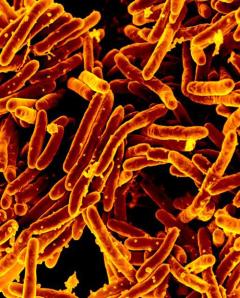
The poultry industry is faced with compounding pressures of maintaining product safety and wholesomeness while keeping up with consumer trends of all-natural foods and label accuracy. Consumers are increasingly demanding that their foods be minimally processed and contain compounds that are easily read and recognized, i.e., products must be clean labeled. The purpose of this review is to briefly describe several natural antimicrobial agents that can be incorporated into poultry processing. These compounds and their essential oils were included in this mini-review because they are generally recognized as safe by the U.S. Food and Drug Administration and are considered clean label: thyme extract, rosemary extract, garlic, and oregano. This list of natural antimicrobial agents by no means includes all of the options available to poultry processors. Rather, this review provides a brief glance at the potential these natural antimicrobial agents have in terms of reduced pathogenicity, increased shelf stability, and sensory acceptability through direct product application or as part of the product packaging.

Research – Inactivation of Listeria monocytogenes on Frozen Red Raspberries by Using UV-C Light

Journal of Food Protection myco

In this study, the efficacy of UV-C treatment was determined on the reduction of foodborne pathogens on artificially contaminated frozen food surfaces. At first, the UV-C inactivation rates on 100 μl of the respective cocktails of Escherichia coli O157:H7, Salmonella, and Listeria monocytogenes covered underneath 0.5-cm-thick ice were examined. Simultaneously, the energy percentage of UV-C transmitted through the ice was determined. The experiments showed that more than 65% of the UV-C light energy passed through the ice and that UV-C susceptibility was in the descending order of E. coli O157:H7, Salmonella, and L. monocytogenes. L. monocytogenes, the most UV-C–resistant strain, was then selected to test on frozen raspberries. The UV-C inactivation kinetic data of L. monocytogenes were well described using the Weibull equation. During 720 s of UV-C exposure, with a total dose of 7.8 × 10² mJ/cm2, a 1.5-log CFU/g reduction of L. monocytogenes population on the surface of frozen red raspberries was noted. No significant differences in total anthocyanins, total phenolics, and total antioxidant activity were observed between UV-C–treated and untreated frozen berries immediately after treatment. At the end of 9 months of storage at −35°C, UV-C–treated berries had statistically lower total phenolics, higher total anthocyanins, and similar total antioxidant activity compared with untreated berries. This study shows that UV-C light can be used to reduce the L. monocytogenes population on frozen raspberries.

Research – In Situ Generation of Chlorine Dioxide for Surface Decontamination of Produce

Journal of Food Protection Eurofins Food Testing UK

Fresh fruits and vegetables are frequently contaminated with bacterial pathogens and implicated in foodborne illnesses. The objective of this study was to develop a unique surface decontamination method for produce using sodium chlorite and an acid in a sequential treatment. The surfaces of cantaloupe rinds, peels of cucumbers, stem scars of grape tomatoes, and leaves of baby spinach were inoculated with Salmonella or Listeria monocytogenes at 5 to 6 log CFU/g, submerged in 1.6 to 4% sodium chlorite solutions for 10 or 30 min, dried for 20 min, and then soaked in 6 mM hydrogen chloride (HCl) for 10 or 30 min and dried for 20 min. Control samples were treated with deionized water, sodium chlorite, HCl, or a premixed solution of sodium chlorite and HCl for comparison. The control treatments reduced the levels of both pathogens on the samples by only 0.3 to 2.9 log CFU/g, whereas the sequential treatment caused significantly higher reductions (P < 0.05) of 5.1 to 5.6 log CFU/g, effectively eliminating the inoculated pathogens. The more effective decontamination resulting from the sequential treatment was attributed to the in situ formation of chlorine dioxide within the plant tissues under the surface by the reaction between sodium chlorite absorbed by the produce and HCl. These results suggest that the sequential use of sodium chlorite and acid is a potentially effective treatment for elimination of foodborne pathogens on produce.


Research – Salt can help fight superbugs, new research and 3D printing could create new industry

Ausfoodnews

Salt could soon be more than just a seasoning with new Canadian research discovering its potential to fight superbugs.

Published in Volume 94, Issue 2 of The Journal of Hospital Infection, the study found that a superbug strain called Methicillin-resistant Staphylococcus aureus (MRSA), will only survive on salt for five minutes.

Comparatively, copper, which is often considered a surface in-which disease-carrying bugs do not live long on, was also tested but the MRSA strain lasted 90 minutes on the surface.

Stainless steel performed even worse with the MRSA superbug living for over six hours on the surface.

The research is now being used to help create a line of products which compress salt together to make coverings that can be placed on door handles in an effort to fight off the spread of disease.

USA – Pro Sports Club Recalls Yogurt Peanut Crunch Bar Because of Possible Health Risk – E.coli O157

FDA

March 23, 2017 – Pro Sports Club of Bellevue, WA is recalling 36,957 Yogurt Peanut Crunch bars because it may be contaminated with Escherichia coli O157:H7 bacteria (E. Coli O157:H7).

The Yogurt Peanut Crunch Bar was sold directly to clients at the PRO Sports facilities in Washington (Bellevue, Redmond and Seattle cities) between August 8, 2016 and March 10, 2017. Product was also sold to internet customers through www.2020lifestyles.com.

This recalled Yogurt Peanut Crunch Bars has a brand name 20/20 Life Styles, lot code B.B. 22JUL17 (means best by July 22, 2017), net weight 2 oz., UPC Code 78571 00052.

No illnesses related to the consumption of the Yogurt Peanut Crunch Bars have been reported to date.

USA – E. coli outbreak grows at Portland preschool

Outbreak News Today

In an update on the E. coli outbreak at the Montessori of Alameda school in Portland, The Multnomah County Health Department said Wednesday that seven people have now been sickened by Escherichia coli bacteria at the school, six children and one adult.

Health officials say all the illnesses occurred in one classroom.

Four of the people are confirmed to have  E. coli, O157:H7 and  two of these cases genetically match the E. coli strain from the national I.M. Healthy SoyNut Butter outbreak. Three additional people are known to have shiga-toxin producing E. coli and further test results are pending. The Health Department has been investigating diarrhea illnesses at the school since March 7, 2017.

I.M. Healthy Soy Nut Butter and I.M. Healthy granola was recalled nationwide on March 4, 2017 after 16 other people became ill in nine states, including Oregon.  The Health Department is investigating how the SoyNut Butter E. coli strain was introduced into Montessori of Alameda.