Category Archives: Uncategorized

USA – E. coli Outbreak Linked to Soy Nut Butter Expands

Ecoli IstockE.coli Blog

Twenty-nine people infected with the outbreak strains of STEC O157:H7 have been reported from 12 states. Arizona 4, California 5, Florida 1, Illinois 1, Massachusetts 1, Maryland 1, Missouri 1, New Jersey 1, Oregon 9, Virginia, 2, Washington 2, and Wisconsin 1.

Illnesses started on dates ranging from January 4, 2017, to March 13, 2017. Ill people range in age from 1 to 57 years, with a median age of 8. Twenty-four (83%) of the 29 ill people are younger than 18 years. Among ill people, 59% are male. Twelve ill people have been hospitalized, and nine people developed hemolytic uremic syndrome, a type of kidney failure. No deaths have been reported.

RASFF Alert – Listeria monocytogenes – Smoked Salmon

kswfoodworld rasff

RASFF – Listeria monocytogenes (6600 CFU/g) in chilled smoked salmon from France in France

RASFF Alert – STEC E.coli – Roquefort Cheese

kswfoodworld rasff

RASFF – shigatoxin-producing Escherichia coli (stx1+ /25g) in roquefort cheese from France, via Luxembourg in Germany

USA – Norovirus reported at Pepperdine University

Outbreak News Today Norwalk_Caspid

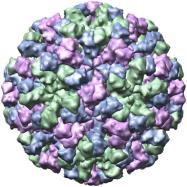
According to a report on the Pepperdine Graphic, an email was sent out to the campus last week concerning a confirmed norovirus case at the school.

We are aware of a few students who have had stomach/intestinal symptoms, but only one that has been officially diagnosed,” the Student Health Center wrote in an email. “Various viruses, bacteria and other diseases can cause gastrointestinal illnesses so someone with symptoms doesn’t necessarily have Norovirus.”

“In any community, including Pepperdine, it could potentially spread,” the email stated.


RASFF Alert – Norovirus – Razor Clams

kswfoodworld rasff

RASFF – Norovirus (GII/ 2g) in frozen razor clams (Ensis) from the Netherlands in the Netherlands

Research – MCR-1 gene found in Salmonella

Poultry Med Salmonella Campylobacter

A variant of the multidrug-resistant gene MCR-1 was detected in a Salmonella typhimurium serovar, in a healthy patient in China. The MCR-1 gene plays a key role in bacterial ability to resist colistin. Colistin is one of the last-resort antibacterial drugs and is increasingly used for treating carbapenem-resistant Enterobacteriaceae. The MCR-1 enzyme modifies the chemical structure of lipid A moiety on bacterial LPS by the addition of phosphoethanolamine, which in turn reduces the binding affinity to colistin (i.e., producing the colistin resistance).
This is the first time an MCR-1 gene has been found in Salmonella in a healthy carrier. The reaserchers called the gene MCR-1.3 as it is a variant on MCR-1, a gene discovered in 2015 in China.

Italy – Campylobacter in Italian poultry meat

Poultry Med

campy2

CDC Photo


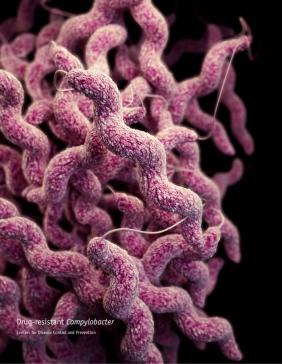
The role of poultry as a reservoir for the transmission of Campylobacter to humans has already been recognized, with 20-30% of the human infections linked to handling, preparation, and consumption of broiler meat. Official Italian data concerning the prevalence of Campylobacter spp. on poultry meats at retail are lacking.
Itlaian researchers collected qualitative and quantitative data concerning the contamination by thermophilic Campylobacters on a wide range of poultry meats marketed in Italy, evaluating the main factors influencing their prevalence and loads.  472 chicken and turkey meat samples (sectioned meats, offal, meat preparations and products) were taken from slaughterhouses, deboning plants and different retailers and submitted to detection/enumeration of Campylobacter spp. Campylobacter spp. was detected in 34.1% of the samples, with general low counts. Higher values were observed in offal (especially liver) and sectioned meats, with significantly higher rates in skin-on samples (86.8% vs 32.7%). Minced meat preparations showed lower prevalence (22.4% vs 58.3%) and counts than whole pieces. Decreasing rates were observed among slaughterhouses (80%), deboning plants (49%), butcher’s shops (37%) and large scale retailers (25%). Sectioned chicken meats were significantly more contaminated than turkey meats. Almost all the isolates were identified as C. jejuni or C. coli, with similar prevalences (18.4% and 20.5%, respectively); C. jejuni was predominant only in samples from slaughterhouses/deboning plants.


RASFF Alert – Animal Feed – Aflatoxin – White Sunflower Seeds

kswfoodworld rasff

RASFF – aflatoxins (B1 = 507.3; Tot. = 543.1 µg/kg – ppb) in white sunflower seeds from Egypt in Belgium

RASFF Alerts – Animal Feed – Salmonella – Poultry Meal – Dog Chews

kswfoodworld rasff

RASFF – Salmonella (presence /25g) in poultry meal from Spain in Spain

RASFF-Salmonella enterica ser. Livingstone (present/37.5g and present/45.5g) in dog chews from Germany in Belgium


French Polynesia – Salmonella prompts Tahiti chicken cull

Radio NZ EGGS

There has been another salmonella outbreak in French Polynesia, prompting the culling of 12,000 chickens.

A statement by the producer SCA Heia Tau Arii says tests showed the presence of salmonella in eggs which are banned from being sold.

The company in Taravao then proceeded to cull the chickens and to close the building where they had been farmed.