
Think about traffic flow in a city – there are stop signs, one-way streets, and traffic lights to organise movement across a widespread network. Now, imagine what would happen if you removed some of the traffic signals.
Among your brain’s 86 billion neurons are the brain’s own version of stop signals: inhibitory neurons that emit chemicals to help regulate the flow of ions travelling down one cell’s axon to the next neuron. Just as a city without traffic signals would experience a spike in vehicle accidents, when the brain’s inhibitory signals are weakened, activity can become unchecked, leading to a variety of disorders.
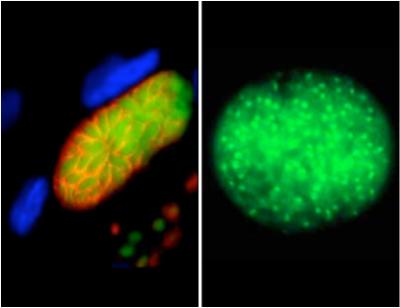
In a new study published in GLIA on March 11, Virginia Tech neuroscientists at the Fralin Biomedical Research Institute at VTC describe how the common Toxoplasma gondii parasite prompts the loss of inhibitory signalling in the brain by altering the behaviour of nearby cells called microglia.

 FoodWorld