Monthly Archives: January 2018

Canada – Updated Food Recall Warning – Imperial Caviar & Seafood brand Whitefish Roe recalled due to potential presence of dangerous bacteria

CFIA

Recall details

Ottawa, January 11, 2018 – The food recall warning issued on January 10, 2018 has been updated to include additional product information. This additional information was identified during the Canadian Food Inspection Agency’s (CFIA) food safety investigation.

Imperial Caviar & Seafood is recalling Imperial Caviar & Seafood brand Whitefish Roe from the marketplace because it may permit the growth of Clostridium botulinum. Consumers should not consume the recalled product described below.

Recalled products

Brand Name Common Name Size Code(s) on Product UPC
Imperial Caviar & Seafood Whitefish Roe 50 g 34917
BB-15-DEC-2018
1 86866 90027 9

Australia – 200 hit by gastro on Sea Princess cruise ship docking in Brisbane

Brisbane Times Norovirus Food Safety kswfoodworld

Gastro has hit about 200 passengers on board a cruise ship docking in Brisbane on Thursday morning.

The Sea Princess was returning from a two-week trip to New Zealand, which saw as much as seven per cent of those on board struck down with Norovirus.

Efforts were made to contain the outbreak, with further cleaning expected once passengers departed the 260-metre cruise ship at Hamilton’s Portside Wharf.

A Princess Cruises spokesman said the cleaning measures would delay the ship’s departure with a fresh crew of passengers on the same route later on Thursday.

The cruise saw an “elevated number” of guests suffering norovirus-induced gastro, he said.

Research – Occurrence of Campylobacter in raw chicken and beef from retail outlets in São Paulo, Brazil

WIley Online Library 


Abstract

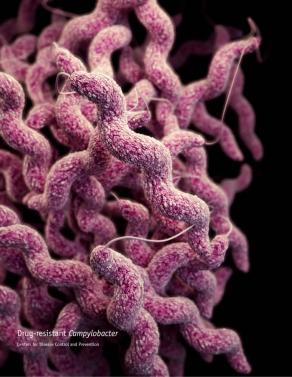
The aim of this study was to evaluate the occurrence of Campylobacter in meat samples (120 chicken and 100 beef) and determine the antimicrobial susceptibility of the isolates. A total of 220 samples from retail outlets were purchased in the city of São Paulo, Brazil. Campylobacter detection was performed according to the International Organization for Standardization (ISO) method ISO-10272-1:2006. A PCR assay based on nucleotide sequence differences in the lpxA gene was used to distinguish between C. jejuni and C. coli. Antimicrobial resistance was determined by agar disc diffusion method. Campylobacter was isolated from 17 (7.7%) of 220 samples. Breast fillets exhibited the highest contamination rate (25%; 5/20), followed by wings (15%; 6/40), whole leg (15%; 3/20), drumstick (10%; 2/20), and drumette (5%; 1/20). All beef samples were negative for Campylobacter. The most prevalent species found was C. coli, followed by C. jejuni. The isolates were commonly resistant to nalidixic acid and ciprofloxacin. Data obtained confirm the need of monitoring and control of Campylobacter in poultry production chain.

Practical applications

Campylobacter spp. cause foodborne illness in humans commonly through the consumption of contaminated poultry meat. Although Brazil is the world’s largest poultry meat exporter, data regarding this pathogen are limited in our country. In the present study, chicken cuts purchased from retail stores in São Paulo may occasionally be contaminated with Campylobacter. This underline the importance of surveillance of foodborne pathogens in retail meats, and the data can contribute to risk analyses or control measures in the meat production chain.

USA – 232 Norovirus Customers of El Toro Restaurants

Food Poison Journal 


The Health Department has more reports of ill customers from the suspected norovirus outbreaks at two El Toro restaurants. We have received reports of 232 ill customers at the Tacoma location and four at the one in University Place. We continue to receive more reports and interview more customers.

If you ate at El Toro Restaurant and became ill, contact the Health Department at food@tpchd.org, report online at www.tpchd.org/reportfoodborneillness, or call (253) 798-4712.

Research – Foodborne illness source attribution estimates for 2013 for Salmonella, Escherichia coli O157, Listeria monocytogenes, and Campylobacter using multi-year outbreak surveillance data, United States

CDC

Executive Summary

Each year in the United States an estimated 9 million people get sick, 56,000 are hospitalized, and 1,300 die of foodborne disease caused by known pathogens. These estimates help us understand the scope of this public health problem. However, to develop effective prevention measures, we need to understand the types of foods contributing to the problem.

The Interagency Food Safety Analytics Collaboration (IFSAC) is a tri-agency group created by the Centers for Disease Control and Prevention (CDC), the U.S. Food and Drug Administration (FDA), and the U.S. Department of Agriculture’s Food Safety and Inspection Service (USDA-FSIS). Based on a new method, IFSAC developed foodborne illness source attribution estimates for 2012 using outbreak data from 1998 through 2012 for four priority pathogens, Salmonella, Escherichia coli O157, Listeria monocytogenes, and Campylobacter. IFSAC described this method and the estimates for 2012 in a report and at a public meeting.

IFSAC derived the estimates for 2013 using the same method used for the 2012 estimates, with some modifications. The data came from 1,043 foodborne disease outbreaks that occurred from 1998 through 2013 and for which each confirmed or suspected implicated food fell into a single food category. The method relies most heavily on the most recent five years of outbreak data (2009–2013). Foods are categorized using a scheme IFSAC created to classify foods into 17 categories that closely align with the U.S. food regulatory agencies’ classification needs.


 

Information – What is the most poisonous toxin?

Columbia Tribune Today 


The following question, “What is the most poisonous toxin?”, comes from Allison in Mrs. Fitzpatrick’s class.

The most poisonous toxin is botulinum toxin. The toxin was discovered in Germany in the late 18th century when it caused food poisoning from a bad sausage.

Botulinum toxin is created by bacteria called clostridium botulinum under anaerobic (low oxygen) conditions. Exposure to botulinum toxin usually occurs from improperly canned food. When ingested it causes a potentially fatal illness called botulism. It doesn’t take much to be lethal — less than one nanogram. However, it is very rare, with less than one in 10 million people affected each year because high pressure and temperatures reached through boiling can kill the bacteria.

USA – Too soon to blame romaine lettuce for E. coli outbreak, CDC says

NBC News Eurofins Food Testing UK

It’s still too early to blame romaine lettuce for an outbreak of E. coli sickness that’s affected at least 24 people in the U.S. and more than 40 in Canada, the Centers for Disease Control and Prevention says.No new cases have been diagnosed since December 12, but that doesn’t mean the outbreak is over, said Ian Williams, chief of the CDC’s Outbreak Response and Prevention Branch.

USA- 2,000 7-Eleven customers possibly exposed to Hepatitis A in Utah

CNN News 

Health officials in Salt Lake County, Utah, are warning residents that an estimated 2,000 of them could have been exposed to hepatitis A at a local 7-Eleven convenience store.

People who visited the location in West Jordan between December 26 and January 3 could be at risk if they used a restroom in the store or consumed certain food items, according to the Salt Lake County Health Department.
“The possible hepatitis A exposure occurred when an infected employee worked while ill and potentially handled certain items in the store,” the department said on Sunday. The case is believed to be connected to a wider hepatitis A outbreak in the area that has been ongoing since August.
Customers who used the restroom or consumed a fountain drink, fresh fruit or food from the hot food case should contact the county health department to get information about receiving a preventive hepatitis A injection, the release said. Prepackaged items don’t pose a risk of exposure.

Canada – Updated Food Recall Warning – Imperial Caviar & Seafood brand Whitefish Roe and VIP Caviar Club brand Salmon Roe recalled due to potential presence of dangerous bacteria

CFIA

Recall details

Ottawa, January 10, 2018 – The food recall warning issued on January 3, 2018 has been updated to include additional distribution information. This additional information was identified during the Canadian Food Inspection Agency’s (CFIA) food safety investigation.

Imperial Caviar & Seafood is recalling Imperial Caviar & Seafood brand Whitefish Roe and VIP Caviar Club brand Salmon Roe from the marketplace because they may permit the growth of Clostridium botulinum. Consumers should not consume the recalled products described below.

Recalled products

Brand Name Common Name Size Code(s) on Product UPC
VIP Caviar Club Salmon Roe 50 g 27017-02 BB: 27-SEP-18 1 86866 90024 8
VIP Caviar Club Salmon Roe 50 g 19417-01 BB: 13-07-2018 1 86866 90024 8
Imperial Caviar & Seafood Whitefish Roe 50 g 17917-02 BB: 28-JUN-2018 1 86866 90027 9

USA- California Hepatitis A Outbreak Comes to Hawaii


Food Poison Journal 


The Hawaii Department of Health (DOH) is investigating two cases of hepatitis A in Kauai residents. Symptoms began from November 2017, and investigation is ongoing. The strain of the virus in both cases appears to be the same one currently circulating in California.“As our investigators continue their work, we want to remind Hawaii residents that hepatitis A vaccination is highly effective in preventing infection,” said Dr. Sarah Park, state epidemiologist. “With large, multi-state outbreaks occurring across the country, it is important that we all take precautions to prevent hepatitis A infection whether at home, work, recreating, or traveling.”