Category Archives: Uncategorized

Research – Oyster research could lead to food safety strategies

Food Safety News

Microbes battling microbes. This type of warfare is happening all around us — and even inside of us — every day. And as in every battle, there are good microbes and bad microbes, depending on what you want the outcome to be.

In this case, the bad guys are pathogens that are infecting large numbers of oyster larvae before they have a chance to grow into the oysters that so many people love to eat. They go by the names of Vibrio coralliilyticus and Vibrio tubiashii, with the first one especially harmful to oyster larvae. It’s the same vibrio that infects warm-water corals and contributes to coral bleaching around the world.

UK -TRS Jeera (Cumin) Powder and Dhania (Coriander) Powder recalled due to the presence of salmonella

FSA

TRS Wholesale Company Ltd is recalling its Jeera (Cumin) Powder and Dhania (Coriander) Powder because salmonella has been detected in the products.

Risk

Salmonella is a bacterium that can cause food poisoning.

Product details

  • TRS Jeera Powder
    Pack size:  100g
    Batch no: P353340
    ‘Best before’ date:  31 December 2017
  • TRS Dhania Powder
    Pack size:  100g
    Batch no: A481514
    ‘Best before’ end:  End December 2017


Australia -More gastro cases linked to Enlighten night noodle market

The Canberra Times

At least 27 people have reported to ACT Health after developing food poisoning possibly linked to a stall at the night noodle markets.

On March 11,  ACT Health notified the public of “several” cases of  gastroenteritis connected to a Canberra-based premises serving food at the market.

Research -The effect of temperature on different Salmonella serotypes during warm seasons in a Mediterranean climate city, Adelaide, Australia

Epidemiology and Infection

Changing trends in foodborne disease are influenced by many factors, including temperature. Globally and in Australia, warmer ambient temperatures are projected to rise if climate change continues. Salmonella spp. are a temperature-sensitive pathogen and rising temperature can have a substantial effect on disease burden affecting human health. We examined the relationship between temperature and Salmonella spp. and serotype notifications in Adelaide, Australia. Time-series Poisson regression models were fit to estimate the effect of temperature during warmer months on Salmonella spp. and serotype cases notified from 1990 to 2012. Long-term trends, seasonality, autocorrelation and lagged effects were included in the statistical models. Daily Salmonella spp. counts increased by 1·3% [incidence rate ratio (IRR) 1·013, 95% confidence interval (CI) 1·008–1·019] per 1 °C rise in temperature in the warm season with greater increases observed in specific serotype and phage-type cases ranging from 3·4% (IRR 1·034, 95% CI 1·008–1·061) to 4·4% (IRR 1·044, 95% CI 1·024–1·064). We observed increased cases of S. Typhimurium PT9 and S. Typhimurium PT108 notifications above a threshold of 39 °C. This study has identified the impact of warm season temperature on different Salmonella spp. strains and confirms higher temperature has a greater effect on phage-type notifications. The findings will contribute targeted information for public health policy interventions, including food safety programmes during warmer weather.

Research – Denmark -Lowest number of salmonella cases in 30 years, but campylobacter remains high


Lowest number of salmonella cases in 30 years, but campylobacter remains high

A total of 925 patients were notified with salmonella in 2015. For the first time in 30 years, this number is lower than 1,000. The positive trend seen these past years with a declining number of affected persons hence continues. More than half of the patients were infected abroad.

Salmonella Enteritidis, which was previously the most common salmonella type, is now rare in Denmark. Previously, this type was found in Danish eggs and chickens, but it has now been nearly eradicated from Danish food production. Nevertheless, the other common salmonella type, Salmonella Typhimurium, and its monophasic variant are still seen frequently in Danish food products. Unusually, we only recorded few outbreaks of salmonella in 2014 and nearly none in 2015.

In contrast hereto, many Danes still fall victim to campylobacter infections. Last year, more than 4,300 cases were recorded; this constitutes an increase with respect to previous years. The increase should, however, be seen on the basis of the facts that new methods for the detection of campylobacter have been introduced and that the information can now be drawn automatically from the laboratories – both of which have contributed to registration of more patients; and the real infection pressure is probably largely unchanged.

For a number of years, the campylobacter bacterium has caused more intestinal infections than any other bacteria – a situation that is seen also in the remaining European countries. In Denmark, approx. 4 times as many fall ill due to campylobacter as to salmonella. About a third of these patients are infected abroad. It is still not fully established how many sources of infection there are, or how we may put a stop to campylobacter infections. Several research project to enhance our understanding of this issue are currently ongoing in Denmark. However, there is consensus that the primary source of infection is chicken meat, and observing the classic kitchen hygiene precautions has considerable effect in the individual kitchens. In particular, caution is warranted when handling raw chicken meat – a few drops of raw meat juice that accidentally end up in a green salad, for example, may be sufficient to cause a campylobacter infection.

For further information, please see this week’s issue of EPI-NEWS 11/2016 which also includes reports on last year’s infections with the intestinal bacteria Yersinia enterocolitica.


Research -Selection of population controls for a Salmonella case-control study in the UK using a market research panel and web-survey provides time and resource savings

Epidemiology and Infection

Timely recruitment of population controls in infectious disease outbreak investigations is challenging. We evaluated the timeliness and cost of using a market research panel as a sampling frame for recruiting controls in a case-control study during an outbreak of Salmonella Mikawasima in the UK in 2013. We deployed a web-survey by email to targeted members of a market research panel (panel controls) in parallel to the outbreak control team interviewing randomly selected public health staff by telephone and completing paper-based questionnaires (staff controls). Recruitment and completion of exposure history web-surveys for panel controls (n = 123) took 14 h compared to 15 days for staff controls (n = 82). The average staff-time cost per questionnaire for staff controls was £13·13 compared to an invoiced cost of £3·60 per panel control. Differences in the distribution of some exposures existed between these control groups but case-control studies using each group found that illness was associated with consumption of chicken outside of the home and chicken from local butchers. Recruiting market research panel controls offers time and resource savings. More rapid investigations would enable more prompt implementation of control measures. We recommend that this method of recruiting controls is considered in future investigations and assessed further to better understand strengths and limitations.

USA -At least 15 with E. coli O157 tied to Oak Leaf Farm

E.coli Blog

The Connecticut State Department of Public Health (DPH) today issued the following update on the E. coli outbreak linked to the Oak Leaf Farm in Lebanon, CT:

As of 1:00 p.m. today, DPH is investigating 15 confirmed cases of E. coli O157 infection.  The number of cases could increase in the near future as DPH is actively identifying individuals who were not initially reported.

So far, investigators have been able to link 14 of these cases to Oak Leaf Farm.  The patients range in age from 1-44 years old, with a median age of six.  In total, five patients have been hospitalized with three still in the hospital.  Two of the hospitalized patients have been diagnosed with Hemolytic Uremic Syndrome (HUS), as first reported last week.

USA -Chipotle E. coli Outbreak Tops 60 in 14 States

Food Poisoning Bulletin

The initial, larger STEC O26 outbreak was first detected by public health officials in Washington and Oregon through local foodborne disease surveillance. In late October 2015, officials in those states detected an increase in illness and after interviewing ill people, they determined that illness was likely linked to eating at multiple Chipotle Mexican Grill locations.

PFGE results from ill people in Washington and Oregon indicated that people were infected with a rare strain of STEC O26. A search of the PulseNet database identified illnesses in other states, and these ill people were added to the total case count.

USA -Pet Food – Voluntary Recalls Frozen Dog Duckbatch Sliders Due to Possible Salmonella and Listeria Monocytogenes Health Risk

FDA

Smallbatch Pets Inc. is voluntarily recalling one lot of frozen dog duckbatch sliders due to their potential to be contaminated with Salmonella and Listeria monocytogenes.

Salmonella and Listeria monocytogenes can affect animals eating the products and there is risk to humans from handling contaminated pet products, especially if they have not thoroughly washed their hands after having contact with the products or any surfaces exposed to these products.

Healthy people infected with Salmonella and Listeria monocytogenes should monitor themselves for some or all of the following symptoms: nausea, vomiting, diarrhea or bloody diarrhea, abdominal cramping and fever. Rarely, Salmonella and Listeria monocytogenes can result in more serious ailments, including arterial infections, endocarditis, arthritis, muscle pain, eye irritation, and urinary tract symptoms. Consumers exhibiting these signs after having contact with this product should contact their healthcare providers.

Pets with Salmonella and Listeria monocytogenes infections may be lethargic and have diarrhea or bloody diarrhea, fever, and vomiting. Some pets will have only decreased appetite, fever and abdominal pain. Infected but otherwise healthy pets can be carriers and infect other animals or humans. If your pet has consumed the recalled product and has these symptoms, please contact your veterinarian.

No pet or consumer illnesses from this product have been reported to date. However, because of their commitment to safety and quality, Smallbatch Pets is conducting a voluntary recall of this product. Consumers should also follow the Simple Handling Tips published on the Smallbatch Pets package, when disposing of the affected product.

The potentially affected lots of dog duckbatch sliders were distributed to retail pet food stores in States CA, CO, OR, WA through pet food retailers/distributors. Eighty cases of this product were sold between the dates of 2/23/16 – 3/10/16.

The affected products are sold frozen in 3lbs. bags. The products affected by this recall are identified with the following manufacturing codes:

LOT # Best By Date UPC
CO27 01/27/17 713757339001

The “Best By” date is located on the back of the package below the seal.

This recall was initiated after routine testing by the Food and Drug Administration of a 3lb bag of dog duckbatch sliders, that was collected at a distributor, revealed the presence of Salmonella and Listeria monocytogenes.

This recall is being made with the knowledge of the U.S. Food and Drug Administration.

Consumers who have purchased the above lots of dog duck sliders are urged to stop feeding them and return product to place of purchase for a full refund or dispose of them immediately.

We do apologize for any inconvenience and for all consumer questions, please call us at 888-507-2712, Monday – Friday, 9:00AM – 4:00PM PST or email us at info@smallbatchpets.com.

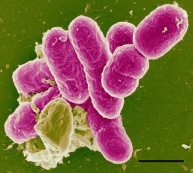
USA- Shigella -152 with Shigella in Illinois

Shigella Blog shigella

The Winnebago County Health Department is reporting additional cases of Shigellosis in our community, bringing the new total to 152, since October 2015. The majority of these cases are isolated and have impacted in children in daycare and elementary schools.

Todd Kisner with the Department’s Center for Health Protection says the best way to prevent the disease, which can cause diarrhea and vomiting, is to enforce routine handwashing, particularly among children.

“When it comes to children, supervision of handwashing may be more appropriate now because not all kids are perfect handwashers yet,” he says.

While an increase in cases is likely over the next few weeks, Kisner says it’s due to doctors performing more routine testing. However, he addds that Kisner says with effective hygiene practices, lingering shigella bacteria won’t live long enough to spread further.