Category Archives: Uncategorized

UK -Further News on Cumin and Coriander -Salmonella

Rochdale Online

TRS Jeera Powder and TRS Dhania Powder (cumin and coriander powder) are being recalled after salmonella was detected.

TRS Wholesale Company Ltd, the manufacturer, will be displaying point-of-sale notices in all stores telling consumers why the products are being recalled and what to do if they have bought them.

Salmonella bacteria can cause food poisoning. Symptoms include diarrhoea, stomach cramps and sometimes vomiting and fever. On average, it takes from 12 to 72 hours for the symptoms to develop after swallowing an infectious dose of salmonella.

Dehydration caused by the illness can be life-threatening.


Research -Comparing listeriosis risks in at-risk populations using a user-friendly quantitative microbial risk assessment tool and epidemiological data

Cambridge University Press

Although infection by the pathogenic bacterium Listeria monocytogenes is relatively rare, consequences can be severe, with a high case-fatality rate in vulnerable populations. A quantitative, probabilistic risk assessment tool was developed to compare estimates of the number of invasive listeriosis cases in vulnerable Canadian subpopulations given consumption of contaminated ready-to-eat delicatessen meats and hot dogs, under various user-defined scenarios. The model incorporates variability and uncertainty through Monte Carlo simulation. Processes considered within the model include cross-contamination, growth, risk factor prevalence, subpopulation susceptibilities, and thermal inactivation. Hypothetical contamination events were simulated. Results demonstrated varying risk depending on the consumer risk factors and implicated product (turkey delicatessen meat without growth inhibitors ranked highest for this scenario). The majority (80%) of listeriosis cases were predicted in at-risk subpopulations comprising only 20% of the total Canadian population, with the greatest number of predicted cases in the subpopulation with dialysis and/or liver disease. This tool can be used to simulate conditions and outcomes under different scenarios, such as a contamination event and/or outbreak, to inform public health interventions.

Research – Biofilm Formation, Virulence Gene Profiles, and Antimicrobial Resistance of Nine Serogroups of Non-O157 Shiga Toxin–Producing Escherichia coli

Mary Ann Leibert

The objectives of this study were to characterize the phenotype and genotype of 36 non-O157 Shiga toxin–producing Escherichia coli (STEC) strains isolated from humans, ovines, or bovines, including the top 6 (O26, O45, O103, O111, O121, and O145) and three other serogroups implicated in serious illness (O91, O113, and O128). Biofilms were formed by all strains with intermediate to strong biofilm producers (n = 24) more common at 22°C than at 37°C (p < 0.001) and 48 and 72 h (p < 0.001) than 24 h of incubation time. Biofilm-forming potential differed by serogroup and origin with O113 and human strains exhibiting the highest potential (p < 0.001). Biofilm-associated genes, csgA/csgD/crl/fimH (100%), flu (94%), rpoS (92%), ehaAα (89%), and cah (72%), were most prevalent, while mlrA (22%) and ehaAβ (14%) were least prevalent, although there was no clear compliment of genes associated with strains exhibiting the greatest biofilm-forming capacity. Among 12 virulence genes screened, iha and ehxA were present in 92% of the strains. The occurrence of stx1 in the top 6 serogroups (8/12, 67%) did not differ (p = 0.8) from other serogroups (17/24, 71%), but stx2 was less likely (confidence interval [CI] = 0.14–1.12; p = 0.04) to be in the former (9/24, 38%) than the latter (9/12, 75%). Excluding serogroups, O91 and O121, at least one strain per serogroup was resistant to between three and six antimicrobials. Streptomycin (31%), sulfisoxazole (31%), and tetracycline (25%) resistance was most common and was 35–50% less likely (p < 0.05) in human than animal strains. All non-O157 STEC strains were able to form biofilms on an abiotic surface, with some exhibiting resistance to multiple antimicrobials. Potential as a reservoir of antimicrobial resistance genes may be another hazard of biofilms in food-processing plants. As a result, future strategies to control these pathogens may include measures to prevent biofilms.

 

Research – Japan -Aflatoxin Exposure and Associated Human Health Effects, a Review of Epidemiological Studies

FSCJP Mould

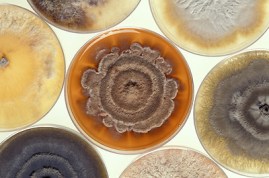
Aflatoxins are fungal toxins that possess acute life threatening toxicity, carcinogenic properties and other potential chronic adverse effects. Dietary exposure to aflatoxins is considered a major public health concern, especially for subsistence farming communities in sub-Saharan Africa and South Asia, where dietary staple food crops such as groundnuts and maize are often highly contaminated with aflatoxin due to hot and humid climates and poor storage, together with low awareness of risk and lack of enforcement of regulatory limits. Biomarkers have been developed and applied in many epidemiological studies assessing aflatoxin exposure and the associated health effects in these high-risk population groups. This review discusses the recent epidemiological evidence for aflatoxin exposure, co-exposure with other mycotoxins and associated health effects in order to provide evidence on risk assessment, and highlight areas where further research is necessary. Aflatoxin exposure can occur at any stage of life and is a major risk factor for hepatocellular carcinoma, especially when hepatitis B infection is present. Recent evidence suggests that aflatoxin may be an underlying determinant of stunted child growth, and may lower cell-mediated immunity, thereby increasing disease susceptibility. However, a causal relationship between aflatoxin exposure and these latter adverse health outcomes has not been established, and the biological mechanisms for these have not been elucidated, prompting further research. Furthermore, there is a dearth of information regarding the health effects of co-exposure to aflatoxin with other mycotoxins. Recent developments of biomarkers provide opportunities for important future research in this area.


USA -E. coli Outbreak Linked to Oak Leaf Farm in CT Grows

Food Poisoning Bulletin Ecoli Istock

The Connecticut State Department of Public Health (DPH) issued an update on the E. coli outbreak linked to Oak Leaf Farm in Lebanon. As of 1:00 p.m. on March 28, 2016, there are 15 confirmed cases of E. coli O157 infection. The number of cases could increase in the next few days. DPH is actively identifying people who were not initially included in the outbreak count.

India -Hyderabad Water Board probe E.coli bacteria in water

Deccan Chronicle

Hyderabad: In response to a DC report about the city’s water containing faecal bacteria or E.coli published on March 27, Water Board managing director B. Janardhan Reddy reviewed the quality of drinking water on Monday.

“Complaints about bad water in Kameshwar Rao Nagar of Saroor-nagar, Rajivnagar and Ambedkarnagar of Al-wal, Prince Bodyguard Lane of Malakpet and Church Colony, Gokul-nagar of Ramanthapur areas was rectified immediately and pres-ently potable water is being supplied,” the Water Board said.

According to Board officials, the Institute of Health Systems had tested 11,247 samples up to March 24. Seven were found to be unclean.

New Zealand -E coli in Patea’s water supply

RNZ

A South Taranaki District Council spokesperson said it had begun chlorinating the town’s water supply after the bacteria was discovered during routine testing on Monday.

E coli causes cause stomach cramps, diarrhoea, nausea, vomiting, and fevers, while severe cases can lead to kidney failure.

Patea’s 1100 residents were advised to boil all water used for drinking, brushing teeth or food preparation until further notice.

The discovery at Patea came only weeks after the bug was found in the water supply in the small settlement of Toko.

Research -Swiss study finds E. coli bacteria in ice cubes

ecoliThe Local

More than a quarter of ice cubes used in Swiss bars and restaurants contain faecal bacteria such as E. coli, according to a nationwide study by the Swiss cantonal chemists association (VKCS).

In an analysis of ice cube samples collected from bars, restaurants and canteens around Switzerland last year, 26 percent fell short of legal health standards, said Sunday paper SonntagsBlick, which released the figure prior to the report’s official publication.

Scotland -E. coli contamination of fresh produce

HPS Ecoli Istock

On 23 March, Food Standards Scotland (FSS) published two research project reports investigating the survival of microbial contamination during the production of fresh produce and the effectiveness of controls to minimise the risk to the consumer.

  • The first project (available at http://www.foodstandards.gov.scot/node/12734) was commissioned in response to an outbreak of Escherichia coli O157 in Great Britain during 2011, associated with the handling and consumption of soil covered vegetables (see Current note 45/4002 at http://www.hps.scot.nhs.uk/ewr/redirect.aspx?id=49297) and simulated a ‘worst case scenario’ contamination event occurring to growing crops a week prior to harvest. The research showed that the commercial processes used to clean, prepare and store vegetables did reduce contamination, however in the unlikely event of a large crop contamination occurring close to harvest, some contamination might remain.
  • The second project (available at http://www.foodstandards.gov.scot/node/12735) was commissioned as a result of an E. coli O104 outbreak in Europe in 2011, where consumption of sprouts grown from contaminated seeds was associated with illness (see Current note 46/2002 at http://www.hps.scot.nhs.uk/ewr/redirect.aspx?id=51465). FSS investigated four different treatments that could be used to reduce contamination when sprouting seeds at home. A hot water (90°C for two minutes) treatment was found to be the most effective, although it was not 100% effective when the seeds were heavily contaminated.

The findings from both of these projects will be used by FSS to inform future risk assessments and food safety advice in relation to fresh produce. FSS advises good food hygiene practices in the kitchen (see http://www.foodstandards.gov.scot/food-safety-standards/food-safety-hygiene) especially with fresh produce that tends to have more soil attached to it. [Source: FSS News Release, 23 March 2016. http://www.foodstandards.gov.scot/news/fss-research-contamination-fresh-pro…]

Vol: 50 No: 13 Year: 2016 Type: Current Note


UK -Baketime Ltd recalls various branded biscuit, snack and confectionery products

FSA

Baketime Ltd is recalling various branded biscuit, snack and confectionery products on a precautionary basis as they have been manufactured in unhygienic conditions. These products are sold by Aldi, Asvina, Booker and LBV.