Category Archives: Uncategorized

RASFF Alert – E.coli – Sweet Basil

RASFFa

RASFF-Salmonella and high count of Escherichia coli (2300; 500; 320; 120; 120 CFU/g) in chilled sweet basil from Laos in the UK

RASFF Alerts – Salmonella – Sweet Basil – Spiced Turkey – Peppermint – Chicken

RASFFa

RASFF-Salmonella and high count of Escherichia coli (2300; 500; 320; 120; 120 CFU/g) in chilled sweet basil from Laos in the UK

RASFF-Salmonella (in 4 out of 5 samples /25g) in frozen boneless skinless spiced turkey half breasts from Brazil in the UK

RASFF-Salmonella (presence /25g) in peppermint from Laos  in the Netherlands

RASFF-Salmonella enteritidis (presence /25g) in raw chicken breast fillet from Poland in the UK

RASFF Alert – Animal Feed -Salmonella – Sunflower Cake

RASFFa

RASFF-Salmonella Senftenberg (presence /25g) in organic sunflower cake from Italy in Sweden

Information -Joint ECDC/EFSA rapid outbreak assessment: multi-country outbreak of Shiga toxin-producing Escherichia coli infection associated with haemolytic uraemic syndrome in Romania and Italy

EFSA

An outbreak of Shiga toxin-producing Escherichia coli (STEC) infection associated with haemolytic uraemic syndrome (HUS) and affecting mostly young children has been reported in February and March in Romania. Italy reported one HUS case with an epidemiological link to Romania on 21 March 2016. Overall, 25 cases have been identified as associated with this multi-country outbreak, of which 19 developed HUS and three of these died.

Information – Multi-country outbreak of Shiga toxin-producing Escherichia coli infection associated with haemolytic uraemic syndrome

EFSA

A multi-country outbreak of Shiga toxin-producing Escherichia coli (STEC) infection associated with haemolytic uraemic syndrome (HUS) and affecting mostly young children has been reported in the last two months in Romania. Italy reported one related HUS case through the Early Warning and Response System (EWRS) on 21 March 2016. Overall, 25 cases were identified as associated with this outbreak, of which 19 developed HUS and three died. Twelve cases had microbiological and/or serological evidence of STEC O26 infection; 13 additional cases met the probable case definition by developing HUS, testing positive for another STEC O serogroup (O157) or by testing positive by PCR for stx1 and/or stx2 and eae genes. Information collected from patients pointed towards a milk processing establishment (the Romanian operator) as a possible source of infection. The implicated milk processing establishment exported a particular type of cheese to four EU countries (Belgium, Germany, Italy and Spain) and one Italian importer further distributed this product to France and Germany. In Romania, one fresh cheese product made of cow’s milk produced by the Romanian operator tested positive for E. coli O26 not possessing stx virulence genes. Other dairy products produced by the Romanian operator tested positive for E. coli virulence genes stx1, stx2 and eae. In Italy, a STEC O26 strain (positive for stx1, stx2 and eae) was isolated from a sample of the cheese that had been produced by the Romanian operator, imported from Romania and consumed by the Italian child that later developed HUS (stool samples negative for STEC but serum samples positive for the presence of antibodies against the LPS of E. coli O26). The PFGE analysis suggests the potential involvement of multiple strains from a common source or from multiple sources. Multi-strain STEC outbreaks have been reported in the past [1]. Therefore, it cannot be excluded that the cases belong to a single outbreak associated with a source contaminated by different strains. The epidemiological evidence linking some of the Romanian cases and the Italian case to the Romanian operator, in addition to the microbiological findings, are consistent with the hypothesis of a multi-strain outbreak. The last Romanian case associated with this outbreak had onset of symptoms on 14 March. The cheese consumed by the Italian case was imported in Italy from Romania on 1 March and had been produced on 18 February 2016 with an expiry date of 18 April 2016. A recall of the company products was undertaken in Romania as of 5 March and in Italy as of 15 March. Other Member States subsequently undertook recalls. According to information available at the time of conducting this assessment, the withdrawal of potentially contaminated dairy products following a recall has been limited in Member States, with the exception of Romania. It is therefore possible that affected products are still present in households, and detection of new cases cannot be excluded. In order to minimise the spread of the infection and investigate possible new cases in a timely manner, Romania, Italy and other Member States that are possibly involved could consider enhancing surveillance for HUS and STEC cases. Continued enhanced surveillance for HUS in children on a routine basis in Romania could provide further early warning of ongoing or new contamination events. The questionnaire used to interview some of the Romanian cases and the Italian case is available in English from ECDC upon request. If new cases are identified, these should be reported to the Epidemic Intelligence Information System for food- and waterborne diseases (EPIS-FWD). In such situations public health authorities could also consider conducting an epidemiological analytical study and including further food and environmental sampling in suspect premises to identify the vehicle of Multi-country outbreak of infection. Whole genome sequencing (WGS) on isolates detected so far should be carried out to provide more detailed information about possible links between cases. The investigation of the European dimension of this cross-border foodborne outbreak has demonstrated the added value of collaboration between Romanian and Italian public health and food authorities as well as ECDC and EFSA in enabling appropriate risk assessment and response.


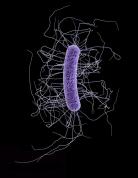
USA -Issues an Alert on Dried Fish Due To Possible Health Risk – Clostridium botulinum

FDA closta

WD Import and Export Inc. located at 4703 2nd Ave, Brooklyn, NY 11232 is recalling its bulk unlabeled cardboard boxes of Dried Yellow Fish because it has the potential to be contaminated with Clostridium botulinum, a bacterium which can cause life threatening illness or death. Consumers are warned not to use the product even if it does not look or smell spoiled.

Botulism, a potential fatal form of food poisoning, can cause the following symptoms: general weakness, dizziness, blurred or double-vision and trouble with speaking or swallowing. Difficulty in breathing weakness of other muscles abdominal distention and constipation may also be common symptoms. People experiencing these problems should seek immediate medical attention.

The product, Dried Yellow Fish was sold in bulk unlabeled and un-coded cardboard boxes and is a product of China. The product was sold in retail stores in New York City.

The potential for contamination was noted after routine sampling by New York State Department of Agriculture and Markets Food Inspection and subsequent analysis of the product by Food Laboratory personnel confirming that the fish was not properly eviscerated prior to processing.

No illnesses have been reported to date in connection with this problem. Consumers who have purchased Dried Fish are advised not to eat it, but should return it to the place of purchase. Consumers with questions may contact the company at 718-567-3339.

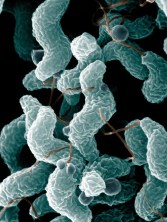
Research -Genetic Diversity of Campylobacter jejuni and Campylobacter coli Isolates from Conventional Broiler Flocks and the Impacts of Sampling Strategy and Laboratory Method

American Society for Microbiology Campylobacter

The genetic diversity of Campylobacter jejuni and Campylobacter coli isolates from commercial broiler farms was examined by multilocus sequence typing (MLST), with an assessment of the impact of the sample type and laboratory method on the genotypes of Campylobacter isolated. A total of 645 C. jejuni and 106 C. coli isolates were obtained from 32 flocks and 17 farms, with 47 sequence types (STs) identified. The Campylobacter jejuni isolates obtained by different sampling approaches and laboratory methods were very similar, with the same STs identified at similar frequencies, and had no major effect on the genetic profile of Campylobacter population in broiler flocks at the farm level. For C. coli, the results were more equivocal. While some STs were widely distributed within and among farms and flocks, analysis of molecular variance (AMOVA) revealed a high degree of genetic diversity among farms for C. jejuni, where farm effects accounted for 70.5% of variance, and among flocks from the same farm (9.9% of variance for C. jejuni and 64.1% for C. coli). These results show the complexity of the population structure of Campylobacter in broiler production and that commercial broiler farms provide an ecological niche for a wide diversity of genotypes. The genetic diversity of C. jejuni isolates among broiler farms should be taken into account when designing studies to understand Campylobacter populations in broiler production and the impact of interventions. We provide evidence that supports synthesis of studies on C. jejuni populations even when laboratory and sampling methods are not identical.

UK- Wales -Although not a Virus as Stated – 7 Tested Positive for Cryptosporidium

South Wales Argos 763px-Cryptosporidium_parvum_01

A MONMOUTHSHIRE farm has cancelled a series of open day visits for primary school children following the outbreak of a diarrhoea-causing virus.

Public Health Wales along with Torfaen and Monmouthshire councils are continuing to investigate an outbreak of cryptosporidium associated with Coleg Gwent’s farm in Usk.

Seven people have tested positive for cryptosporidium and 16 others are suspected of having the bug after regular attendance at the farm or contact with those who have.

Information -Deadly E Coli and Salmonella bacteria ‘lurk in carpets posing serious health risk’

The Mirror Online

Deadly E Coli and salmonella bacteria could be lurking in people’s carpets posing a serious health risk, experts warn.

Asthma and eczema bugs could also be living in unwashed domestic floor coverings, according to new research.

The study found 26.2million adults (41%) have never washed their carpets, leading to a build up of germs and dust mite feaces.

It means that those living with unwashed carpets are at risk to a host of hazards including dust mites and bacteria that could lead to E.coli and salmonella.

The investigation found that though 79% knew nasty bacteria and allergens could live in bedsheets, 63% had no idea they could be lurking in carpets too

Malaysia -Tapah school food poisoning caused by salmonella contamination

New Straits Times

IPOH: Analysis done on food samples taken from Sekolah Menengah Sains Tapah dining hall showed that the food poisoning incident on Sunday was caused by salmonella contamination of the chicken used in the curry.

State Health director Datuk Dr Juita Ghazalie said the ‘Hazard Analysis and Critical Control Point’ test done showed that the chickens were not properly stored, allowing the bacteria to breed.

“The chicken meat was not kept at – 6 degree Celsius temperature for 32 hours before being cooked.

“During that period, salmonella bacteria could grow exponentially and cause food poisoning,” she said.