Category Archives: Uncategorized

Information -Fish Ciguatera Poisoning

NSW Government

Ciguatera poisoning is a form of food poisoning. It is caused by eating warm water finfish that carry ciguatera poison (toxin). Small plant-eating fish eat toxic algae and in turn are eaten by larger, predatory fish, like Spanish Mackerel.

USA -Reser’s Fine Foods recalls deli salads of various brands – Listeria monocytogenes

Food Safety News

Reser’s Fine Foods, Inc. of Beaverton, OR, is recalling 19 refrigerated salad products from 29 states in the U.S. and one Canadian province because they might be contaminated with Listeria monocytogenes.

Reser’s initiated the recall April 10 after notification from one of its ingredient suppliers that one lot of its fresh-cut onions could be contaminated with the pathogen.

Research-Inhibition of Listeria monocytogenes in Fresh Cheese Using Chitosan-Grafted Lactic Acid Packaging

Molecules

A chitosan from biologically obtained chitin was successfully grafted with d,l-lactic acid (LA) in aqueous media using p-toluenesulfonic acid as catalyst to obtain a non-toxic, biodegradable packaging material that was characterized using scanning electron microscopy, water vapor permeability, and relative humidity (RH) losses. Additionally, the grafting in chitosan with LA produced films with improved mechanical properties. This material successfully extended the shelf life of fresh cheese and inhibited the growth of Listeria monocytogenes during 14 days at 4 °C and 22% RH, whereby inoculated samples with chitosan-g-LA packaging presented full bacterial inhibition. The results were compared to control samples and commercial low-density polyethylene packaging.

Europe -Multi-country outbreak of Shiga toxin-producing Escherichia coli infection associated with haemolytic uraemic syndrome

EFSA

A multi-country outbreak of Shiga toxin-producing Escherichia coli (STEC) infection associated with haemolytic uraemic syndrome (HUS) and affecting mostly young children has been reported in the last two months in Romania. Italy reported one related HUS case through the Early Warning and Response System (EWRS) on 21 March 2016. Overall, 25 cases were identified as associated with this outbreak, of which 19 developed HUS and three died. Twelve cases had microbiological and/or serological evidence of STEC O26 infection; 13 additional cases met the probable case definition by developing HUS, testing positive for another STEC O serogroup (O157) or by testing positive by PCR for stx1 and/or stx2 and eae genes. Information collected from patients pointed towards a milk processing establishment (the Romanian operator) as a possible source of infection. The implicated milk processing establishment exported a particular type of cheese to four EU countries (Belgium, Germany, Italy and Spain) and one Italian importer further distributed this product to France and Germany. In Romania, one fresh cheese product made of cow’s milk produced by the Romanian operator tested positive for E. coli O26 not possessing stx virulence genes. Other dairy products produced by the Romanian operator tested positive for E. coli virulence genes stx1, stx2 and eae. In Italy, a STEC O26 strain (positive for stx1, stx2 and eae) was isolated from a sample of the cheese that had been produced by the Romanian operator, imported from Romania and consumed by the Italian child that later developed HUS (stool samples negative for STEC but serum samples positive for the presence of antibodies against the LPS of E. coli O26). The PFGE analysis suggests the potential involvement of multiple strains from a common source or from multiple sources. Multi-strain STEC outbreaks have been reported in the past [1]. Therefore, it cannot be excluded that the cases belong to a single outbreak associated with a source contaminated by different strains. The epidemiological evidence linking some of the Romanian cases and the Italian case to the Romanian operator, in addition to the microbiological findings, are consistent with the hypothesis of a multi-strain outbreak. The last Romanian case associated with this outbreak had onset of symptoms on 14 March. The cheese consumed by the Italian case was imported in Italy from Romania on 1 March and had been produced on 18 February 2016 with an expiry date of 18 April 2016. A recall of the company products was undertaken in Romania as of 5 March and in Italy as of 15 March. Other Member States subsequently undertook recalls. According to information available at the time of conducting this assessment, the withdrawal of potentially contaminated dairy products following a recall has been limited in Member States, with the exception of Romania. It is therefore possible that affected products are still present in households, and detection of new cases cannot be excluded. In order to minimise the spread of the infection and investigate possible new cases in a timely manner, Romania, Italy and other Member States that are possibly involved could consider enhancing surveillance for HUS and STEC cases. Continued enhanced surveillance for HUS in children on a routine basis in Romania could provide further early warning of ongoing or new contamination events. The questionnaire used to interview some of the Romanian cases and the Italian case is available in English from ECDC upon request. If new cases are identified, these should be reported to the Epidemic Intelligence Information System for food- and waterborne diseases (EPIS-FWD). In such situations public health authorities could also consider conducting an epidemiological analytical study and including further food and environmental sampling in suspect premises to identify the vehicle of Multi-country outbreak of infection. Whole genome sequencing (WGS) on isolates detected so far should be carried out to provide more detailed information about possible links between cases. The investigation of the European dimension of this cross-border foodborne outbreak has demonstrated the added value of collaboration between Romanian and Italian public health and food authorities as well as ECDC and EFSA in enabling appropriate risk assessment and response.

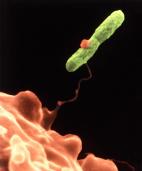
 

USA -Legionnaires Disease Case at IU Health Ball Memorial Hospital

Food Poisoning Bulletin legionellacA patient was sickened with Legionnaires’ Disease at the IU Health Ball Memorial Hospital in Muncie, Indiana last week. The illness was transmitted through the water in the hospital.


The IU Health Ball Memorial Hospital Chief Operating Officer and Chief Medical Officer said that the results were positive for the illness. The patient is very ill, but the hospital would not comment further on his or her current condition. Water samples have been sent for testing, and the hospital has hired an expert to help control the risk of further infections.

USA -Fresh from Tennessee: Raw Milk Can be Hazardous to Your Health

Food Poisoning Journal imagesCAZ9J1WP

Milk, whether it comes from seemingly healthy cows, goats or any other animal, can cause serious health problems, including death, if it has not been pasteurized to kill harmful bacteria. This reminder from the Tennessee Department of Health comes following the Centers for Disease Control and Prevention’s announcement regarding hospitalizations and a death from Listeria infections linked to people drinking raw milk from a Pennsylvania dairy.

Tennessee Department of Health Commissioner John Dreyzehner, MD, MPH, suggests those who perceive raw milk as having significant health benefits compared to pasteurized milk should understand the risks.

“Consuming raw milk believing it’s healthier than pasteurized milk is a perilous risk that shakes off the possibility of a range of serious and occasionally fatal illnesses for the individuals and anyone they share it with,” said TDH Commissioner John Dreyzehner, MD, MPH. “Our best choice for healthy, nutritious milk is the pasteurized kind. Even if one believes there are health benefits, an upside, is it worth taking a chance on the downside risk of a serious illness, especially in a child?”

RASFF Alerts -Aflatoxin – Peanuts – Hazelnuts – Chilli Powder – Berbere Spice Mix – Whole Chilli – Egusi Seeds

RASFFa

RASFF-aflatoxins (Tot. = 5.2 µg/kg – ppb) in blanched peanuts from China in France

RASFF-aflatoxins (B1 = 14.98; Tot. = 18.62 µg/kg – ppb) in roasted hazelnut kernels from Turkey in Germany

RASFF-aflatoxins (B1 = 8.4 µg/kg – ppb) in chilli powder from India in the UK

RASFF-aflatoxins (B1 = 8.79; Tot. = 20.83 µg/kg – ppb) and ochratoxin A (305.9 µg/kg – ppb) in berbere spice mixture from Ethiopia  in Germany

RASFF-aflatoxins (B1 = 10.6; Tot. = 10.8 µg/kg – ppb) in whole chilli from India in the UK

RASFF-aflatoxins (B1 = 3.3; Tot. = 4 µg/kg – ppb) in egusi seeds from Ghana  in the UK

RASFF-aflatoxins (B1 = 51; Tot. = 56 µg/kg – ppb) in pistachios in shell from the United States in Spain


RASFF Alert – Ochratoxin -Raisins

RASFFa

RASFF-ochratoxin A (28; 26; 30 µg/kg – ppb) in raisins from Uzbekistan in Lithuania

RASFF Alert – Norovirus -Oysters

RASFFa

RASFF-norovirus (GII) in live oysters (Crassostrea gigas) from France in Italy

RASFF Alert -Listeria monocytogenes – Sandwich Kebab

RASFFa

RASFF – Listeria monocytogenes (n=5, c=4 /25g) in chilled sandwich kebab with garlic sauce from the Netherlands in the Netherlands