Category Archives: Uncategorized

USA -Oahu Hepatitis A Outbreak his 53 – Baskin Robbins and Taco Bell Impacted

Food Poisoning Journal

On Wednesday the Hawaii State Department of Health (DOH) reported a confirmed case of Hepatitis A in a food service employee at the ice cream specialty store, Baskin-Robbins, located at the Waikele Center in Waipahu. The department is advising persons who consumed any food or drink products from this store between June 17 and July 3, 2016 (actual dates: June 17, 18, 19, 21, 22, 25, 27, 30, and July 1 and 3) they may have been exposed to the disease.

Today DOH has confirmed a new case of hepatitis A infection in a food service employee. The employee worked at the fast food restaurant, Taco Bell, located in Waipio at 94-790 Ukee Street.

http://www.foodpoisonjournal.com/foodborne-illness-outbreaks/oahu-hepatitis-a-outbreak-his-53/#.V4yQRE05DsY

USA -E. coli outbreak at Carbon Live grows to 65, city says

Chicago Tribune

An outbreak of E. coli at Carbon Live Fire Mexican Grill has grown to include 65 people who have become ill, more than double the number initially reported by the Chicago Department of Public Health.

http://www.chicagotribune.com/business/ct-ecoli-outbreak-update-0715-biz-20160714-story.html


Singapore -At least 29 sick: Singapore restaurant suspended for links to outbreak

Barf Blog

The Ministry of Health (MOH), National Environment Agency (NEA), and Agri-Food & Veterinary Authority of Singapore (AVA) are investigating several cases of gastroenteritis reported between 4 and 11 July 2016, traced to the consumption of food prepared at Pow Sing Restaurant, located at 63-65 Serangoon Garden Way. As of 12 July 2016, a total of 29 cases were verified to be affected, and further investigations are on-going.


http://barfblog.com/2016/07/at-least-29-sick-singapore-restaurant-suspended-for-links-to-outbreak/


USA -131 inmates ill after Salmonella found at Lexington County jail

Watch Fox 57

A gastrointestinal illness has impacted a large group of inmates at the Lexington County Detention Center.

Wednesday, Captain Adam Myrick said 120 inmates have been treated for the illness in the past two days.

Myrick said that number Thursday is now at 131 inmates.

http://wach.com/news/local/gastrointestinal-illness-impacting-120-inmates-at-lexington-co-detention-center

USA -New Mexico Warns of Increase in Shigella Illnesses


Food Poisoning Bulletin shigella

The New Mexico Department of Health is warning people that there is an increase of shigellosis cases in that state. Most of the cases are in Lea and Eddy County. At least 36 people have been identified in this outbreak; most were children associated with child care centers and their family members.

https://foodpoisoningbulletin.com/2016/new-mexico-warns-of-increase-in-shigella-illnesses/?utm_source=feedburner&utm_medium=email&utm_campaign=Feed%3A+FoodPoisoningBulletin+%28Food+Poisoning+Bulletin%29

Research -Battling toxoplasmosis: International team describes step-by-step progress

Science Daily Toxoplasma

In the July 14 edition of Scientific Reports (Nature), 39 researchers from 14 leading institutions in the United States, United Kingdom and France suggest novel approaches that could hasten the development of better medications for people suffering from toxoplasmosis. This chronic, currently incurable infection, caused by the parasite Toxoplasma gondii, infects the brain and eye of as many as 2 billion people worldwide.

Their findings provide conceptual and practical roadmaps for improving the efficacy and reducing toxicity of available medicines. They also offer insights into the biology of T. gondii, suggest critical molecular targets for new medicines, and offer renewed hope for the speedy development of much-needed curative medicines for those with toxoplasmosis–and potentially malaria.

The researchers describe three significant steps forward:

  • They characterized a new experimental model, a Brazilian strain of T. gondii, called EGS, which behaves in tissue culture much like the dormant cystic parasites that live in human brain cells. This is “an immensely useful and important advance for medicine development,” said the study’s corresponding author Rima McLeod, professor of ophthalmology and visual sciences and of pediatrics at the University of Chicago. “It allows us to define its genotype and phenotype in depth and to identify what it does to its human host’s blood and primary brain stem cells. Remarkably, this encysted parasite turns on host cell pathways in ways that can alter ribosomal function and cause mis-splicing of transcripts as well as other flaws associated with Alzheimer’s and Parkinson’s disease.”
  • The researchers found targets critical for the parasite’s various life stages. Especially appealing was the parasite’s mitochondrial protein, cytochrome b. The team was able to develop compounds more soluble than existing cytochrome b inhibiting quinolones. These can limit parasite survival, and have physiochemical properties commensurate with crossing the blood-brain barrier to treat central nervous system infections. This work emphasizes that the cytochrome bc 1 complex is a critical target. Co-crystallography of the enzyme with the inhibitor provides information to optimize inhibitory compounds.
  • They show that greater understanding of T. gondii could have significant implications for anti-malarial research. Compounds they developed were highly effective against Plasmodium falciparum, the parasite that causes malaria, including all tested drug-resistant strains. Malaria, McLeod emphasized, “kills a child every eleven seconds.”

The team’s findings matter because T. gondii is the most frequent cause of infection leading to destruction of the back of the eye for persons in most countries in the world. It is most damaging for infants and children who acquire infection from their mothers during gestation, but it can also cause life-threatening infections in those with compromised immune systems, such as those with cancer, autoimmune disease or AIDS. Highly virulent strains of Toxoplasma are also now known to cause lethal disease, especially in South America.

A large data analysis by researchers at the University of Chicago, published June 26, 2016, in Clinical Infectious Diseases, found that the estimated annual incidence of toxoplasmosis over the last ten years in the US was 6,137 people, based on diagnostic codes for the disease. An editorial in that journal notes that these data “are the strongest to date to indicate that toxoplasmosis represents a significant disease burden in the United States.”


Story Source:

The above post is reprinted from materials provided by University of Chicago Medical Center. Note: Materials may be edited for content and length.


Journal Reference:

  1. Martin McPhillie, Ying Zhou, Kamal El Bissati, Jitender Dubey, Hernan Lorenzi, Michael Capper, Amanda K Lukens, Mark Hickman, Stephen Muench, Shiv Kumar Verma, Christopher R. Weber, Kelsey Wheeler, James Gordon, Justin Sanders, Hong Moulton, Kai Wang, Taek-Kyun Kim, Yuqing He, Tatiana Santos, Stuart Woods, Patty Lee, David Donkin, Eric Kim, Laura Fraczek, Joseph Lykins, Farida Esaa, Fatima Alibana-Clouser, Sarah Dovgin, Louis Weiss, Gael Brasseur, Dyann Wirth, Michael Kent, Leroy Hood, Brigitte Meunieur, Craig W. Roberts, S. Samar Hasnain, Svetlana V. Antonyuk, Colin Fishwick, Rima McLeod. New paradigms for understanding and step changes in treating active and chronic, persistent apicomplexan infections. Scientific Reports, 2016; 6: 29179 DOI: 10.1038/srep29179

https://www.sciencedaily.com/releases/2016/07/160715140753.htm?utm_source=feedburner&utm_medium=email&utm_campaign=Feed%3A+sciencedaily%2Fhealth_medicine%2Ffoodborne_illness+%28Foodborne+Illness+News+–+ScienceDaily%29

USA -Listeria in Frozen Vegetables- Outbreak Over.

Science Daily – Tainted frozen vegetables prompt latest ingredient-driven foodborne illness outbreak

An ongoing incident of Listeria contamination linked to frozen vegetables is causing illnesses across state and national lines. At least 350 products use the vegetables, which are distributed to retailers in all 50 states and four Canadian provinces.

Ingredient-driven outbreaks make for complex investigations. When a single contaminated ingredient is included in hundreds or even thousands of products, the potential for illness increases exponentially. It becomes extremely challenging to identify the contaminated food. Other ingredient-driven outbreaks that have occurred in recent years include one linked to pine nuts that were used in pesto, salads, and baked goods, and another associated with sunflower seeds found in a variety of trail mixes.

In fact, an ingredient-driven outbreak powered enactment of the FDA Food Safety Modernization Act (FSMA), the first major overhaul of the U.S. food system in 70 years. In 2009, Salmonella-contaminated peanut butter and peanut products sickened more than 700 people and led to nine deaths. According to the Centers for Disease Control and Prevention, nearly 3,000 peanut products — including crackers, cookies, and granola bars produced by a variety of companies — may have been made with the contaminated ingredients produced by the Peanut Corporation of America (PCA). Illnesses spread throughout the country as investigators raced to identify the source of contamination. It took months to pinpoint the tainted products, and to then track down the number of items, retailers, and distributors involved. Meanwhile, people kept getting sick.

The PCA outbreak underscored the importance of a prevention-based approach to foodborne contamination, codified in FSMA. The law requires food manufacturers to take proactive steps to prevent food safety problems. Companies that supply food ingredients must adhere to adequate food safety practices. Manufacturers must develop safety plans for their processing facilities, which identify possible points of contamination and steps to mitigate them, and monitor the effectiveness of those efforts. When problems arise, food processors must work diligently to correct them.

The investigation into contaminated frozen vegetables is ongoing, with both manufacturers and regulators working to protect consumers from further illnesses. The new prevention-based requirements for food-processing facilities will begin to go into effect in September 2016.

See more information at: http://www.cdc.gov/listeria/outbreaks/frozen-vegetables-05-16/index.html

https://www.sciencedaily.com/releases/2016/06/160621143858.htm?utm_source=feedburner&utm_medium=email&utm_campaign=Feed%3A+sciencedaily%2Fhealth_medicine%2Ffoodborne_illness+%28Foodborne+Illness+News+–+ScienceDaily%29

Food Poisoning Journal

The investigation into a Listeriosis outbreak traced to frozen vegetables from CRF Frozen Foods Inc. has ended — but federal officials warn more people could still be stricken by the potentially deadly Listeria monocytogenes pathogen.

http://www.foodpoisonjournal.com/foodborne-illness-outbreaks/18870/#.V4yQPU05DsY


Canada -Updated Food Recall Warning – H. Van Wijnen brand Smoked Atlantic Salmon Filet Royal recalled due to potential growth of dangerous bacteria if sold refrigerated – Clostridium botulinum

CFIA closta

Ottawa, July 15, 2016 – The food recall warning issued on July 5, 2016 has been updated to include additional product information. This additional information was identified during the Canadian Food Inspection Agency’s (CFIA) food safety investigation.

A & E Distribution Inc. is recalling H. Van Wijnen brand Smoked Atlantic Salmon Filet Royal from the marketplace because it may permit the growth of Clostridium botulinum if sold refrigerated. Consumers should not consume the recalled product described below.

Recalled product

Brand Name Common Name Size Code(s) on Product UPC
H. Van Wijnen Smoked Atlantic Salmon Filet Royal 170 g All Best Before dates up to and including July 29, 2016. Variable

http://inspection.gc.ca/about-the-cfia/newsroom/food-recall-warnings/complete-listing/2016-07-15/eng/1468616246532/1468616249108


UK – E.coli in Salad Updates

Food Quality News Ecoli Istock

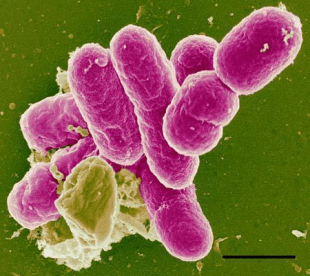
More than 150 people have been sickened with E. coli linked to salad imported from Italy.

http://www.foodqualitynews.com/Food-Outbreaks/Italian-link-as-UK-E.-coli-investigation-continues/?utm_source=newsletter_daily&utm_medium=email&utm_campaign=15-Jul-2016&c=HZYJTM%2FeUUpkGkGC9Pd24vOL%2FimpIyLn&p2=

Food Manufacturer UK

Two people have died and 151 cases have been confirmed in an E.coli outbreak that appears to be linked to eating mixed salad leaves.

http://www.foodmanufacture.co.uk/Manufacturing/Two-die-in-E.Coli-outbreak/?utm_source=newsletter_daily&utm_medium=email&utm_campaign=15-Jul-2016&c=HZYJTM%2FeUUrNHDC2jjqNeyT%2BRVjZ%2BFYp&p2=

RASFF -Aflatoxin -Groundnuts -Nutmeg – Ginger Powder -Peanuts – Pistachio Paste -Pistachio

RASFFa

RASFF-aflatoxins (B1 = 6.1 µg/kg – ppb) in groundnuts from Argentina in the Netherlands

https://webgate.ec.europa.eu/rasff-window/portal/?event=notificationDetail&NOTIF_REFERENCE=2016.AYZ

RASFF-aflatoxins (B1 = 18; Tot. = 24 µg/kg – ppb) in nutmeg from Indonesia in the Netherlands

https://webgate.ec.europa.eu/rasff-window/portal/?event=notificationDetail&NOTIF_REFERENCE=2016.AZB

RASFF-aflatoxins (B1 = 14.6; Tot. = 34.9 µg/kg – ppb) in ginger powder from India in Finland

https://webgate.ec.europa.eu/rasff-window/portal/?event=notificationDetail&NOTIF_REFERENCE=2016.AZD

RASFF-aflatoxins (B1 = 11; Tot. = 13 µg/kg – ppb) in groundnut kernels from Argentina in the Netherlands

https://webgate.ec.europa.eu/rasff-window/portal/?event=notificationDetail&NOTIF_REFERENCE=2016.AZE

RASFF-aflatoxins (B1 = 2.6; Tot. = 5.9 / B1 = 5.4; Tot. = 31 µg/item) in peanuts from South Africa in the Netherlands

https://webgate.ec.europa.eu/rasff-window/portal/?event=notificationDetail&NOTIF_REFERENCE=2016.AYY

RASFF-aflatoxins (B1 = 57.27; Tot. = 65.36 µg/kg – ppb) in pistachio paste for use in ice cream from Italy in Germany

https://webgate.ec.europa.eu/rasff-window/portal/?event=notificationDetail&NOTIF_REFERENCE=2016.0911

RASFF-aflatoxins (B1 = 13; Tot. = 14.2 µg/kg – ppb) in in shell pistachios from Iran in Spain

https://webgate.ec.europa.eu/rasff-window/portal/?event=notificationDetail&NOTIF_REFERENCE=2016.AZI

RASFF-aflatoxins (B1 = 4.7; Tot. = 10.5 µg/kg – ppb) in groundnut kernels from Argentina in Greece

https://webgate.ec.europa.eu/rasff-window/portal/?event=notificationDetail&NOTIF_REFERENCE=2016.AZJ

RASFF-aflatoxins (B1 = 26; Tot. = 28 µg/kg – ppb) in raw groundnuts from Nicaragua in the Netherlands

https://webgate.ec.europa.eu/rasff-window/portal/?event=notificationDetail&NOTIF_REFERENCE=2016.AZO