Category Archives: Uncategorized

UK – British Lion Eggs Declared Salmonella Free

‘A real success story for the UK egg industry’ – British Lion eggs declared salmonella free.

New Food Magazine  


The Chairman of the British Egg Council has heralded new advice that British Lion eggs are now safe to eat raw as the culmination of years of hard work on the part of the nation’s egg industry.

It is the result of a report published last year by the Advisory Committee on the Microbiological Safety of Food (ACMSF) suggesting the presence of salmonella in UK eggs had been in decline for years and that the risks for eggs produced under the British Lion Code of Practice. More than 90 per cent of UK eggs are produced under this scheme.

Research – Norovirus Can Escape the Immune System by Hiding in Rare Gut Cells

Norovirus can escape the immune system by hiding in rare gut cell.

Outbreak News Today  


Noroviruses are the leading cause of non-bacterial gastroenteritis in the world and are estimated to cause 267 million infections and 20,000 deaths each year. This virus causes severe diarrhea, nausea, and stomach pain.

Although often referred to as the “cruise ship” virus in the United States, noroviruses are an expensive and serious public health problem particularly among young children, the elderly, and immune-compromised patients. Now, in a new study published in Immunity this week, researchers from the Perelman School of Medicine at the University of Pennsylvania have used a mouse model to show that, even in immunized animals, noroviruses can escape the immune system and still spread by hiding out in an extremely rare type of cell in the gut.

“Current vaccines against norovirus have been ineffective despite eliciting strong antibody responses,” said senior author E. John Wherry, PhD, a professor of Microbiology and director of the Penn Institute for Immunology. “Understanding the unique norovirus characteristic of hiding from the host immune system may explain its biology and present opportunities to improve vaccines and therapeutics.”

While most infected people clear the virus within a few days, some individuals continue to shed virus for weeks to months after. Such persistently infected people may be a source of outbreaks, but it was unclear why the immune system fails to eliminate the virus in these cases.

USA – Hepatitis A Outbreak – 18th Fatality – San Diego

Outbreak News Today Virusds

Hepatitis A outbreak: 18th fatality reported in San Diego area.

The County of San Diego Health and Human Services Agency announced today the 18th hepatitis A related death in the current local outbreak.


Since the beginning of the year, 490 hepatitis A cases have been reported with 70 percent of those infected requiring hospitalization for their illness.

The majority of people who have contracted hepatitis A are homeless and/or illicit drug users, although some cases have been neither.  The outbreak is being spread person-to-person and through contact with a fecally contaminated environment.  No common sources of food, beverage or drugs have been identified that have contributed to this outbreak, though investigation is ongoing.

On September 1, 2017, the San Diego County Public Health Officer declared a local public health emergency due to the ongoing hepatitis A virus outbreak in the county. The County Board of Supervisors ratified this declaration on September 6, 2017 and again on September 12, 2017. The declaration shall be ratified every two weeks by the County Board of Supervisors until the declaration is rescinded.

USA – Food Poisoning Outbreak – Chilli Cook Off

Food Poisoning Outbreak at VA Chincoteague Chili Cook-off

Food Poisoning Bulletin

A possible food poisoning outbreak at the 18th Annual Chincoteague Chili Chowder Cook-off and Car Show is being investigated by the Virginia Department of Health. That event was held on September 30, 2017.

Officials have issued a press release that states, “we are expanding our investigation and are reaching out to the Hampton Roads area as well.” There is no information about the symptoms people are experiencing, foods they are concentrating on, or how many people may have been sickened or hospitalized.

Anyone who attended that event, whether sick or well, is asked to complete a survey to help officials investigate and solve the outbreak. The survey takes about 5 to 10 minute to complete. Participation is voluntary and responses and any personal information will remain confidential. Officials are asking that anyone experiencing gastrointestinal illness after attending that event seek medical care. If you have questions, contact the Eastern Shore Health District at 757-302-4268.

UK – New Advice on Eating Runny Eggs – Salmonella

FSA EGGS

New advice on eating runny eggs

The Food Standards Agency has today announced a change to its advice about eating eggs – infants, children, pregnant women and elderly people can now safely eat raw or lightly cooked eggs that are produced under the British Lion Code of Practice.

The revised advice, based on the latest scientific evidence, means that people vulnerable to infection or who are likely to suffer serious symptoms from food poisoning (such as infants, children, pregnant women and  elderly people) can now safely eat raw or lightly cooked hen eggs or foods containing them.

We had previously advised that vulnerable groups should not consume raw or lightly cooked eggs, because eggs may contain salmonella bacteria which can cause serious illness.

New findings on egg safety

The decision to change the advice is a result of the findings from an expert group that was set up by the Advisory Committee on the Microbiological Safety of Food (ACMSF) in February 2015 to look at egg safety. Its report, published in July 2016, highlighted that the presence of salmonella in UK eggs has been dramatically reduced in recent years, and the risks are very low for eggs which have been produced according to food safety controls applied by the British Lion Code of Practice. More than 90% of UK eggs are produced under this scheme.

Heather Hancock, Chairman of the Food Standards Agency, said: “It’s good news that now even vulnerable groups can safely eat UK eggs without needing to hardboil them, so long as they bear the British Lion mark. The FSA has thoroughly reviewed the scientific evidence about the safety of these eggs, and we’re confident that we can now change our advice to consumers.

“The major reduction in the risk of salmonella in Lion eggs is testament to the work carried out by egg producers. The measures they’ve taken, from vaccination of hens through to improving hygiene on farms and better transportation, have dramatically reduced salmonella levels in UK hens.”

A range of interventions have been put in place across the food chain as part of the Lion scheme including: vaccinating hens, enhanced testing for salmonella, improved farm hygiene, effective rodent control, independent auditing and traceability, and keeping the eggs cool while transporting them from farm to shop.

Exceptions to the revised advice

The revised advice does not apply to severely immunocompromised individuals, who require medically supervised diets prescribed by health professionals, and is only for eggs produced under the British Lion Code of Practice.

The existing advice on UK non-Lion eggs, non-hen eggs and eggs from outside the UK, is that they should always be cooked thoroughly for vulnerable groups.

Consumer advice

When eating raw or lightly cooked eggs it is recommended to:

• store eggs safely in a cool dry place such as the fridge;

• follow good hygiene practices in the kitchen; avoiding cross contamination, cleaning work surfaces, dishes and utensils and making sure you wash your hands thoroughly before and after handling eggs

• observe ‘best before’ dates.

USA – Ohio Meat Poultry Company Recalls Products for Bacteria Risk

Ohio meat-poultry company recalls products for bacteria risk

Food Safety News

Newswanger Meats in Ohio recalled more than a ton of beef, pork and chicken products after routine county tests showed bacteria in the company’s water supply for its processing facility.

The Shiloh, OH, company distributed the meat and poultry products to Ohio City Provisions, a butcher and grocery store, and Fresh Fork Market in Cleveland. Other products were sold through the retail store at Newswanger Meats location in Shiloh.

Galen Newswanger, manager of the meat and poultry operation, told local news media that customers have been notified of the potential contamination and recall. Newswanger produced the recalled products Oct. 4 through 6.


Ireland – Cheese – Listeria monocytogenes

FSAI

Recall of a Batch of The Little Milk Company Organic Irish Cheddar Cheese Due to Listeria monocytogenes

Summary
Category 2: For Information
Alert Notification: 2017.16
Product: The Little Milk Company, Organic Irish Cheddar
(Organic Mild Cheddar 135g; Milk Organic Wedge 1kg; Grated Cheese 2kg)
Batch Code: Batch number: B82.  Best before dates: 18/12/2017, 01/01/2018, 14/01/2018, 25/01/2018, 12/02/2018, 05/03/2018, 12/03/2018, 26/03/2018, 17/07/2018
Country Of Origin: Ireland

Message:

The Little Milk Company is recalling a batch of its Organic Irish Cheddar cheese due to the possible presence of Listeria monocytogenes.  The batch was sold in different forms with different best before dates.  Point-of-sale recall notices will be displayed in stores which sold the implicated batch.

UK – Scotland – Travel – Mexico – Cyclospora

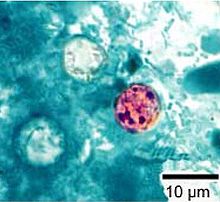
HPS Scotland 220px-Cyclospora_cayetanensis_stained

Cyclospora outbreak related to travel to Mexico

Further to Current note 51/2905 (at http://www.hps.scot.nhs.uk/ewr/redirect.aspx?id=75006), the outbreak of cyclosporiasis in UK travellers to Mexico has been declared over.

As of 27 September, 132 cases of cyclosporiasis had been reported in the UK in 2017, of which 44 had been confirmed by a reference laboratory and 88 remained as probable cases (local laboratory diagnosis only). Cases have been reported in England, Scotland, Wales, Isle of Man and Jersey.

Although six cases were reported earlier in 2017 (two in January, one in March, three in May), cases began to increase from the beginning of June (week 22), with the majority of cases (N=92) reported in June and July (between weeks 22 and 30) compared to 203 cases reported in the same period in 2016 (55% decrease).

As in 2015 and 2016, Mexico has featured as the most common country of acquisition for cases of cyclosporiasis in the UK. Of the 132 cases reported in 2017, travel history information is currently known for 109 cases (83%). Of these, 84 (77%) reported travel to Mexico, 18 travelled to 14 other destinations (including three to the Dominican Republic) and seven did not travel outside the UK in the 14 days prior to onset of symptoms. For cases that travelled to Mexico with a known onset date (N=92), the earliest onset date was 19 May 2017 and the most recent 18 August 2017, 83% of cases having had onset in June and July 2017. The median age for cases that travelled to Mexico was 42 years (range 16-77), 53% being female and 47% male.

Of the cases that travelled to Mexico, 74 had information about region within Mexico or the hotel they stayed at. Of these, all but one stayed in the Riviera Maya and Cancun region on the Caribbean coast of the Yucatán peninsula, north eastern Mexico.

Cases stayed at 27 different hotels, with 37 cases having stayed at one of three different hotels and 37 cases having stayed at 24 other hotels.

Limited information on food and drink exposures was available for 50 cases that travelled to Mexico. More than two-thirds of cases consumed bottled water, mixed salad leaves, orange juice, tomatoes, mint in drinks, ice in drinks, lettuce and onions. As a case-control study was not conducted, it was not possible to identify the likely vehicle of infection. However, it is likely that the vehicle of infection was a food or drink item that is seasonally distributed to hotels in Riviera Maya given that cases have occurred during the UK summer months in 2015, 2016 and 2017 and travel to Mexico from the UK occurs year round.

Reports of cyclosporiasis in travellers returning from Mexico will continue to be monitored throughout the year but it is thought that particular vigilance will be required during the run up to the summer holidays in 2018. [Text adapted from Health Protection Report news, 6 October 2017. https://www.gov.uk/government/publications/health-protection-report-volume-…]

Further information and advice for clinicians advising travellers is available from TRAVAX at http://www.travax.nhs.uk/outbreaks/outbreak-record-page.aspx?id=22259 and for the general public at http://www.fitfortravel.nhs.uk/news/newsdetail.aspx?id=22259.

Research – Why Doesn’t Everyone Who Drinks Raw Milk Get Sick

Food Poisoning Bulletin

Why Doesn’t Everyone Who Drinks Raw Milk Get Sick?

Over the years, Food Poisoning Bulletin has received many, many messages from people defending raw milk consumption. Every one of these messages has used the claim, “I have drunk raw milk for years and I have never gotten sick.”

The only way to ensure that milk is safe to drink is to pasteurize it. Pathogenic bacteria are not present in every drop of milk. Pathogens tend to stick together and cluster in tiny areas of milk, which is why taking a sample of milk and testing is is no guarantee that the rest of the milk is pathogen free. One drop of milk can contain enough pathogenic bacteria to kill someone. Can we test every drop of milk? Of course not.

So, why don’t more people get sick when they drink raw milk? One answer is that many DO get sick. Between 1993 and 2006 more than 1,500 people in this country got sick after drinking raw milk or eating raw milk cheese.  In the last six years that I have been editing this site, there have been dozens of food poisoning outbreaks linked to raw milk and raw milk products, with dozens of people sickened. Some of those outbreaks have been deadly.

USA – Salmonella Dublin – Raw Milk

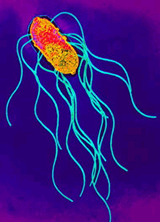
Outbreak News TodaySalmonella kswfoodworld

Salmonella Dublin identified as strain that sickened two in Washington, linked to raw milk

Washington state health officials say lab results confirmed the Salmonella strain recently found in Pride & Joy Dairy organic raw milk matches the strain that hospitalized two Washington residents in January. Health officials are urging consumers not to drink Pride & Joy Dairy organic raw milk in any container size or sell-by date.

“Unpasteurized ‘raw’ milk can carry harmful bacteria and germs. Foodborne illnesses are possible from many different foods; however, raw milk is one of the riskiest,” said Dr. Scott Lindquist, Washington state communicable disease epidemiologist.