
Category Archives: Uncategorized

New Zealand – Toxic Shellfish – PSP

Safe Food

Once again, the collection of shellfish from a coastal area of New Zealand is subject to a warning from the Ministry for Primary Industries.  This time the affected area is most of the Taranaki coastline.

Tests on shellfish show that levels of Paralytic Shellfish Poisoning (PSP) toxins are above the safe limit of 0.8 mg/kg set by MPI. Unfortunately, the toxins are not destroyed by cooking, so the only advice is not to collect and eat the shellfish.

I have written about PSP before, so, rather than reiterate the warnings and background, here is the link to the earlier post.

USA – Vibrio vulnificans – Florida Rises to 33

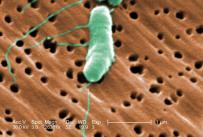
Vibrio_vulnificus_01aVibrio cases jump to 33 in Florida

Outbreak News Today 

The number of Vibrio vulnificus infections in Florida jumped to 33 cases as of Oct. 2, according to Florida Department of Health data.That’s an increase in 10 cases since our last report on Sept. 21.

The breakdown of cases by county is as follows: Collier (5), Lee (4), Hillsborough (3), Sumter (3), two each in Charlotte, Citrus, Escambia, Santa Rosa and Volusia and one each in Brevard, Duval, Nassau, Okaloosa, Orange, Pasco, Pinellas and Polk counties.

In addition, five fatalities have been reported to date in Brevard, Collier, Lee, Orange and Santa Rosa counties.

Last year, Florida reported 46 cases, including 10 deaths

Kenya – 100 Girls Ill at a School – Food Poisoning

The Star

100 girls at Kabuchai school treated for food poisoning.

More than 100 students St Christopher Mabanga Girl’s School in Kabuchai were treated for suspected food poisoning on Friday.

The students complained of stomachaches, diarrhoea, vomiting and headaches after having supper on Thursday evening.

Principal Consolata Ong’ong’o said they rushed them to a private hospital due to the ongoing nurses strike.

They were taken to Khalaba medical centre in Bungoma

Edwin Mutunga, who is the doctor in charge, said all the learners had similar symptoms.

Bungoma education director Jacob Onyiego and Richard Sabwami, county representative of Kenya Secondary Heads Association, asked parents not to worry “as the situation is under control”.

Information – Bag for Life – Food Poisoning?

The Guardian

Your bag for life doesn’t have to carry a food poisoning risk. Here’s what to do.

Environmental health officers are urging consumers not to switch back to plastic following recent warnings that raw foods can spread harmful bacteria. So how can you keep your reusable bags hygienic?

The CIEH has now waded into the row, urging consumers to stick with the bags for life while being cautious about which food stuffs are placed in which bag. Urging a “common sense” approach by consumers, it fears a resurgence in the use of single-use and thin plastic bags following a significant (85%) decrease since the 5p charge was introduced in England in 2015.

Some manufacturers are developing bags for life that have anti-bacterial technology to make it safe to carry raw meat one day and general groceries the next. It is likely that enlightened retailers will start introducing simple, standardised colour-coded bags for life to echo those used for chilled and frozen foods.

Information – Harmful Habits Making You Ill

The Sun

HARMFUL HABITS

From texting on the toilet to not replacing kitchen sponges, we reveal five habits that are ‘making you ill’

EVERYONE hates getting sick, but while most of us blame a sniffly colleague or that guy on the bus who didn’t cover his mouth when he coughed (gross!), the real culprit could be closer to home.

“People think the toilet bowl and the floor are the dirtiest places around the house,” says microbiologist Professor Sally Bloomfield of the International Scientific Forum on Home Hygiene.

MOBILE PHONE MICROBES We’ve all done it – used our loo break to scroll through Insta. In fact, a study found that 90 per cent of us use our phone in the bathroom*.

“Touching your phone between using the toilet and washing your hands is a very bad idea,” says Dr Paul Matewele, microbiologist at London Metropolitan University.

“Toilet seats, handles, sinks and taps are covered in germs such as E. coli, which can cause urinary tract infections and intestinal illness, C. diff which can result in diarrhoea, and acinetobacter which can cause a contagious respiratory infection.”

Information – Chicken and Food Poisoning

Food Poisoning Bulletin Campylobacter kswfoodworld

Information about chicken and food poisoning has been posted on the Foodsafety.gov website. This meat has been linked to several food poisoning outbreaks in the past few years. About a million Americans every year get sick from eating contaminated poultry. And Americans eat more chicken every year than every other meat.

Raw chicken is often contaminated with Salmonella, Campylobacter, and Clostridium perfringens bacteria. Undercooked chicken, or foods that are contaminated by raw chicken juices, can cause serious illness. You need to pay special attention when you have raw chicken in your home.

When you’re shopping, put the chicken into a disposable bag before you put it into your shopping card. I get a bag, then put my hand into it, pick up the chicken, and turn the bag inside out so I know I didn’t touch the package, because studies have shown the packages may be contaminated as well. In 2015, a study conducted by the Food Standards Agency in the UK found that 7% of package exteriors were contaminated with Campylobacter.


USA – Salmonella Linked to Raw Milk

Food Poisoning Journal Raw Milk Food Safety KSW Foodworld

Salmonella Illnesses Linked to Raw Milk

Lab results confirmed the Salmonella strain recently found in Pride & Joy Dairy organic raw milk matches the strain that hospitalized two Washington residents in January. Health officials are urging consumers not to drink Pride & Joy Dairy organic raw milk in any container size or sell-by date.

“Unpasteurized ‘raw’ milk can carry harmful bacteria and germs. Foodborne illnesses are possible from many different foods; however, raw milk is one of the riskiest,” said Dr. Scott Lindquist, Washington state communicable disease epidemiologist.

USA – Birds Eye Peas Recall – Listeria monocytogenes

Food Safety News

Stores, DOD recall Birds Eye peas for Listeria; company mum

Several U.S. grocery retailers and the U.S. Defense Commissary Agency, which provides food to military personnel and families around the world, are recalling Birds Eye brand peas because a sample tested positive for Listeria monocytogenes.

Complete distribution details were not available Thursday. However, the recalled peas have best-by dates in July 2019, so there is concern that consumers may have unused portions in their homes.

Research – Microbiological Survey of Packaged Ready to Eat Meats at Retail in New Zealand

Journal of Food Protection   

Microbiological Survey of Packaged Ready-to-Eat Red Meats at Retail in New Zealand

A microbiological survey was undertaken on packaged ready-to-eat red meats available at retail in New Zealand. A total of 1,485 samples (297 lots of five samples each) were collected according to a sampling plan based on market share and regulatory regimes (Animal Products Act 1999 and Food Act 1981) and were tested against the microbiological limits specified in Food Standards Code (FSC) 1.6.1 applicable at the time of sampling. Each lot was tested as a composite for the presence or absence of Salmonella spp., coagulase-producing staphylococci, Listeria monocytogenes, and other Listeria spp. at the end of the manufacturer’s stated shelf life. Individual samples within a positive lot were subsequently enumerated for L. monocytogenes. None of the samples contained Salmonella spp. or had coagulase-producing staphylococci counts above the acceptable level specified in FSC 1.6.1 (>100 CFU/g). Data showed that 93.6% (278 of 297 lots) of ready-to-eat red meat complied with the FSC 1.6.1 criteria applicable at the time of the survey. The failure of 19 lots (6.4%) was due to the presence of L. monocytogenes from product obtained from 8 of 33 producers tested. Thirteen samples of 95 positive samples were found to contain between 50 and 500 CFU/g L. monocytogenes, but all of these samples were manufactured by the same operator. Pulsed-field gel electrophoresis typing of all of the L. monocytogenes isolates obtained from the survey identified 12 different pulsotypes. Different pulsotypes were often identified in samples from the same operator sampled on separate occasions. A total of 46 lots (15.5%) contained Listeria spp. (including L. monocytogenes). The detection of Listeria in samples may highlight the existence of problems in operator processing and/or packaging processes and suggests that improvements in good hygienic practice and implementation of more effective risk mitigation strategies are needed.

RASFF Alerts – Salmonella – Salted Chicken Half Breast – Fuet – Beef Trimmings – Organic Anise Seeds – Turmeric Powder – Chicken Fillets – Mechanically Recovered Chicken Meat- Raw Milk Reblochon – Poultry Meat Preparations – Whole Chicken- Sesame Seeds – Whole Turkey

kswfoodworld rasff

RASFF – Salmonella (presence /25g) in fuet from Spain in France

RASFF-Salmonella (present /25g) in frozen salted chicken half breasts from Brazil in the Netherlands

RASFF-Salmonella (presence /25g) in chilled beef trimmings from Germany in Sweden

RASFF-Salmonella enterica ser. Kentucky (presence /25g) in organic anise seeds from Egypt in Spain

RASFF-Salmonella enterica ser. Amsterdam (presence /25g) and Salmonella enterica ser. Senftenberg (presence /25g) in turmeric powder from India, via the Netherlands in Finland

RASFF-Salmonella enterica ser. Enteritidis (presence /25g) in frozen chicken fillets from Poland in France

RASFF-Salmonella (presence /25g) in frozen mechanically separated chicken meat from Belgium in Belgium

RASFF-Salmonella in raw milk reblochon from France in Germany

RASFF-Salmonella (presnece /25g) in frozen poultry meat preparations from Brazil in the Netherlands

RASFF-Salmonella enterica ser. Infantis (presence /25g) in frozen whole chicken from Poland, via the Netherlands in Finland

RASFF-Salmonella (presence /25g) in hulled sesame seeds from India in Poland

RASFF-Salmonella enterica ser. Enteritidis (present /25g) in frozen whole turkey from France in France

RASFF-Salmonella (presence /25g) in frozen salted chicken half breasts from Brazil in the Netherlands

RASFF-Salmonella (presence /25g) in frozen salted chicken half breasts from Brazil in the Netherlands