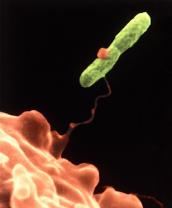
About 30 people were recently sickened by Campylobacter at Blair Academy, reports the New Jersey Herald. The school is a private boarding and day school for high school students located in Blairstown, NJ.

About 30 people were recently sickened by Campylobacter at Blair Academy, reports the New Jersey Herald. The school is a private boarding and day school for high school students located in Blairstown, NJ.
Posted in Uncategorized
Center for Science in the Public Interest
Fresh produce items like cilantro, cucumbers, cantaloupes, and peppers that are often eaten raw cause more foodborne illness than any other single category of food, according to a study by the Center for Science in the Public Interest. The nonprofit food safety and nutrition watchdog group reviewed 10 years of outbreak data to determine which foods are most often linked to outbreaks of foodborne disease and identify trends in illnesses. Over the period studied, fresh produce caused 629 outbreaks and almost 20,000 illnesses.
Posted in Uncategorized
Biofilms formations of spoilage and pathogenic bacteria on food or food contact surfaces have attracted increasing attention. These events may lead to a higher risk of food spoilage and foodborne disease transmission. While Pseudomonas lundensis is one of the most important bacteria that cause spoilage in chilled meat, its capability for biofilm formation has been seldom reported. Here, we investigated biofilm formation characteristics of P. lundensis mainly by using crystal violet staining, and confocal laser scanning microscopy (CLSM). The swarming and swimming motility, biofilm formation in different temperatures (30, 10, and 4 °C) and the protease activity of the target strain were also assessed. The results showed that P. lundensis showed a typical surface-associated motility and was quite capable of forming biofilms in different temperatures (30, 10, and 4 °C). The strain began to adhere to the contact surfaces and form biofilms early in the 4 to 6 h. The biofilms began to be formed in massive amounts after 12 h at 30 °C, and the extracellular polysaccharides increased as the biofilm structure developed. Compared with at 30 °C, more biofilms were formed at 4 and 10 °C even by a low bacterial density. The protease activity in the biofilm was significantly correlated with the biofilm formation. Moreover, the protease activity in biofilm was significantly higher than that of the corresponding planktonic cultures after cultured 12 h at 30 °C.
This work contributes to a better understanding of biofilm formation in P. lundensis for the first time, and highlights the ongoing need for study on the function of biofilms in causing food spoilage, which are important to the further study of this most important spoilage bacterium in food industry.
Posted in Uncategorized
Staphylococcus aureus is a Gram-positive spherically-shaped bacterium capable of producing heat-stable enterotoxins that cause acute gastrointestinal diseases. The growth of this pathogen in food is a major threat to public health worldwide. Potato salad is a frequent vehicle for infection and food poisoning caused by S. aureus. Therefore, the objective of this study was to investigate the growth kinetics of S. aureus in cooked potato and potato salad.
Samples of potato cubes and potato salad inoculated with S. aureus were incubated at temperatures between 8 and 43 °C to observe its growth for developing growth models. No growth was observed at 8 °C. The experimental results showed that the growth curves did not exhibit lag phases, and can be described by a 3-parameter logistic model.
A one-step kinetic analysis approach was used to simultaneously analyze all growth curves by direct construction of both the primary and secondary (Ratkowsky square root) models using nonlinear regression to minimize the global residual error. The estimated nominal minimum growth temperature of S. aureus was 6.12 °C in potato cubes and 8.80 °C in potato salad. The estimated maximum growth temperatures of S. aureus in potato cubes and potato salad were very close to each other (46.3 and 46.8 °C, respectively). On the average, the specific growth rates of S. aureus in potato cubes were approximately 70% higher than those in potato salad.
This study suggests that cooked potato and potato salad should be stored below 6 °C or above 47 °C to prevent the growth of S. aureus. The mathematical models and kinetic parameters can be used to accurately evaluate the effect of temperature abuse on the growth of S. aureus and conduct risk assessments of S. aureus in cooked potato and potato salad.
Posted in Uncategorized
Beer is one of the world’s most ancient and widely consumed fermented alcoholic beverages produced with water, malted cereal grains (generally barley and wheat), hops, and yeast. Beer is considered an unfavorable substrate of growth for many microorganisms, however, there are a limited number of bacteria and yeasts, which are capable of growth and may spoil beer especially if it is not pasteurized or sterile-filtered as craft beer. The aim of this research study was to track beer spoilage lactic acid bacteria (LAB) inside a brewery and during the craft beer production process. To that end, indoor air and work surface samples, collected in the brewery under study, together with commercial active dry yeasts, exhausted yeasts, yeast pellet (obtained after mature beer centrifugation), and spoiled beers were analyzed through culture-dependent methods and PCR-DGGE in order to identify the contaminant LAB species and the source of contamination. Lactobacillus brevis was detected in a spoiled beer and in a commercial active dry yeast. Other LAB species and bacteria ascribed to Staphylococcus sp., Enterobaceriaceae, and Acetobacter sp. were found in the brewery. In conclusion, the PCR-DGGE technique coupled with the culture-dependent method was found to be a useful tool for identifying the beer spoilage bacteria and the source of contamination. The analyses carried out on raw materials, by-products, final products, and the brewery were useful for implementing a sanitization plan to be adopted in the production plant.
In-depth studies of beer spoilage agents and sources are fundamental for the implementation of a brewery sanitization plan and for preserving the quality of the final products. The combination of a culture-dependent and culture-independent approach using PCR-DGGE applied along the craft beer production process were efficient in identifying the beer spoilage bacteria and the source of contamination. The importance of a specific and efficient sanitization plan is confirmed, based on the application of hygiene and good manufacturing practices, which are often the most effective methods for managing microbiological risk.
Posted in Uncategorized
Since the last update on November 20th when the CDC reported 45 sickened in 6 states – California (2), Minnesota (2), New York (1), Ohio (1), Oregon (13), and Washington (26), seven more ill people have now been reported from California (1), Illinois (1), Maryland (1), Ohio (2), Pennsylvania (1), and Washington (1) adding Illinois, Pennsylvania and Maryland to the mix.
Fifty-two people are now infected with the outbreak strain of E. coli O26 from 9 states. The majority of illnesses have been reported from Washington and Oregon during October 2015. The number of ill people reported from each state is as follows: California (3), Illinois (1), Maryland (1), Minnesota (2), New York (1), Ohio (3), Oregon (13), Pennsylvania (1), and Washington (27).
Posted in Uncategorized
Hand hygiene therefore is one of the most important measures for the prevention of contamination.
Read ‘The Importance of Hand Hygiene’ to understand the impact of poor hand hygiene including expensive product recalls
Posted in Uncategorized
The Missouri Department of Health and Senior Services states that a Legionnaires’ Disease outbreak occurred at the Best Western on the River Hotel in Hannibal. Three people staying at that hotel over the past eight months contracted the illness, and one person died
Posted in Uncategorized
A Salmonella outbreak linked to JEM brand nut butters has sickened 11 people in nine states, according to the Centers for Disease Control and Prevention (CDC). Illnesses associated with this outbreak, which was announced by the agency today, were reported from June through October. Three of the cases are in Oregon. California, Colorado, Georgia, Hawaii, Idaho, Illinois, North Carolina and New Jersey have each reported one case.
These spreads have a long shelf life and are most likely still in consumers’ homes. If you have any of these products in your home, throw them away, even if some of it has been eaten and no one has gotten sick. Wash your hands carefully after handling these products.
The symptoms of a Salmonella infection include diarrhea, fever, and abdominal cramps. Salmonella infections usually begin 12 to 72 hours after exposure to the pathogenic bacteria.
Posted in Uncategorized
Listeria monocytogenes can grow and multiply in various food matrices and cause severe human illness. Apart from the influence on consumer health, L. monocytogenes contamination of ready-to-eat (RTE) food products causes major economic losses due to product recalls. Control of foodborne pathogens in RTE food products is a challenge, specifically in foods that cannot undergo a heat-treatment during processing. The aim of this study was to develop control strategies for the management of L. monocytogenes in an avocado processing facility, additional to a quality control system. An in-house monitoring system (IMS) was established to test specifically for Listeria spp. in the final products and processing environment, including floors, equipment, work areas and personnel. Guacamole and environmental samples were collected and tested on-site for Listeria with the ISO 11290-1 method. Based on the prevalence of Listeria, the facility introduced new strategies in processing to counter cross contamination. Results from the 2014 guacamole production season showed almost complete eradication of Listeria spp. in final products (0.17%, n = 1170) and the processing facility (0.79%, n = 1520). This is a major achievement since the highest incidence of Listeria spp. over a period of five years was measured at 11.39% (n = 948) in the final product during the 2013 season and 13.44% (n = 1927) in the processing facility in 2011. These results indicate that successful management of Listeria spp. in an avocado processing facility can be accomplished with in-house monitoring of the listerial population and subsequent adjustments to the processing system.
Posted in Uncategorized