Category Archives: Uncategorized

New Zealand -Hepatitis A case linked to Fruzio Mixed Berries products

NZFarmer.co.nz Virusds

Health authorities say another case of hepatitis A is likely linked to Fruzio Mixed Berries products which are under a product recall.

If confirmed this would be the fifth person to contract Hepatitis A after eating the berries product range. The berries were recalled by the Ministry for Primary Industries (MPI) last week after four people were found to be ill with the virus.

MPI’s director of plant food and environment Peter Thomson said the ministry was alerted to the further case on Tuesday after an investigation by health authorities.

Stuff.co.nz

Authorities say further recalls of frozen berry products can’t be ruled out amid a Hepatitis A scare.

A product recall notice for Fruzio Mixed Berries has been issued after a warning about the link between the virus and imported frozen berries.

On Monday four people were found to be ill with the virus and further recalls have not been ruled out.

Ireland -Lidl Recalls Deluxe Crayfish Soup with Saffron due to Possible Presence of Harmful Bacteria

FSAI fsai

Lidl Ireland is recalling all batches of Deluxe Crayfish Soup with Saffron, due to the possible presence of harmful bacteria. Lidl Ireland has issued in-store notices requesting customers who have bought this product not to consume it, but to return it to a Lidl store.
Customers can contact Lidl Ireland Customer Services on 1800 347 447 if they have any queries.

Europe – Informtation -Shigellosis among refugees in the EU

Health Protection Scotland shigella
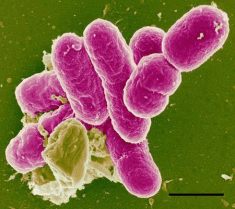
The European Centre for Disease Prevention and Control (ECDC) has noted that more than 80 cases of shigellosis have been diagnosed among refugees in EU countries between July and November this year. These countries include Austria, Greece, Germany, the Netherlands, Finland and Sweden. The occurrence of shigellosis among refugees is not unexpected as the disease is endemic in the countries of origin where people are fleeing from, as well as in some of the countries they travel through. According to ECDC’s risk assessment (available at http://ecdc.europa.eu/en/publications/Publications/Shigella-RRA-24-11-2015-…), however, the risk to the general population in Europe remains low.

Transmission of shigellosis often occurs via the faecal-oral route. Person-to-person transmission of Shigella is effective in crowded conditions where it is more difficult to maintain good personal hygiene. Therefore, refugees can be vulnerable to a Shigella infection as personal hygiene is difficult to maintain during travel, and they often encounter overcrowding during their journey and at reception facilities.

Since Shigella is well adapted to low temperatures, and transmission can also occur in the coldest months of the year, the number of shigellosis cases among refugees is unlikely to decrease in the coming months.

The risk to the general population in Europe of being affected by single cases or outbreaks of shigellosis among refugee populations remains low, since factors which contribute to the transmission such as compromised hygiene, overcrowding and limited access to clean water are specific to some refugee reception facilities. However, cleaners of the hosting facilities for incoming refugees, together with other workers and volunteers, should be considered at possible risk to shigellosis. [Source: ECDC News Release, 1 December 2015. http://ecdc.europa.eu/en/press/news/Pages/News.aspx]


 

USA – 200 Sick – Norovirus

Kiro7.com

Over 200 people who responded to a survey put out to guests who attended a catered event at the Russell Investments Center Building in downtown Seattle last Tuesday, report feeling ill afterwards.

On Tuesday, health officials said they planned to stop reporting further updates on the number of the ill — as they had received enough responses to help them characterize the outbreak.

USA – Chipotle Outbreak Update

New York Times

Chipotle Shares Take Another Hit After Boston College Athletes Fall Ill

Thirty Boston College students got sick after eating at Chipotle Mexican Grill over the weekend, a school spokesman said, sending company shares down 6 percent in extended trading on Monday on fears of more food poisoning problems at the burrito chain.

Chipotle said it had temporarily closed its restaurant in Boston’s Cleveland Circle, where a college spokesman said all the students reported eating, while it works with local health officials to investigate the illnesses.


Information – Latest Issue of Food Safety Magazine

Food Safety Magazine


Research -Effects of Electrolyzed Oxidizing Water on Inactivation of Bacillus subtilis and Bacillus cereus Spores in Suspension and on Carriers

Wiley Online Library

Spores of some Bacillus species are responsible for food spoilage and foodborne disease. These spores are highly resistant to various interventions and cooking processes. In this study, the sporicidal efficacy of acidic electrolyzed oxidizing (EO) water (AEW) and slightly acidic EO water (SAEW) with available chlorine concentration (ACC) of 40, 60, 80, 100, and 120 mg/L and treatment time for 1, 2, 3, 4, 5, and 6 min were tested on Bacillus subtilis and Bacillus cereus spores in suspension and on carrier with or without organics. The reduction of spore significantly increased with increasing ACC and treatment time (P < 0.05). Nondetectable level of B. cereus spore in suspension occurred within 2 min after exposure to both EO waters containing 120 mg/L ACC, while only SAEW at 120 mg/L and 2 min treatment achieved >6 log reductions of B. subtilis spore. Both types of EO water with ACC of 60 mg/L and 6 min treatment achieved a reduction of B. subtilis and B. cereus spores to nondetectable level. EO water with ACC of 80 mg/L and treatment time of 3 min on carrier test without organics addition resulted in reductions of B. subtilis spore to nondetectable level. But, addition of 0.3% organics on carrier decreased the inactivation effect of EO water. This study indicated that EO water was highly effective in inactivation of B. subtilis and B. cereus spores in suspension or on carrier, and therefore, rendered it as a promising disinfectant to be applied in food industry.

Practical Application

EO water can be used to disinfect food or food contact surface contaminated with Bacillus spores.

Research -Effects of Domestic Storage and Thawing Practices on Salmonella in Poultry-Based Meat Preparations

ingetnaconnect imagesCAYZ5I84

Among consumer food handling practices, time-temperature abuse has been reported as one of the most common contributory factors in salmonellosis outbreaks where the evidence is strong. The present study performed storage tests of burgers, sausages, and kebabs and investigated (i) the effect of refrigerator temperatures (4°C versus 8 or 12°C, which were the temperatures recorded in 33 and 3%, respectively, of domestic refrigerators in Italy), with or without prior temperature abuse (25°C for 2 h, simulating transport of meats from shop to home), and (ii) the impact of the thawing method (overnight in the refrigerator at 8°C versus on the kitchen countertop at 23°C) on the presence and numbers of Salmonella bacteria. Storage tests were carried out on naturally or artificially (Salmonella enterica serovar Typhimurium at ca. 10 CFU/g) contaminated products, while freezing-thawing tests were conducted only on artificially contaminated products (Salmonella Typhimurium at ca. 10, 100, and 1,000 CFU/g). The results from the artificially contaminated products showed significant (P < 0.05) growth of Salmonella Typhimurium at 12°C (i.e., from ca. 8 most probable number [MPN]/g to . 710 MPN/g) in kebabs after 7 and 10 days but more moderate growth in sausages (i.e., from ca. 14 MPN/g to a maximum of 96 MPN/g after 9 days of storage). Storage of naturally contaminated burgers or sausages (contamination at or below 1 MPN/g) at 4, 8, or 12°C and a short time of temperature abuse (2 h at 25°C) did not facilitate an increase in the presence and numbers of Salmonella bacteria. Thawing overnight in the refrigerator led to either a moderate reduction or no change of Salmonella Typhimurium numbers in burgers, sausages, and kebabs. Overall, this study showed that domestic storage and thawing practices can affect food safety and that time-temperature abuse can cause a substantial increase of Salmonella numbers in some types of poultry-based meat preparations, highlighting that efforts for the dissemination of consumer guidelines on the correct storage and handling of meats need to be continued.


Research -Application of a Rapid Knowledge Synthesis and Transfer Approach To Assess the Microbial Safety of Low-Moisture Foods

Journal of Food Protection

Low-moisture foods (LMF) are increasingly implicated in outbreaks of foodborne illness, resulting in a significant public health burden. To inform the development of a new Codex Alimentarius code of hygienic practice for LMF, we applied a rapid knowledge synthesis and transfer approach to review global research on the burden of illness, prevalence, and interventions to control nine selected microbial hazards in eight categories of LMF. Knowledge synthesis methods included an integrated scoping review (search strategy, relevance screening and confirmation, and evidence mapping), systematic review (detailed data extraction), and meta-analysis of prevalence data. Knowledge transfer of the results was achieved through multiple reporting formats, including evidence summary cards. We identified 214 unique outbreaks and 204 prevalence and 126 intervention studies. Cereals and grains (n = 142) and Salmonella (n = 278) were the most commonly investigated LMF and microbial hazard categories, respectively. Salmonella was implicated in the most outbreaks (n = 96, 45%), several of which were large and widespread, resulting in the most hospitalizations (n = 895, 89%) and deaths (n = 14, 74%). Salmonella had a consistently low prevalence across all LMF categories (0 to 3%), but the prevalence of other hazards (e.g., Bacillus cereus) was highly variable. A variety of interventions were investigated in small challenge trials. Key knowledge gaps included underreporting of LMF outbreaks, limited reporting of microbial levels in prevalence studies, and a lack of intervention efficacy research under commercial conditions. Summary cards were a useful knowledge transfer format to inform complementary risk ranking activities. This review builds upon previous work in this area by synthesizing a broad range of evidence using a structured, transparent, and integrated approach to provide timely evidence informed inputs into international guidelines.


USA – JEM Nut Butter – Salmonella Update

Food Poisoning Journal

A total of 11 people infected with the outbreak strain of Salmonella Paratyphi B variant L(+) tartrate(+) have been reported from nine states as of December 2, 2015. The number of ill people identified in each state is as follows: California (1), Colorado (1), Georgia (1), Hawaii (1), Idaho (1), Illinois (1), North Carolina (1), New Jersey (1), and Oregon (3).

Illnesses started on dates ranging from July 18, 2015, to October 15, 2015. Ill people range in age from 1 year to 79, with a median age of 48. Sixty-four percent of ill people are male. Among nine ill people with available information, none reported being hospitalized, and no deaths have been reported.