Category Archives: Uncategorized

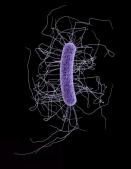
RASFF Alert – Clostridium -Crayfish Soup

RASFF-Logo

RASFF-Clostridium in crayfish soup with saffron from the Netherlands in Sweden


RASFF Alerts -Listeria monocytogenes – Squid Salad – Smoked Salmon – Raw Milk Sheep Cheese – Gorgonzola

RASFF-Logo

RASSF-Listeria monocytogenes (in 5 out of 5 samples /25g) in squid salad from the United States in the Netherlands

RASFF-Listeria monocytogenes (presence /25g) in chilled smoked sliced salmon from Denmark in Denmark

RASFF-Listeria monocytogenes (presence /25g) in chilled smoked sliced salmon from Denmark in Italy

RASFF-Listeria monocytogenes (presence /25g) in chilled sheep cheese made from raw milk from France in Italy

RASFF-Listeria monocytogenes (15000 CFU/g) in gorgonzola cheese from Italy in France


UK – FSA Recall -Lidl recalls its ‘Deluxe’ Crayfish Soup with Saffron due to the possible presence of Clostridium species

FSA closta

Lidl is recalling all batches and ‘best before’ dates of its ‘Deluxe’ Crayfish Soup with Saffron from stores in Northern Ireland as a precautionary measure because of the possible presence of Clostridium species. The safety of the product cannot be demonstrated.

Risk

Possible presence of Clostridium species. The safety of the product cannot be demonstrated.

Product details

Product: ‘Deluxe’ Crayfish Soup with Saffron
Pack size: 570 ml
‘Best before’ dates: All dates
Batch no: All batches

No other Lidl products are known to be be affected.


Canada -Updated Food Recall Warning – Salba brand Chia Seeds – Premium Ground recalled due to possible Salmonella contamination

CFIA

The food recall warning issued on November 16, 2015 has been updated to include additional product information. This additional information was identified during the Canadian Food Inspection Agency’s (CFIA) food safety investigation.

Everspring Farms Ltd. is voluntarily recalling Salba brand Chia Seeds – Premium Ground from the marketplace due to possible Salmonella contamination. Consumers should not consume the recalled product described below.

Recalled products

Brand Name Common Name Size Code(s) on Product
Salba Chia Seeds – Premium Ground 150 g Lot # SSSBC150211-41
BB/MA APR-2017


Research -New technology traces resistance gene quickly – Colistin

Technical University of Denmark

A new resistance gene has been found in coli bacteria among pigs, broiler meat and humans in China. Bacteria with the same resistance gene have now also been found in Denmark, according to a new Danish study. The National Food Institute, Technical University of Denmark, and Statens Serum Institut have been able to quickly create an overview of the situation in Denmark because many bacteria have had their DNA-profile mapped with the help of whole genome sequencing.

The National Food Institute is working to develop global databases in order to further the intelligent use of whole genome sequencing data.

This work takes place in the network Global Microbial Identifier and the EU project COMPARE. Both have the aim of creating a global system of databases for whole genome sequencing. These databases will be used to identify and diagnose disease-causing microorganisms and infectious diseases. They will also make it possible to compare data with information on outbreaks and emerging disease-causing microorganisms.

The National Food Institute also performs the role of WHO Collaborating Centre and EU reference laboratory for antimicrobial resistance. As such, the reference laboratory is planning in agreement with the European Commission to examine the prevalence of mcr-1 in cooperation with national veterinary and food laboratories in the EU.

Australia – Ground Coriander Recall – Salmonella

NSW

Gourmet Organic Herbs has recalled its Ground Coriander sold in fruit and vegetable shops, health food stores and independent retailers, including IGA supermarkets in NSW, QLD, VIC, TAS, SA and WA.

The product is being recalled due to microbial (salmonella) contamination.

Product details are:

  • Batch Numbers: BN218705-03 and BN222302-02

Research -Best Practices for Planning Events Encouraging Human–Animal Interactions – Salmonella – E.coli O157

Wiley Online Library 19243

Educational events encouraging human–animal interaction include the risk of zoonotic disease transmission. It is estimated that 14% of all disease in the USA caused by Campylobacter spp., Cryptosporidium spp., Shiga toxin-producing Escherichia coli (STEC) O157, non-O157 STECs, Listeria monocytogenes, non-typhoidal Salmonella enterica and Yersinia enterocolitica were attributable to animal contact. This article reviews best practices for organizing events where human–animal interactions are encouraged, with the objective of lowering the risk of zoonotic disease transmission

UK – Lancashire Farm Shop Fined – E.coli – 2014

BBC News

Four children suffered potentially life-threatening kidney failure after an E. coli outbreak at a Lancashire farm shop, a court heard.

Huntley’s Country Stores, near Preston, admitted health and safety breaches at a lambing event in April 2014.

The four children needed life-saving kidney dialysis with one needing three operations and blood transfusions.

The farming attraction was fined £60,000 and told to pay £60,000 costs at Preston Crown Court on Monday.

In total, 15 people were struck down by the bug – 13 of them children – with nine needing hospital treatment. A further 15 possible cases were also recorded.

Research -Qualitative Assessment for Toxoplasma gondii Exposure Risk Associated with Meat Products in the United States

Ingenta Connect Toxoplasma

Toxoplasma gondii is a global protozoan parasite capable of infecting most warm-blooded animals. Although healthy adult humans generally have no symptoms, severe illness does occur in certain groups, including congenitally infected fetuses and newborns, immunocompromised individuals including transplant patients. Epidemiological studies have demonstrated that consumption of raw or undercooked meat products is one of the major sources of infection with T. gondii. The goal of this study was to develop a framework to qualitatively estimate the exposure risk to T. gondii from various meat products consumed in the United States. Risk estimates of various meats were analyzed by a farm-to-retail qualitative assessment that included evaluation of farm, abattoir, storage and transportation, meat processing, packaging, and retail modules. It was found that exposure risks associated with meats from free-range chickens, nonconfinement-raised pigs, goats, and lamb are higher than those from confinement-raised pigs, cattle, and caged chickens. For fresh meat products, risk at the retail level was similar to that at the farm level unless meats had been frozen or moisture enhanced. Our results showed that meat processing, such as salting, freezing, commercial hot air drying, long fermentation times, hot smoking, and cooking, are able to reduce T. gondii levels in meat products. whereas nitrite and/or nitrate, spice, low pH, and cold storage have no effect on the viability of T. gondii tissue cysts. Raw-fermented sausage, cured raw meat, meat that is not hot-air dried, and fresh processed meat were associated with higher exposure risks compared with cooked meat and frozen meat. This study provides a reference for meat management control programs to determine critical control points and serves as the foundation for future quantitative risk assessments.


Research – ECDC – PFGE – Improvements Required for Listeria ID

ECDC

This report presents the results of the third round of the Listeria External Quality Assessment (EQA) scheme for the typing of Listeria monocytogenes (further EQA-3). The EQA covers the Pulsed Field Gel Electrophoresis (PFGE) method, conventional serological typing and PCR-based molecular typing. A total of 22 laboratories registered forparticipation in the EQA-3 with 20 laboratories completing it and two laboratories opting out without submittingresults. The EQA-3 took place between October and December 2014.

Listeriosis is a relatively rare but serious foodborne disease, with 1 763 confirmed human cases reported in the EUin 2013 (0.44 cases per 100 000). Compared to other foodborne infections under EU surveillance, listeriosis caused the most severe human disease, with 99% of the cases hospitalised.

Since 2007, ECDC’s programme on Food- and Waterborne Diseases and Zoonoses (FWD) has been responsible for the EU-wide surveillance of listeriosis and the facilitation of the detection and investigation of foodborne outbreaks. Surveillance data, including some basic typing parameters for the isolated pathogen, are reported by Member States to the European Surveillance System (TESSy). In addition to the basic characterisation of the pathogens, more advanced and discriminatory molecular typing techniques for the surveillance of foodborne infections have been incorporated into TESSy (TESSy-MSS – ‘molecular surveillance system’) since 2012.

The objectives of this EQA are to assess the quality of PFGE and serotyping, and the comparability of the collected results produced by participating national public health reference laboratories in the European Union (EU), European Economic Area (EEA) and EU candidate countries. Strains for the EQA were selected from strains currently relevant for public health in Europe. A set of eleven strains was selected. Ten of the strains were different from one another and one was a doublet of one of the other ten strains. The set included a broad range of the clinically relevant types for invasive listeriosis.

A total of 22 laboratories participated in at least one part of the EQA-3, however two laboratories opted out of submitting any results: 18 laboratories (90%) produced PFGE results and 16 laboratories (80%) participated in the serotyping exercise. Eight of these 16 laboratories performed conventional phenotypic serotyping, while 13 performed molecular PCR-based serotyping.

The majority (67%) of the laboratories were able to produce a PFGE gel of sufficiently high quality to allow for comparison with profiles obtained by other laboratories. The gels were normalised and interpreted using the specialised software BioNumerics (BN) software. Fourteen laboratories completed the gel analysis and generally did so with high quality (93%) and in accordance with the guidelines.

The average percentage of correctly typed strains obtained for conventional serotyping was 91%, an increase from EQA-2 mainly attributed to one difficult strain included in the previous EQA. In the molecular (PCR-based) serotyping, participants obtained an average of 94% correctly typed strains which corresponds to the score obtained in EQA-2.

This EQA-3 scheme for typing of Listeria was the third EQA for laboratories participating in the FWD-Net. The number of participants were higher than in EQA-2 and EQA-1. The molecular surveillance system being implemented as part of TESSy, relies on the capacity of the European Food- and Waterborne Diseases and Zoonoses network (FWD-Net) laboratories to produce comparable typing results. Currently, the molecular typing method used for EU-wide surveillance is PFGE. Phenotypic serotyping is currently included in TESSy and PCR-based serotyping has also been included since 2012. The data submitted to TESSy are being used for surveillance purposes by several EU countries. In general, the participating countries demonstrated a high quality of serotyping.

The results of the EQA-3 for PFGE typing of Listeria demonstrate that the majority of participating laboratories were able to produce good results scoring ‘Fair’ and above in all parameters, which enables inter-laboratory comparisons. However, one third of the laboratories produced results that need to be improved in order to enable inter-laboratory exchange of data. Consequently, to achieve an acceptable quality, the technical issues identified should be overcome by optimising laboratory procedures, and providing trouble-shooting assistance and training.