Category Archives: Uncategorized

RASFF Alerts – Salmonella – Poultry – Betel Leaves – Chicken – Pork

RASFF-Logo

RASFF-Salmonella (presence /25g) in frozen poultry meat preparations (Aves) from Brazil in the Netherlands

RASFF-Salmonella (in 2 out of 5 samples /25g) in betel leaves from India in the UK

RASFF-Salmonella (pesence /25g) in frozen salted chicken breast fillets from Thailand in the UK

RASFF-Salmonella (in 1 out of 5 samples /25g) in betel leaves from India in the UK

RASFF-Salmonella enteritidis (presence /25g) in white chicken meat from Poland in France

RASFF-Salmonella in betel leaves from India in the UK

RASFF-Salmonella typhimurium (presence /25g) in frozen pork meat from Germany in Sweden

RASFF Alert – Animal Feed – Salmonella – Spaghetti for Dogs

RASFF-Logo

RASFF-Salmonella group E1 (presence /25g) in spaghetti for dogs from the Czech Republic in Germany

USA -Preliminary Cause of Cass County ND Jail Outbreak: Clostridium Perfringens

Food Poisoning Bulletin

Several news reports state that the North Dakota Department of health has made a preliminary diagnosis about what sickened 110 inmates in the Cass County Jail last month. Clostridium perfringens was most likely the culprit. Stool samples from several inmates revealed the pathogenic bacteria.

This bacteria is found on raw meat and poultry. It grows when foods are prepared in large quantities, as in jails, nursing homes, and schools, and that food is kept warm, but not quite warm enough, for long periods of time, or is improperly cooled. This type of outbreak is quite common in large institutions.

The outbreak in December 2015 was the second one at the Cass County Jail in the last four years. About 40% of the 282 inmates at the jail were sick with symptoms that included diarrhea and nausea.

Research -Monitoring chicken flock behaviour could help combat leading cause of food poisoning – Campylobacter

Science Daily Salmonella Campylobacter

A new technique that monitors the movement of chickens can be used to predict which flocks are at risk of becoming infected with Campylobacter — the most common bacterial source of food poisoning in humans in the UK.

Research by scientists at Oxford University has found that by using a camera system to analyse the ‘optical flow’ of chickens, at-risk flocks can be detected when the birds are only seven to 10 days old — much earlier than is usually possible with conventional on-farm sampling methods.

Despite efforts to improve biosecurity, Campylobacter — which can reach humans through raw or undercooked chicken — has so far been persistently difficult to eliminate from the food chain. This new early warning system has the potential to transform the way Campylobacter is controlled, benefiting producers, consumers and the birds themselves.

The study is published in the journal Proceedings of the Royal Society B.

Dr Frances Colles from Oxford University’s Department of Zoology, lead author of the study, said: ‘Humans consume nearly 60 billion chickens a year — more than any other animal. At the same time, there is a worldwide epidemic of human gastroenteric disease caused by Campylobacter. It is estimated that up to four-fifths of this disease originates from contaminated chicken meat.

‘Despite intensive efforts to improve on-farm biosecurity practice over the past decade, more than 70% of EU broiler [meat] chicken flocks remained Campylobacter-positive at slaughter during 2008, and the incidence of human disease continues unabated. This suggests that environmental contamination of growing broilers may not be the only cause of high rates of Campylobacter infection in chickens and that key points for intervention — for example, in breeder flocks, hatcheries, or management in the first week of chick life — remain unrecognised.’

The Oxford team tested the hypothesis that flocks colonised with Campylobacter might be distinguishable by their behaviour, following suggestions that infection could have an impact on chickens’ welfare.

Professor Marian Dawkins, Professor of Animal Behaviour at Oxford and corresponding author on the paper, said: ‘We used a novel and non-invasive way of monitoring the behaviour of chickens throughout their lives that involved analysing the optical flow patterns from cameras inside broiler houses.

‘Optical flow works by detecting the patterns formed by changes in brightness in moving images, both temporally and spatially. It is computationally simple and does not require tagging or marking individual animals, making it ideal for long-term continuous monitoring of large groups of similar animals such as egg-laying hens and broiler chickens, where optical flow is predictive of key welfare measures such as mortality rate.’

To test the hypothesis that optical flow analysis might also be able to detect when flocks become infected with Campylobacter, the researchers collected data for 31 commercial broiler flocks. They also collected faecal samples from those same flocks and tested them for the presence of Campylobacter at different ages (21 days, 28 days and 35 days) using standard laboratory methods. This gave a direct comparison between optical flow and testing from faecal samples.

Campylobacter-positive flocks showed lower mean optical flow (less average movement) and higher kurtosis (less uniform movement) than flocks without the bacteria — as early as the first 10 days of life. Additionally, this link was independent of external temperature.

Professor Dawkins said: ‘Our results provide statistical evidence of a link between broiler chicken flock behaviour and Campylobacter status. It is not certain whether the changes in optical flow are a direct effect of Campylobacter, or whether a general reduction in the birds’ overall health predisposes them to Campylobacter colonisation at a later date. However, the findings are compatible with the growing evidence that Campylobacter may be detrimental to chickens’ health, rather than simply being harmless gut bacteria.

‘Use of this optical flow information has the potential to make a major impact on the management of commercial chicken flocks, for the benefit of producers, consumers and the birds themselves. Farm managers able to access such information in real time would have early warning of which of their flocks were most at risk of health and welfare problems, enabling them to intervene before these became serious and helping them to produce higher quality, healthier food with better welfare.’

The researchers are working with Isis Innovation, Oxford University’s technology transfer company, to ascertain how to make maximum impact from this technique.


USA – Kids Food Safety – Alvin and the Chipmunks – The Road Chip

FoodSafety.Gov

Welcome to the homepage for USDA and Ad Council’s partnership with the new movie from 20th Century FOX, Alvin and the Chipmunks: The Road Chip.

Here, you can find our fun PSAs about the importance of safe food handling, featuring our friends Alvin, Theodore, Simon, and Dave. Parents, make sure you download the four kid-friendly activity pages – all you’ll need is a printer and a pencil for a fun way to help your kids learn the four steps to Food Safety:

  1. Clean
  2. Separate
  3. Cook
  4. Chill

And remember – the “Road Chip” to food safety starts here!


USA – Pork Products – Listeria monocytogenes

Food Safety News

Comeau’s Inc. in  Breaux Bridge, La., has recalled approximately 14 pounds of pork products that may be adulterated with Listeria monocytogenes, according to the U.S. Department of Agriculture’s Food Safety and Inspection Service (FSIS).

The smoked pork tasso was packaged on Dec. 22, 2015. The following products are subject to recall:

  • 1-pound, vacuum-sealed packages containing diced “CAJUN HICKORY SMOKED PORK TASSO.”

The products subject to recall bear establishment number “EST. 20513” inside the USDA mark of inspection and package code number “42358”. These items were shipped to retail locations in Louisiana.

The problem was discovered during routine FSIS testing.  No  adverse reactions due to consumption of these products have yet been associated with the recalled product.

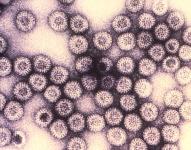
Solomon Islands – Rotavirus -1700 Confirmed Cases

Radio New Zealand Rotavirus

Health authorities in the Solomon Islands have identified the cause of a diarrhoea outbreak which has so far claimed the lives of six children.

There are 1,700 confirmed cases across six provinces.

The chairperson of the ministry of health’s emergency and operations committee says lab results just back from Australia and Fiji indicate the presence of rotavirus in all patient samples.

Dr Chris Becha says a tailored response strategy is being finalised and will be made public tomorrow.


UK -Lambing advice to pregnant women – Listeria monocytogenes – Toxoplasma

Health Protection Scotland imagesCAE10AJI

On 29 December, the Scottish Chief Medical Officer (CMO) issued annual advice warning pregnant women of the need to avoid close contact with animals that are giving, or have recently given birth.

For a number of years, the Scottish Government, along with other UK health departments, has advised pregnant women who come into close contact with sheep during lambing or other farm animals that are giving birth may risk their own health, and that of their unborn child, from infections that such animals can carry such as Chlamydia, Toxoplasma, Listeria and Q fever.

Although the number of pregnancies affected by contact with infected animals is extremely small, it is very important that pregnant women understand the risks and take appropriate precautions. It should be noted these risks are not confined to the spring, and do not only apply to sheep, but also to cattle and goats that have recently given birth. All can carry similar infections.

To avoid the possible risk of infection, pregnant women should:

  • not help to lamb or milk ewes, or to provide assistance with a cow that is calving or a nanny goat that is kidding;
  • avoid contact with aborted or new-born lambs, calves or kids or with the afterbirth, birthing fluids or materials (e.g. bedding) contaminated by such birth products;
  • avoid handling (including washing) clothing, boots or any materials that may have come into contact with animals that have recently given birth, their young or afterbirths. Potentially contaminated clothing will be safe to handle after being washed on a hot cycle;
  • ensure contacts or partners who have attended lambing ewes or other animals giving birth take appropriate health and hygiene precautions, including the wearing of personal protective equipment and clothing and adequate washing to remove any potential contamination.

The Chief Medical Officer also advised pregnant women experiencing a fever, or flu-like symptoms, who think they might have acquired an infection from a farm-like environment to seek immediate medical advice.

Farmers and livestock keepers have a responsibility to minimise the risks to pregnant women, including members of their family, the public and professional staff visiting farms. [Source: Scottish Government News 29 December 2015. http://news.scotland.gov.uk/News/Lambing-advice-to-pregnant-women-20dc.aspx]

Research -Could bug-busting viruses control food poisoning?

Science Daily

Viruses that can seek and destroy food poisoning bugs in the gut are being investigated by researchers at The University of Nottingham, thanks to a new grant.

The work, which has been funded with a $100,000 USD grant by the Bill & Melinda Gates Foundation, could offer the potential for treating and preventing intestinal illnesses in children in developing countries including those caused by Salmonella, Campylobacter and E. coli.

They hope the viruses, known as bacteriophages — the word meaning “bacteria-eaters” — and which only affect their target bacteria, could offer a viable alternative to antibiotics and a potential new approach for the developing world where the illnesses can often be fatal.

Professor Paul Barrow in the University’s School of Veterinary Medicine and Science, who is leading the research, said: “In developing countries there is a huge amount of enteric disease.

“There is some evidence to suggest that gut flora — the bacteria that live in the gut — in childhood can offer protection against pathogens in later life and that it is tied up with the immunity of the host, their diet and other environmental factors.”

The research is being supported by the Grand Challenges Explorations (GCE) initiative, which funds individuals worldwide to explore ideas that can break the mould in how we solve persistent global health and development challenges.

Nigeria -SON warns fast-food operators against food poisoning

Punch

The Standard Organisation of Nigeria has restated the need for operators of fast-food restaurants in the country to make use of the relevant code of practice for their operations in order to avoid food poisoning.

The Oyo State coordinator of the organisation, Dr. Omolara Okunlola, said this in an address she read during a meeting with stakeholders in the fast-food business, noting that the 2004 Code of Hygienic Practice for Fast Food was put in place to protect members of the public who patronise the eateries against food poisoning.