Category Archives: Uncategorized

Research -Microbiological Status and Food Safety Compliance of Commercial Basil Production Systems

Ingenta Connect

Basil has been implicated in a number of microbe-associated foodborne illnesses across the world, and the source of contamination has often been traced back to the production and/or processing stages of the supply chain. The aim of this study was to evaluate the microbiological quality of fresh basil from the point of production to the retail outlet in the Gauteng and Northwest Provinces of South Africa. A total of 463 samples were collected over a 3-month period from two large-scale commercial herb producing and processing companies and three retail outlets. The microbiological quality of the samples was assessed based on the presence or absence of Escherichia coli O157:H7 and Salmonella Typhimurium and the levels of the indicator bacteria E. coli and total coliforms. Salmonella Typhimurium was detected on four basil samples (0.9%) arriving at the processing facility and at dispatch, but no E. coli O157:H7 was detected throughout the study. Total coliform counts were 0.4 to 4.1 CFU/g for basil, 1.9 to 3.4 log CFU/ml for water, and 0.2 to 1.7 log CFU/cm2 for contact surfaces, whereas E. coli was detected in the water samples and only once on basil. The Colilert-18 and membrane filter methods were used to analyze water samples, and a comparison of results revealed that the Colilert-18 method was more sensitive. Strong evidence suggests that high numbers of coliforms do not necessarily indicate the presence of Salmonella Typhimurium. The study results highlight the importance of effective implementation of food safety management systems in the fresh produce industry.


 

Research – Bacteriophages: An Old Antibiotic Alternative Becomes New Again

Food Safety News

The increasing global attention to the threat of antibiotic resistance has spurred research and development of antimicrobial alternatives. Once such alternative is bacteriophages.

Bacteriophages are viruses that infect and kill bacteria. There are thousands of different types and they are so abundant in the environment – an estimated 1030 live on the planet – that “we eat thousands of phages a day,” says Manan Sharma, a research microbiologist with USDA’s Agricultural Research Service.


India – 300 Hospitalised from Food Poisoning

Hiru News

The number of workers hospitalised by food poisoning in a garment factory in Allawarawa, balangoda has risen up to 300 while many others with similar symptoms are being taken to the hospital, a correspondent from Balangoda hospital said to Hiru News.

USA – FDA -Raw Dehydrated Dog Food Chicken – Salmonella -Fish Supreme – Listeria monocytogenes

FDA 260px-YellowLabradorLooking_new

Big Dog Natural of Brick, NJ is voluntary recalling a select production lot of Big Dog Natural raw dehydrated dog food Chicken Supreme potentially contaminated with Salmonella and Fish Supreme potentially contaminated with Listeria monocytogenes that was shipped in the week of 10/31/2015 to 11/13/2015 to online customers. Salmonella and Listeria monocytogenes can affect animals eating the products and there is risk to humans from handling contaminated pet products, especially if they have not thoroughly washed their hands after having contact with the products or any surfaces exposed to these products.

Research -Old Antibiotic Alternative Becomes New Again – Bacteriophages

Food Safety News

The increasing global attention to the threat of antibiotic resistance has spurred research and development of antimicrobial alternatives. Once such alternative is bacteriophages.

Bacteriophages are viruses that infect and kill bacteria. There are thousands of different types and they are so abundant in the environment – an estimated 1030 live on the planet – that “we eat thousands of phages a day,” says Manan Sharma, a research microbiologist with USDA’s Agricultural Research Service.

Research -Modeling the Effect of Water Activity, pH, and Temperature on the Probability of Enterotoxin A Production by Staphylococcus aureus

IngentaConnect Staphylococcus

The objectives of this study were to develop a probability model of Staphylococcus aureus enterotoxin A (SEA) production as affected by water activity (aw), pH, and temperature in broth and assess its applicability for milk. The probability of SEA production was assessed in tryptic soy broth using 24 combinations of aw (0.86 to 0.99), pH (5.0 to 7.0), and storage temperature (10 to 30°C). The observed probabilities were fitted with a logistic regression to develop a probability model. The model had a concordant value of 97.5% and concordant index of 0.98, indicating that the model satisfactorily describes the probability of SEA production. The model showed that aw, pH, and temperature were significant factors affecting the probability of toxin production. The model predictions were in good agreement with the observed values obtained from milk. The model may help manufacturers in selecting product pH and aw and storage temperatures to prevent SEA production.

Research -Fish Product–Borne Histamine Intoxication Outbreak and Survey of Imported Fish and Fish Products in Serbia

Ingenta Connect Histamine3d

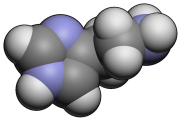
Histamine levels in fish and fish products are regarded as a primary criterion for food safety, considering the effects of histamine on human health. The aim of this research was to describe a case of massive histamine intoxication in Serbian children and to provide relevant information regarding the presence of histamine in imported marine fish and fish products available in the Serbian market. In January 2014, an incident of foodborne illness occurred in 28 children (aged 2 to 5 years) who consumed canned sardines in a kindergarten in Vojvodina province, northern Serbia. The diagnosis was established based on anamnestic data, epidemiological data, and clinical symptoms and confirmed by positive histamine finding in the incriminated sardines. Substantially high histamine levels (>300 mg/kg) were detected in seven of the nine examined units of these canned sardines. In addition, during an official veterinary border control from January 2013 to January 2015, 273 lots in total, including 2,457 fish and fishery product units, were analyzed using enzyme-linked immunosorbent assay. Even though only nine (3.29%) of all examined lots were declared as unsafe for human consumption, the presented case of histamine intoxication strongly suggests the importance of border inspection and comprehensive control of each imported lot.

Research -Microbiological Status and Food Safety Compliance of Commercial Basil Production Systems

Ingenta Connect

Basil has been implicated in a number of microbe-associated foodborne illnesses across the world, and the source of contamination has often been traced back to the production and/or processing stages of the supply chain. The aim of this study was to evaluate the microbiological quality of fresh basil from the point of production to the retail outlet in the Gauteng and Northwest Provinces of South Africa. A total of 463 samples were collected over a 3-month period from two large-scale commercial herb producing and processing companies and three retail outlets. The microbiological quality of the samples was assessed based on the presence or absence of Escherichia coli O157:H7 and Salmonella Typhimurium and the levels of the indicator bacteria E. coli and total coliforms. Salmonella Typhimurium was detected on four basil samples (0.9%) arriving at the processing facility and at dispatch, but no E. coli O157:H7 was detected throughout the study. Total coliform counts were 0.4 to 4.1 CFU/g for basil, 1.9 to 3.4 log CFU/ml for water, and 0.2 to 1.7 log CFU/cm2 for contact surfaces, whereas E. coli was detected in the water samples and only once on basil. The Colilert-18 and membrane filter methods were used to analyze water samples, and a comparison of results revealed that the Colilert-18 method was more sensitive. Strong evidence suggests that high numbers of coliforms do not necessarily indicate the presence of Salmonella Typhimurium. The study results highlight the importance of effective implementation of food safety management systems in the fresh produce industry.
Research -Multiplex Quantitative PCR Assays for the Detection and Quantification of the Six Major Non-O157 Escherichia coli Serogroups in Cattle Feces

Ingenta Connect

Shiga toxin–producing Escherichia coli (STEC) serogroups O26, O45, O103, O111, O121, and O145, called non-O157 STEC, are important foodborne pathogens. Cattle, a major reservoir, harbor the organisms in the hindgut and shed them in the feces. Although limited data exist on fecal shedding, concentrations of non-O157 STEC in feces have not been reported. The objectives of our study were (i) to develop and validate two multiplex quantitative PCR (mqPCR) assays, targeting O-antigen genes of O26, O103, and O111 (mqPCR-1) and O45, O121, and O145 (mqPCR-2); (ii) to utilize the two assays, together with a previously developed four-plex qPCR assay (mqPCR-3) targeting the O157 antigen and three virulence genes (stx 1, stx 2, and eae), to quantify seven serogroups and three virulence genes in cattle feces; and (iii) to compare the three mqPCR assays to a 10-plex conventional PCR (cPCR) targeting seven serogroups and three virulence genes and culture methods to detect seven E. coli serogroups in cattle feces. The two mqPCR assays (1 and 2) were shown to be specific to the target genes, and the detection limits were 4 and 2 log CFU/g of pure culture–spiked fecal samples, before and after enrichment, respectively. A total of 576 fecal samples collected from a feedlot were enriched in E. coli broth and were subjected to quantification (before enrichment) and detection (after enrichment). Of the 576 fecal samples subjected, before enrichment, to three mqPCR assays for quantification, 175 (30.4%) were quantifiable (≥4 log CFU/g) for at least one of the seven serogroups, with O157 being the most common serogroup. The three mqPCR assays detected higher proportions of postenriched fecal samples (P > 0.01) as positive for one or more serogroups compared with cPCR and culture methods. This is the first study to assess the applicability of qPCR assays to detect and quantify six non-O157 serogroups in cattle feces and to generate data on fecal concentration of the six serogroups.


Research -Impacts of Climate and Management Variables on the Contamination of Preharvest Leafy Greens with Escherichia coli

Ingenta Connect Eurofins Food Testing UK

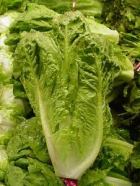
The observed seasonality of foodborne disease suggests that climatic conditions play a role and that changes in the climate may affect the presence of pathogens. However, it is hard to determine whether this effect is direct or whether it works indirectly through other factors, such as farm management. This study aimed to identify the climate and management variables that are associated with the contamination (presence and concentration) of leafy green vegetables with E. coli. This study used data about E. coli contamination from 562 leafy green vegetables (lettuce and spinach) samples taken between 2011 and 2013 from 23 open-field farms in Belgium, Brazil, Egypt, Norway, and Spain. Mixed-effect logistic and linear regression models were used to study the statistical relationship between the dependent and independent variables. Climate variables and agricultural management practices together had a systematic influence on E. coli presence and concentration. The variables important for E. coli presence included the minimum temperature of the sampling day (odds ratio = 1.47), region, and application of inorganic fertilizer. The variables important for concentration (R 2 = 0.75) were the maximum temperature during the 3 days before sampling and the region. Temperature had a stronger influence (had a significant parameter estimate and the highest R 2) than did management practices on E. coli presence and concentration. Region was a variable that masked many management variables, including rainwater, surface water, manure, inorganic fertilizer, and spray irrigation. Climate variables had a positive relationship with E. coli presence and concentration. Temperature, irrigation water type, fertilizer type, and irrigation method should be systematically considered in future studies of fresh produce safety.