Category Archives: Uncategorized

India -30 Nursing Students Ill – Food Poisoning

The Hans India

About 30 nursing students fall ill due to food poisoning at MGM School of Nursing here on Friday. They were undergoing treatment at MGM hospital. The doctors at the hospital have kept 10 students under observation while the condition of others was said to be stable.
The incident occurred after the students had their breakfast at the hostel where there were 243 students. The nursing school students complained that the quality of the food served was very poor and proper menu was not being followed in the contractor-run mess.

The conditions in the hostel kitchen were very unhygienic and unsafe as snakes creep into the hostel during nights posing danger to their lives, students told the Congress leaders. The issue would be taken to the notice of the District Collector seeking action against the contractor, the leader assured.

Research – Stopping E.coli Before it Starts

Health Essentials Ecoli Istock

Escherichia coli, better known as E. coli bacteria, normally live in the intestines of people and animals. But while most E. coli are harmless — and even part of a healthy human intestinal tract — some are more dangerous and can cause illness.

One in six Americans will get sick from food poisoning this year alone, says the Centers for Disease Control and Prevention (CDC). While most people will recover without any lasting effects from their illness,  the effects for some can be devastating and even deadly.


Malaysia -16 pre-school pupils suffer food poisoning in Kedah

MalayMailOnline

Sixteen pupils of Sekolah Kebangsaan Tualak pre-school in Kuala Nerang were hit by food poisoning yesterday after consuming fried rice at the school.

USA -Possibility of Salmonella in Eggs

Food Poisoning Journal EGGS

Good Earth Egg Company, LLC of Bonne Terre, Missouri has announced a voluntary recall of its shell eggs because they have the potential to be contaminated with Salmonella, an organism which can cause serious and sometimes fatal infections in young children, frail or elderly people, and others with weakened immune systems.

The Food and Drug Administration has notified Good Earth Egg that a link has been established between eggs produced in our facility to cases of Salmonella illnesses in the state of Missouri.

USA – FDA Recall -Asafoetida Powder – Salmonella

FDA

Shakti Group USA LLC of New Brunswick, NJ is recalling 50 gm and 100 gm sizes of L.G Compounded Asafoetida Powder, both coded with Lot Number: 2323 because it has the potential to be contaminated with Salmonella, an organism which can cause serious and sometimes fatal infections in young children, frail or elderly people, and others with weakened immune systems. Healthy persons infected with Salmonella often experience fever, diarrhea (which may be bloody), nausea, vomiting and abdominal pain. In rare circumstances, infection with Salmonella can result in the organism getting into the bloodstream and producing more severe illnesses such as arterial infections (i.e., infected aneurysms), endocarditis and arthritis.

L.G COMPOUNDED ASAFOETIDA POWDER was distributed to OH, NJ, VA, NH, and PA through retail stores.

The product is packaged in a white screw cap plastic bottle with UPC 840222000149, Lot Number: 2323.

No illnesses have been reported to date.

The recall was as a result of a sampling conducted by the FDA which revealed that the finished products contained the bacteria. Shakti Group has ceased the production and distribution of the product.

Consumers who have purchased L.G COMPOUNDED ASAFOETIDA POWDER are urged to return it to the place of purchase for a full refund. Consumers with questions may contact the company at 1-609-357-9181 between the hours of 8am – 5pm EST from Monday – Saturday.

Asafoetida powder, also known as Hing, is a crucial ingredient in Indian vegetarian cooking.

Derived from a species of giant fennel, asafoetida has a unique smell and flavour.

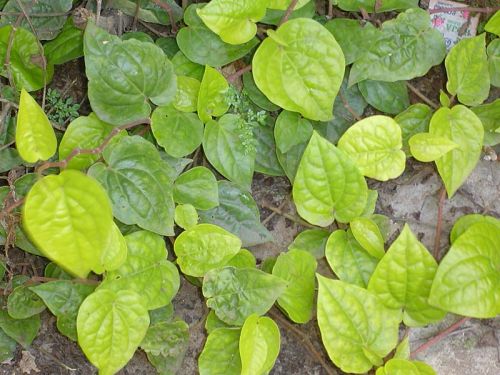
UK – Betel Leaves and Salmonella

Betel

Nearly every week there are RASFF Alerts about Salmonella found in imported Betel leaves are also known as ‘Paan leaf’, ‘Betel quid’ and ‘piper betle’

Betel leaves can be dated back over 2,000 years where in India they were offered to guests as a polite custom and called, ‘Paan-Supari’. This is a custom that was brought over to England by the South Asian community.

In 2011, over 140 cases of microbiological contamination in betel leaves were discovered by EU member states.

Imported mainly into the UK and Germany, interestingly from 2012, Paan exports have made a profit over £40 million due to its popularity within South Asian communities.

Imported mainly from Bangladesh, Thailand and India, there was a temporary ban in 2014-2015 of leaves from Bangladesh.

As reported by EU’s RASFF (Rapid Alert System for Food and Feed), paan is considered to be a major cause of salmonella in the UK.

Paan leaves are consumed raw. Paan is often chewed raw as a palate cleanser or to aid digestion.

It would appear that poor handling techniques and the difficulty in sterilisation of the delicate leaves may be the issue. The water that the leaves are soaked in can also be contaminated with Salmonella

UK – FSA -Shellfish official controls: high E.coli event along South and South West coasts of England

FSA Mussels

The FSA has today published four investigative reports commissioned following an event that occurred in July 2015 where exceptionally high levels of E.coli were recorded at shellfish beds along the South and South West coasts of England.


Research -Pathogens found in Ice Man’s stomach

Science Daily

Scientists are continually unearthing new facts about Homo sapiens from the mummified remains of Ötzi, the Copper Age man, who was discovered in a glacier in 1991. Five years ago, after Ötzi’s genome was completely deciphered, it seemed that the wellspring of spectacular discoveries about the past would soon dry up. An international team of scientists working with paleopathologist Albert Zink and microbiologist Frank Maixner from the European Academy (EURAC) in Bozen/Bolzano have now succeeded in demonstrating the presence of Helicobacter pylori in Ötzi’s stomach contents, a bacterium found in half of all humans today. The theory that humans were already infected with this stomach bacterium at the very beginning of their history could well be true. The scientists succeeded in decoding the complete genome of the bacterium.

When EURAC’s Zink and Maixner first placed samples from the Iceman’s stomach under the microscope in their ancient DNA Lab at EURAC, almost three years ago, they were initially sceptical.

“Evidence for the presence of the bacterium Helicobacter pylori is found in the stomach tissue of patients today, so we thought it was extremely unlikely that we would find anything because Ötzi’s stomach mucosa is no longer there,” explains Zink. Together with colleagues from the Universities of Kiel, Vienna and Venda in South Africa as well as the Max Planck Institute for the Science of Human History in Jena, the scientists tried to find a new way to proceed. “We were able to solve the problem once we hit upon the idea of extracting the entire DNA of the stomach contents,” reports Maixner. “After this was successfully done, we were able to tease out the individual Helicobacter sequences and reconstruct a 5,300 year old Helicobacter pylori genome.”

The scientists found a potentially virulent strain of bacteria, to which Ötzi’s immune system had already reacted. “We showed the presence of marker proteins which we see today in patients infected with Helicobacter,” said the microbiologist.

A tenth of infected people develop further clinical complications, such as gastritis or stomach ulcers, mostly in old age. “Whether Ötzi suffered from stomach problems cannot be said with any degree of certainty,” says Zink, “because his stomach tissue has not survived and it is in this tissue that such diseases can be discerned first. Nonetheless, the preconditions for such a disease did in fact exist in Ötzi.”

After completing their stomach biopsy, the two EURAC scientists transferred the genome data for analysis by their colleague Thomas Rattei from the University of Vienna. Rattei, in collaboration with geneticists from the USA, South Africa and Germany, came to a surprising conclusion: “We had assumed that we would find the same strain of Helicobacter in Ötzi as is found in Europeans today,” explains the computational biologist. “It turned out to be a strain that is mainly observed in Central and South Asia today.”

The scientists assume that there were originally two strain types of the bacterium, an African and an Asian one, which at some point recombined into today’s European version. Since bacteria are usually transmitted within the family, the history of the world’s population is closely linked to the history of bacteria. Up till now, it had been assumed that Neolithic humans were already carrying this European strain by the time they stopped their nomadic life and took up agriculture. Research on Ötzi, however, demonstrates that this was not the case.

“The recombination of the two types of Helicobacter may have only occurred at some point after Ötzi’s era, and this shows that the history of settlements in Europe is much more complex than previously assumed,” says Maixner.

Further studies will be needed to show to what extent these bacteria living inside the human body can help us understand how humans developed. The current investigations, the results of which have just been published in Science magazine, invite further research.

“Now that we are aware of how it works,” says Zink, “we are keen to continue.” Several research projects to take place in South America and Asia are currently at the planning stage.


RASFF Alerts – Aflatoxin – Groundnuts – Pistachios – Red Chilli Powder

RASFF-Logo

RASFF-aflatoxins (B1 = 12.5 µg/kg – ppb) in groundnuts in shell from Egypt in Italy

RASFF-aflatoxins (B1 = 46.6; Tot. = 49 µg/kg – ppb) in pistachios in shell from Iran in Greece

RASFF-aflatoxins (B1 = 101 µg/kg – ppb) in groundnuts in shell from Brazil in the UK

RASFF-aflatoxins (B1 = 9.05; Tot. = 9.05 / B1 = 22.6; Tot. = 24.4 µg/kg – ppb) and ochratoxin A (9.9 / 17.5 µg/kg – ppb) in red chilli powder and red chilli crushed from India in Cyprus

RASFF-aflatoxins (B1 > 24; Tot. > 24 µg/kg – ppb) in pistachios in shell from Iran in Spain

RASFF Alert -Foodborne Outbreak suspected to be caused by Oysters from the Netherlands

RASFF-Logo

RASFF – foodborne outbreak suspected to be caused by oysters from the Netherlands