
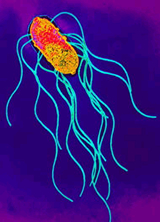
Foodborne salmonellosis originating from poultry products is a major problem, and post harvest control is important to prevent Salmonella contamination. However, assessing when and where Salmonella contamination occurs, and, more importantly, which routes of contamination have the greatest impact on introduction and dissemination in the final poultry meat product is an extremely complex question with a tremendous number of variables. Estimating Salmonella prevalence in poultry processing and the significance/role of Salmonella prevalence in finished products is a critical aspect of food safety control, with USDA regulations updating regularly to improve food safety. Numerous cultural methodologies exist for the detection of Salmonella. However, it is also critical to establish non-Salmonella bacteria and indicator organism profiles that allow for a more continuous monitoring or oversight of microbial shifts that potentially could occur during processing. Development of quantitative risk assessment models, for assessing where the greatest risks for contamination occur, may also allow for prioritizing optimal intervention strategies to achieve the most effective reductions in Salmonella contamination of poultry products.

 FoodWorld