Monthly Archives: August 2016

Research -Standards for the Growing, Harvesting, Packing, and Holding of Produce for Human Consumption

FDA

The FDA Food Safety Modernization Act (FSMA) Produce Safety rule is now final, and the earliest compliance dates for some farms begin one year after the effective date of the final rule (see “Compliance Dates” below). The rule establishes, for the first time, science-based minimum standards for the safe growing, harvesting, packing, and holding of fruits and vegetables grown for human consumption.

This rule was first proposed in January 2013. In response to input received during the comment period and during numerous public engagements that included public meetings, webinars, listening sessions, and visits to farms across the country, the FDA issued a supplemental notice of proposed rulemaking in September 2014. The proposed revisions were designed to make the originally proposed rule more practical, flexible, and effective.

The final rule is a combination of the original proposal and revisions outlined in the supplemental proposal, with additional changes as appropriate. The definition of “farm” and related terms were revised in the final Preventive Controls for Human Food rule, and the same definitions of those terms are used in this rule to establish produce safety standards. Operations whose only activities are within the farm definition are not required to register with FDA as food facilities and thus are not subject to the preventive controls regulations.

For operations that meet the farm definition, exemptions and modified requirements for the Produce Safety are explained in “Exemptions and Variances” and in the Coverage and Exemptions/Exclusions flowchart (PDF: 95KB).

 

Research -Serotypes Profile of Salmonella Isolates from Meat and Poultry Products, January 1998 through December 2014

FSIS USDA Salm2

Summary

The Food Safety and Inspection Service (FSIS) conducts nontyphoidal1 Salmonella serotype testing on isolates recovered from raw meat and poultry products subject to sampling under the Pathogen Reduction Hazard Analysis and Critical Control Point (PR/HACCP) verification testing program. The results presented here provide an estimate of relative serotype distributions for each product class during the 16-year period following implementation of the PR/HACCP program (1998-2014). All data sets are reported by calendar year (CY).

Introduction

Salmonella is the leading cause of bacterial foodborne illness in the United States and causes an estimated 1.2 million illnesses, 19,000 hospitalizations and 380 deaths, each year (4). Attribution data from 2014 estimates that 360,000 (30%) of foodborne illnesses are attributed to FSIS-regulated products, which is a 9.3% decrease when compared to 2010 (16,22). The Centers for Disease Control and Prevention (CDC) reports that the severity of disease depends on a variety of factors including host-specific and pathogen-specific factors including the serotype designation (6). Although there are more than 2,500 Salmonella serotypes, it is estimated that less than 100 of them cause human illness (6).

FSIS is committed to implementing, revising and enforcing programs that align with FSIS’ strategic goals and Healthy People 2020 Goals to reduce Salmonella illnesses attributable to FSIS-regulated products (16,17,18). To this end, FSIS reviews serotype data generated through PR/HACCP sampling to monitor trends of isolates identified in various products to proactively guide decisions affecting food safety and public health.

USA -Scallops At Center of Hawaii Hepatitis A Outbreak

Food Poisoning Bulletin File:Opened scallop shell.jpg

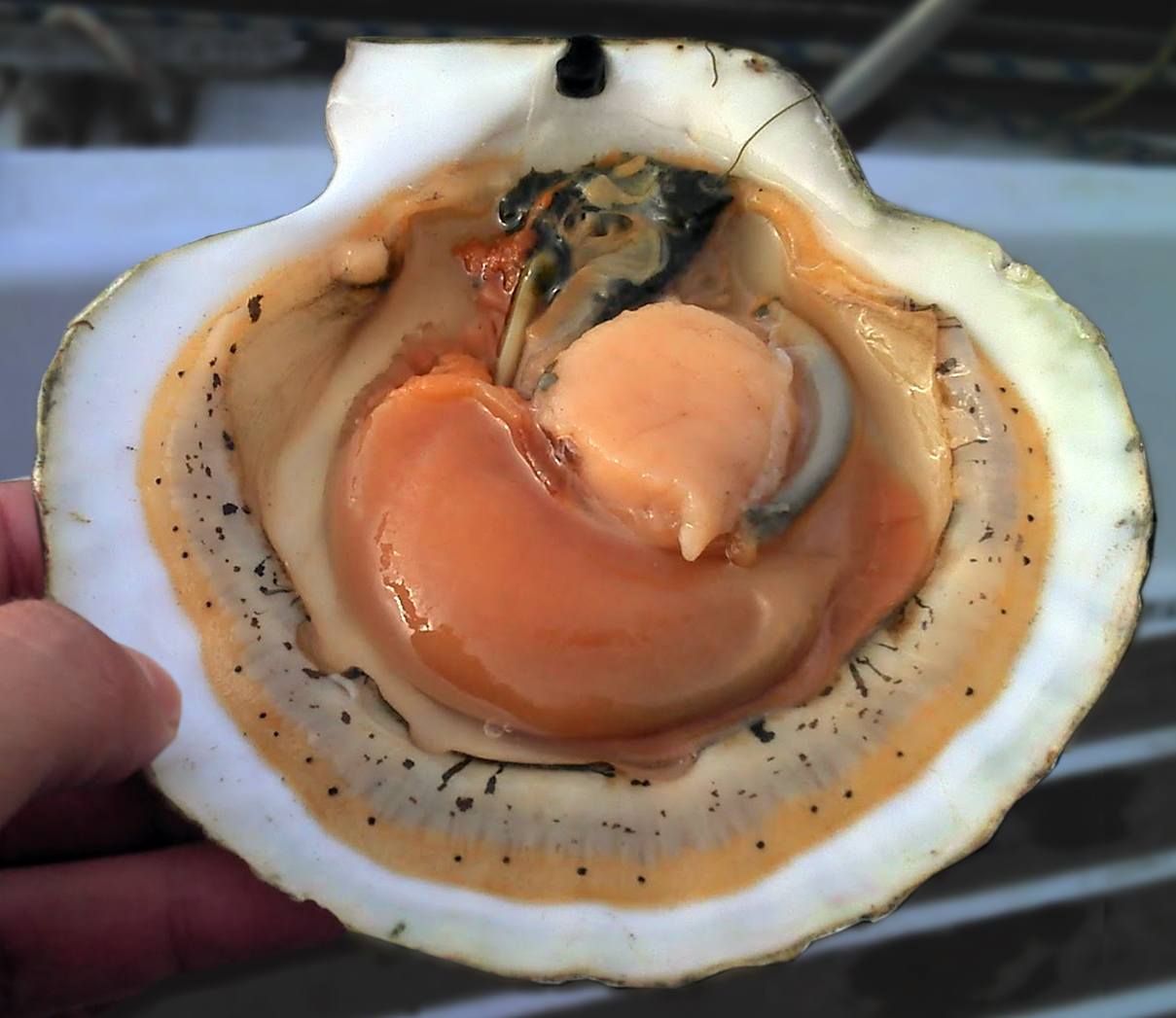
The imported scallops at the center of the Hawaii hepatitis A outbreak that were served raw at Genki Sushi restaurants were imported from the Philippines. Hawaii Department of Health officials have named the brand as Sea Port Bay Scallops. The scallops are wild harvested in the Philippine Bay, frozen, and distributed.

Algeria -More than 600 victims of food poisoning

Stopru

More than 640 people, including 300 children, were victims of food poisoning on Friday afternoon in Blida, we learn to hospital sources.

According to statements of the victims – who had headaches, vomiting and acute diarrhea – and the first elements of the investigation, intoxication is due to consumption of whey (Lben) prepared Guerrouaou, about ten kilometers from the masterpiece of wilaya, and before being passed in dairies located in several municipalities. Emergencies of Hassiba Ben Bouali unit, under the Chu Frantz Fanon, were submerged by about 300 victims of poisoning. A Boufarik, 98 children and adults were presented to the hospital emergency room during the afternoon of Friday, and until midnight for medical care in emergency.


Research -Using LEDs to destroy Salmonella

The Straits Times

In the future, fruit-juice dispensers could be fitted with blue light emitting diodes (LEDs) to stave off the nasty salmonella bacteria that makes you sick.

A study has revealed promising results with LEDs showing an ability to kill strains of salmonella bacteria in unpasteurised orange juice.

Heading the team of scientists that did the study was Assistant Professor Yuk Hyun-Gyun and his former PhD student, Dr Vinayak Ghate, who graduated from the Food Science and Technology Programme at the National University of Singapore (NUS) last month.

Research -Climate Change Increasing Vibrio Infections

Food Poisoning Bulletin Vibrio_vulnificus_01a

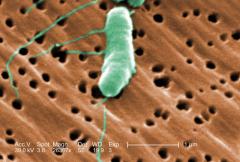
Marine prokaryotes (single celled organisms), the largest living biomass in the world’s oceans, play a fundamental role in maintaining life on the planet. Evidence has been found that, for the first time, provides a link between climate variability in the North Atlantic and the presence and spread of marine Vibrios, one of the ocean’s prokaryotes. Several species of Vibrio bacteria are responsible for infections in animals and humans.

Humans acquire Vibrio infections by eating raw or undercooked oysters or other seafood, or by swimming in contaminated water or by drinking that water. Some of the species of Vibrio that cause illness, V. vulnificus, V. alginolyticus, and V. parahaemolyticus, live in salt water and brackish water and live in plankton. Another type of Vibrio bacteria, V. cholerae, causes cholera.

The scientists used archived plankton samples collected by the Continuous Plankton Recorder survey from 1958 to 2011 and assessed the abundance of vibrios, including those that are pathogenic to people, in nine areas of the North Atlantic and the North Sea. There was a correlation with climate change and plankton number changes.


USA -Hepatitis A source served at Genki Sushi; Oahu, Kauai restaurants closed immediately

Khon2

The Hawaii State Department of Health has ordered all Oahu and Kauai Genki Sushi Restaurants to close for business immediately.

The Department of Health has determined that the hepatitis A outbreak on Oahu is likely due to imported frozen scallops served raw at Genki Sushi restaurants on Oahu and Kauai.

Scotland -Cyclospora update – advice for travellers

HPS

Further to Current note 50/3201 (at http://www.hps.scot.nhs.uk/ewr/redirect.aspx?id=69011), Cyclospora cases linked with travel to Mexico continue to be reported. Since 1 June there have been 265 cases of cyclosporiasis recorded across the UK, with 193 reporting travel to Mexico (94 from Scotland , 87 from England, and 12 across the rest of the United Kingdom). HPS is collaborating with PHE to monitor and investigate the situation and is urging travellers to the Riveria Maya coast in Mexico to take careful precautions with food, water and personal hygiene. A leaflet for travellers has been produced which can be accessed on the Public Health England website at https://www.gov.uk/government/publications/cyclospora-advice-for-travellers.

Vol: 50 No: 33 Year: 2016 Type: Current Note


Research – Microbial Identification and Tracking: the Next Generation

mBiosphere

How do you identify an unknown microbe? If you’ve taken an introductory microbiology lab course in the past twenty years, chances are you were assigned an unknown bacterium that you had to identify through differential media and biochemical assays. Newer techniques like qPCR are being standardized to identify human-associated fecal bacteria for water safety surveillance. But in the wake of the next-generation sequencing revolution, there is no substitute for whole-genome sequencing as a method to pinpoint the exact strain of an unknown microbial species. As NGS technology has advanced, sequencing costs have decreased and applications of the technology have broadened.

No matter the sequencing methodology or extent, nucleotide sequence alone will not supplant the need for experimental data to associate ecological and phenotypic data to the accumulated genetic information, Garrity writes. This holds true regardless of sequencing purpose: factors such as expression level, mRNA or protein turnover, and cofactor presence are necessary to know how a given DNA sequence affects the biology of an organism.

aaaaaaaa

Eurofin’s can undertake Genomic Sequencing at several locations around the world

Eurofins Genomics – Europe

Eurofins Genomics – USA

Eurofins Genomics – India

sales@eurofins.co.uk for UK Information

Hong Kong -Food Alert – A kind of raw goat milk cheese imported from France contaminated by Shiga toxin-producing E. coli

CFS logo

Issue Date 2016-08-15
Source of Information Notification from the Rapid Alert System for Food and Feed (RASFF) of the European Commission
Food Product Raw goat milk cheese
Product name and Description Product name: Valencay raw milk cheese Product brand: Anjouin Place of origin: France Manufacturer: Fromagerie d’Anjouin Lot No.: V161 Weight: 220 grams per piece Best-before date: August 9, 2016
Reason For Issuing Alert
– The Centre for Food Safety (CFS) received a notification from the RASFF that certain batches of the above-mentioned raw goat milk cheese were found to have been contaminated with Shiga toxin-producing E. coli and the French manufacturer concerned has initiated a recall of the affected products. According to the RASFF, some of the products under Lot No. V161 have been imported into Hong Kong.
– People can contract Shiga toxin-producing E. coli causing gastro-intestinal disease through consumption of contaminated water or undercooked and contaminated foods. Intestinal bleeding and serious complications such as haemolytic uraemic syndrome may also develop in some people. Moreover, due to poor personal hygiene, person-to-person transmission of this pathogen is possible through an oral-faecal route. Generally speaking, E. coli cannot survive under high temperature and can be killed by thorough cooking.
Action Taken by the Centre for Food Safety
– Based on the information provided by the RASFF, the CFS had followed up with the local importer concerned, Repertoire Culinaire Hong Kong Limited, and learned that a total of 24 pieces (220g per piece) of the affected product had been imported to Hong Kong and 19 of them had been distributed to other vendors. The importer concerned had been notified of the incident by the supplier earlier on and the remaining five pieces of the product had been disposed of. It has also notified the vendors which have bought the affected product to immediately remove from shelves and stop sale of the affected product, and initiated a recall.
– The CFS will alert the trade, continue to closely monitor the situation and take appropriate follow-up actions.
Advice to the Trade
– Stop using or selling the affected product immediately if having them in possession.
Advice to Consumers – Not to consume the affected batch of the product.
Further Information The CFS press release

– Members of the public may call the importer’s hotline at 3758 2752 during office hours for enquiries about the recall.