Monthly Archives: August 2016

New Zealand – Hundreds sickened with Campylobacter in NZ town’s water supply

Barf Blog Campylobacter

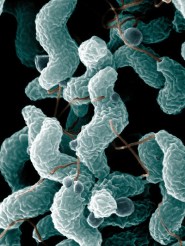
At least 200 people have been stricken by what appears to be Campylobacter in Havelock North, New Zealand, and residents say Hastings District Council knew the town’s water supply was contaminated hours before they told people to stop drinking it.

Canada -Cyclospora Outbreak in Canada Sickens 51

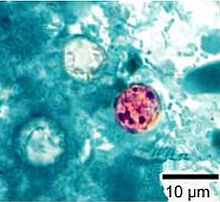
Food Poisoning Bulletin 220px-Cyclospora_cayetanensis_stained

A Cyclospora outbreak in Canada has sickened 51 people in four provinces. An ongoing investigation by the Public Health Agency of Canada, the Canadian Food Inspection Agency and Health Canada has not yet revealed the source of the outbreak.

Cyclospora is a parasite native to tropical climates. Often, illnesses are associated with travel to tropical or suntropical countries and imported produce is usually the source of non-travel outbreaks in the U.S. or Canada.

Recent U.S. outbreaks have been linked to cilantro and bagged salad mix. Other cyclospora outbreaks have been linked to raspberries, basil, blackberries, mesclun, and snap peas.

In this outbreak, the 51 cases were reported between May and July from: British Columbia (1), Alberta (2), Ontario (44), and Quebec (4). One person was hospitalized.

USA – Rabbit Creek Bread, Brownie and Muffin Mixes Recalled for E. coli

Food Poisoning Bulletin

Rabbit Creek Products of Louisburg, KS  has issued a recall for bread, muffin and brownie mixes that may be contaminated with E. coli.  Click the preceding link to see the long list of recalled products. Consumers  who have purchased these products should not use them as E. coli can cause serious illness.

The recalled mixes, sold under Rabbit Creek and other brand names, contain flour made by General Mills that has been linked to an E. coli outbreak. Two outbreak strains, E.coli O26 and E. coli O121 have sickened 46 people.


Research -Gastrointestinal illnesses cost the Swiss health care sector up to EUR 45 million per year

Science Daily

In Switzerland, between 300,000 and 700,000 patients per year visit a doctor due to acute diarrhea. Until now, the financial burden on the Swiss health care system had been completely unclear. The study, recently published in the scientific journal Epidemiology & Infection, estimates the costs entailed until a patient is cured.

In 2012, gastrointestinal diseases gave rise to health care costs of between EUR 29 to 45 million. This includes costs for visiting a doctor, hospitalisation, laboratory-based diagnostic tests and medicines. The study estimates individual costs for illnesses caused by acute diarrhea ranging from about EUR 30 to 4,800 depending on the severity of the illness.

Australia -Salmonella and Rockmelon – Q&A

FSANZ FSANZ3

Why has a warning about consuming rockmelons been issued?

Salmonella Hvittingfoss has been detected on the surface of some rockmelons that were sampled from a retail outlet in South Australia by South Australia Health.
This sampling was conducted in response to an investigation of a cluster of cases of Salmonella Hvittingfoss. Although case interviews are continuing, consumption of rockmelon is common to many of the cases.

What action has been taken?

A food recall has been instigated by Red Dirt in the Northern Territory – the company that produces the rockmelons that were found to be positive for Salmonella at the retail outlet in South Australia.
State and territory enforcement agencies have advised that they have worked with the company to remove all affected product from distribution.

What should I do?

Not every person who eats the affected rockmelons will get sick.
Only some rockmelons are affected by this issue.
If you have rockmelons at home, and you do not know their source, it’s best not to eat them as a precaution. This especially applies to young children, the elderly, pregnant women and people with compromised immune systems.
If you are feeling unwell and suspect you have consumed affected product, please seek medical attention.

Are there any particular shops or brands I should be avoiding?

The only rockmelons affected by the food recall are sourced from Red Dirt in the Northern Territory. If you have rock melons in your home and do not know the source, either check with your retailer or dispose of them as a precautionary measure.
If you are unsure about products currently for sale, ask your retailer.
State and territory enforcement agencies have advised that they have worked with the company to remove all affected product from distribution.
These products were available for purchase nationally at a variety of retailers including large and small supermarkets, and fruit and vegetable grocery stores. It is also possible that they may have been used by food service businesses, such as restaurants and cafes, childcare centres and aged care facilities. These premises are advised to either check with their place of purchase for the source of their rock melons, or dispose of them as a precaution.

What is a salmonella illness?

Salmonella illness is one of the most commonly reported gastrointestinal diseases and is notifiable in all Australian states and territories. It can cause mild to severe symptoms and can potentially be fatal. Common symptoms may include abdominal cramps, nausea, diarrhoea, mild fever, vomiting, dehydration and headaches. The usual time it takes from eating a contaminated food to becoming unwell is 24–48 hours (but it can range between 8–72 hours) and symptoms typically last for 2–7 days.
People of all ages are susceptible to Salmonella illness. However, infants (under 5 years of age), the elderly, pregnant women and other people with compromised immune systems are at a greater risk of illness and generally have more severe symptoms.
Further information on Salmonella is available in the FSANZ Agents of Foodborne Illness publication.

How did the rockmelons get contaminated?

The surface of rockmelons can become contaminated by dirty water, direct contact with fertiliser, pests or animals in the field, or if they are not properly washed before sale.
Rockmelons also have a wrinkled surface that can potentially trap bacteria, and when it is cut, the bacteria can be transferred to the inside of the fruit, which is a perfect place for bacterial growth.

What else can I do in future?

Do not buy melons that are bruised or damaged.
If buying fresh-cut produce, make sure it is properly refrigerated. Fresh produce should be refrigerated within 2 hours of peeling or cutting. Leftover fresh-cut produce should be discarded if it’s been left at room temperature for more than 2 hours.
Wash hands with warm soapy water before and after handling rockmelons.
Wash cutting boards, dishes, utensils and counter tops with hot soapy water after they’ve been in contact with fresh produce, raw meat, poultry, raw eggs or seafood.

What advice is given to businesses that use rockmelon within their operations?

Food businesses that use or sell rockmelon should check where their produce comes from and be confident it is safe and suitable.

More information


RASFF Alert – Aflatoxin -Pecan Nuts – Peanut Butter – Baby Food – Groundnuts – Pistachios – Ground Ginger

RASFFa

RASFF – aflatoxins (B1 = 89; Tot. = 101 / B1 = 171; Tot. = 190 / B1 = 46; Tot. = 57.4 µg/kg – ppb) in pecan nuts from the United States inSwitzerland

RASFF – aflatoxins (B1 = 46.4; Tot. = 76.3 µg/kg – ppb) in peanut butter from Côte d’Ivoire in Belgium

RASFF – aflatoxins (B1 = 0.21 / B1 = 0.39 / B1 = 0.35 µg/kg – ppb) in baby food from the Netherlands in the Netherlands

RASFF – aflatoxins (B1 = 23.6; Tot. = 27.6) in groundnuts from the United States in the UK

RASFF – aflatoxins (B1 = 270; Tot. = 290 µg/kg – ppb) in pistachio nuts from Iran, via the United Kingdom in the Netherlands

RASFF -aflatoxins (B1 = 10; Tot. = 19.2 µg/kg – ppb) in organic ground ginger from India in Finland

RASFF Alert – Moulds – Fuet

RASFFa

RASFF – fuet from Spain infested with moulds in the Netherlands

RASFF Alerts – Listeria monocytogenes -Salmon – Sausages

RASFFa

RASFF – Listeria monocytogenes (4500 CFU/g) in graved salmon from Germany in Germany

RASFF– Listeria monocytogenes (<10 CFU/g) in sausages from France in France

RASFF Alerts – Ochratoxin -Pistachio Nuts -Dried Raisins

RASFFa

RASFF – ochratoxin A (32.0 µg/kg – ppb) in pistachio nuts from the United States, via Germany in the Netherlands

RASFF – ochratoxin A (24.8 µg/kg – ppb) in dried raisins from Poland, with raw material from Uzbekistan, via Latvia in Poland

RASFF Alert – STEC E.Coli – Minced Meat

RASFFa

RASFF – shigatoxin-producing Escherichia coli (O26:H11; stx1 +; stx2 +; eae +) in frozen minced meat from Ireland in France