
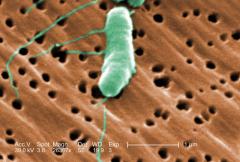
Marine prokaryotes (single celled organisms), the largest living biomass in the world’s oceans, play a fundamental role in maintaining life on the planet. Evidence has been found that, for the first time, provides a link between climate variability in the North Atlantic and the presence and spread of marine Vibrios, one of the ocean’s prokaryotes. Several species of Vibrio bacteria are responsible for infections in animals and humans.
Humans acquire Vibrio infections by eating raw or undercooked oysters or other seafood, or by swimming in contaminated water or by drinking that water. Some of the species of Vibrio that cause illness, V. vulnificus, V. alginolyticus, and V. parahaemolyticus, live in salt water and brackish water and live in plankton. Another type of Vibrio bacteria, V. cholerae, causes cholera.
The scientists used archived plankton samples collected by the Continuous Plankton Recorder survey from 1958 to 2011 and assessed the abundance of vibrios, including those that are pathogenic to people, in nine areas of the North Atlantic and the North Sea. There was a correlation with climate change and plankton number changes.

 FoodWorld