Monthly Archives: April 2014

Research – Campylobacter Articles – Travels- Petting Zoo’s

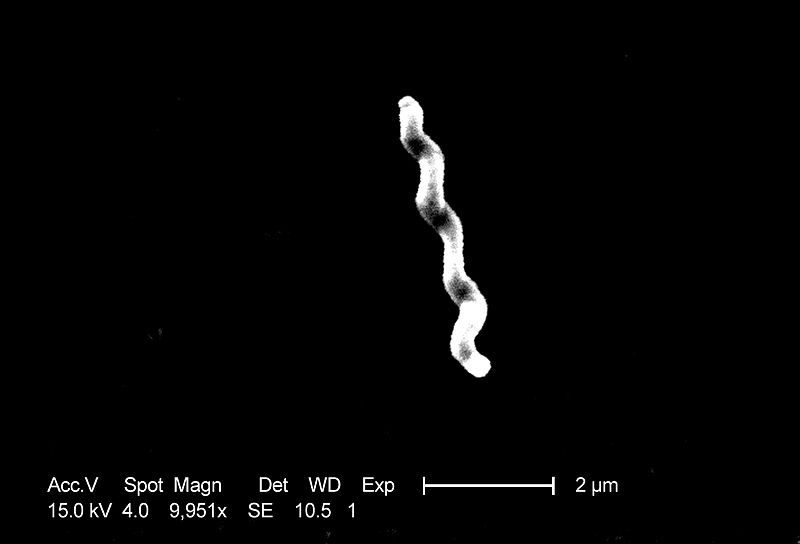
Cambridge Journals Campylobacter_jejuni_01

Multilocus sequence types (STs) were determined for 232 and 737 Campylobacter jejuni/coli isolates from Dutch travellers and domestically acquired cases, respectively. Putative risk factors for travel-related campylobacteriosis, and for domestically acquired campylobacteriosis caused by exotic STs (putatively carried by returning travellers), were investigated. Travelling to Asia, Africa, Latin America and the Caribbean, and Southern Europe significantly increased the risk of acquiring campylobacteriosis compared to travelling within Western Europe. Besides eating chicken, using antacids, and having chronic enteropathies, we identified eating vegetable salad outside Europe, drinking bottled water in high-risk destinations, and handling/eating undercooked pork as possible risk factors for travel-related campylobacteriosis. Factors associated with domestically acquired campylobacteriosis caused by exotic STs involved predominantly person-to-person contacts around popular holiday periods. We concluded that putative determinants of travel-related campylobacteriosis differ from those of domestically acquired infections and that returning travellers may carry several exotic strains that might subsequently spread to domestic populations even through limited person-to-person transmission.

Wiley Online

The significance of petting zoos for transmission of Campylobacter to humans and the effect of interventions were estimated. A stochastic QMRA model simulating a child or adult visiting a Dutch petting zoo was built. The model describes the transmission of Campylobacter in animal feces from the various animal species, fences, and the playground to ingestion by visitors through touching these so-called carriers and subsequently touching their lips. Extensive field and laboratory research was done to fulfill data needs. Fecal contamination on all carriers was measured by swabbing in 10 petting zoos, using Escherichia coli as an indicator. Carrier-hand and hand-lip touching frequencies were estimated by, in total, 13 days of observations of visitors by two observers at two petting zoos. The transmission from carrier to hand and from hand to lip by touching was measured using preapplied cow feces to which E. coli WG5 was added as an indicator. Via a Beta-Poisson dose-response function, the number of Campylobacter cases for the whole of the Netherlands (16 million population) in a year was estimated at 187 and 52 for children and adults, respectively, so 239 in total. This is significantly lower than previous QMRA results on chicken fillet and drinking water consumption. Scenarios of 90% reduction of the contamination (meant to mimic cleaning) of all fences and just goat fences reduces the number of cases by 82% and 75%, respectively. The model can easily be adapted for other fecally transmitted pathogens.


USA – FDA to Permit the Irradiation of Shellfish

FDA FDA

The U.S. Food and Drug Administration (FDA or we) is amending our current food additive regulations to allow the safe use of ionizing radiation on crustaceans (e.g., crab, shrimp, lobster, crayfish, and prawns) to control foodborne pathogens and extend the shelf life. Our action responds to a food additive petition submitted by the National Fisheries Institute. Our decision is based on a rigorous safety assessment that considered 1) potential toxicity, 2) the effect of irradiation on nutrients, and 3) potential microbiological risk that may result from treating crustaceans with ionizing radiation. The evaluation also considered previous evaluations of the safety of irradiation of other foods including poultry, meat, molluscan shellfish, iceberg lettuce, and fresh spinach. This rule covers raw, frozen, cooked, partially cooked, shelled, or dried crustaceans, or cooked, or ready-to-cook, crustaceans processed with spices or small amounts of other food ingredients.

At the maximum permitted dose of 6.0 kiloGray, this new use of ionizing radiation will reduce, but not entirely eliminate, the number of pathogenic (illness causing) microorganisms in or on crustaceans. The maximum dosage of irradiation approved is capable of reducing a number of pathogens that may be found in crustaceans, including Listeria, Vibrio, and E. coli. Irradiation is not a substitute for proper food-handling practices; therefore crustaceans treated with ionizing radiation must be stored, handled, and cooked in the same way as non-irradiated foods.


Norway- Hepatitis A – Cakes with Berries

HACCP Europa

Marexim AS is recalling cake Berries Slices (Skogsbærkakestykker) because berries used in the cake are suspected to be infected with Hepatitis A virus.

The recalled product is Berries Slices (Skogsbærkakestykker) with product number: EPD No. 2071272, Lot # 3178079418 and Best before date: 27/12/2014.

USA – CDC – Antimicrobial Resistance Program – AR

CDC E.coli O157

It’s been called public health’s ticking time bomb. Antibiotic resistance—when bacteria don’t respond to the drugs designed to kill them—threatens to return us to the time when simple infections were often fatal. Today, antibiotic resistance annually causes more than 2 million illnesses and 23,000 deaths in the United States. Tomorrow, if it continues on its current course, could be even worse:

  • A simple cut of the finger could lead to a life-threatening infection.
  • Common surgical procedures, such as hip and knee replacements, would be far riskier because of the danger of infection.
  • Dialysis patients could develop untreatable bloodstream infections.
  • Life-saving treatments that suppress immune systems, such as chemotherapy and organ transplants, could potentially cause more harm than good.
  1. Clostridium difficile (C. difficile) causes deadly diarrhea mostly in people who’ve recently had medical care and antibiotics.
  2. Carbapenem-resistant Enterobacteriaceae (CRE) are nightmare bacteria that are resistant to nearly all antibiotics and spread easily.
  3. MDR Neisseria gonorrhoeae causes gonorrhea and is showing resistance to antibiotics usually used to treat it.
  4. Extended-spectrum β-lactamase-producing Enterobacteriaceae (ESBL) are bacteria one step away from becoming CRE.
  5. MDR Salmonella causes about 100,000 illnesses in the US each year; resistant infections are more severe.
  6. Methicillin-resistant Staphylococcus aureus (MRSA) causes skin and wound infections, pneumonia, and bloodstream infections.
  7. MDR Pseudomonas causes healthcare-associated pneumonia and bloodstream infections; some strains are resistant to nearly all antibiotics.


Hepatitis A – USA and Europe – Outbreaks and Data

Food Poisoing Bulletin Virusds

The County of Rockland Department of Health is recommending that everyone who ate at the restaurant on March 29, March 30, or April 1, 2014 receive a vaccination. The vaccination is about 80% to 90% effective. The Rockland County Department of Health is offering free vaccines to patrons and employees of the restaurant on Sunday, April 13, 2014 from 11:00 am to 3:00 pm and Monday, April 14, 2014 from 9:00 am to 12:00 pm at the Rockland County Fire Training Center at 35 Firemens Memorial Drive in Pomona.

Unfortunately, for anyone who ate there March 29, 2014, today is the very last day a hepatitis A or immune globulin vaccination would be effective

Food Poisoning Bulletin

A hepatitis A alert has been issued by the Cabarrus Health Alliance, after a manager at the Chuck E. Cheese restaurant at 8016 Cambridge Commons Drive, Suite B in Charlotte, North Carolina, was diagnosed with the illness. Anyone who ate at the restaurant between March 24 and April 7, 2014 should be vaccinated against the virus.

The vaccine is only effective if given within 14 days of exposure. If you ate there before March 29, 2014 and have not been vaccinated, you must monitor yourself for the symptoms of hepatitis A and go to a doctor if you get sick

Food Poisoning Journal

Charlotte, NC, Papa John’s outlet is to blame for a Hepatitis A scare, according to the Mecklenburg County Health Department.

Anyone who ate food from the location on March 28 and 29 should get the Hepatitis A vaccine immediately.

Officials are looking into a potential Hepatitis A outbreak from the Papa John’s location in the 8000 block of Cambridge Commons in Charlotte, near Harrisburg Road and I-485.

According to the health department, a manager at that restaurant, who recently traveled out of the country, contracted Hepatitis A and may have infected Papa John’s patrons.

EFSA – Hepatitis A Data

Since 1 January 2013, 1 315 cases of hepatitis A virus (HAV) infection have been reported by 11 Member States as potentially linked to the ongoing HAV outbreak. Of these, 240 were confirmed outbreak cases, sharing the same sequence KF182323 at the junction VP1-2a of the viral genome. When first declared, the outbreak was associated with travel to Italy. In addition to Italy, seven other Member States have now reported cases with no travel history: France, Germany, Ireland, Norway, the Netherlands, Sweden and the UK. Epidemiological, microbiological and environmental investigations indicate frozen berries as the vehicle of infection for this outbreak and suggest that it could be a single outbreak, linked to a common, continuous source in the EU/EEA. However other hypotheses cannot be excluded, such as cross contamination in a food production environment or an outbreak strain that is already widespread but has, to date, gone undetected. Due to the characteristics of the pathogen (i.e. low infectivity dose and long incubation period) and of the food vehicle (i.e. long shelf-life and complex processing and distribution chain), it is expected that more cases will be reported and other Member States may become involved. In accordance with their national guidelines, Member States may consider active or passive immunisation of those in close contact with cases in order to prevent secondary transmission. Despite coordinated efforts from EFSA, ECDC, affected Member States and the European Commission (HAV-Trace Working Group), the ongoing trace-back investigation has not yet identified a likely source of contamination. The Working Group will continue the trace-back exercise and extend participation, on voluntary basis, to countries that have recently become involved, namely France, Norway and Sweden. All relevant information on national trace-back investigations shall be gathered and integrated into the HAV-Trace exercise via the RASFF (Rapid Alert System for Food and Feed) platform. Given the epidemiological and laboratory evidence of contaminated frozen berries, the risk to human health, and ongoing transmission with increasing geographical spread, affected Member States could consider implementing mitigating measures at national level. In particular, Member States could consider promoting risk communication, recommending heat treatment of frozen berries before consumption and encouraging HAV vaccination of those in contact with cases and throughout the larger community. Implementation of an enhanced sampling scheme for frozen berries at the processing and distribution level could also be considered. Enhanced epidemiological and microbiological surveillance for HAV in the EU/EEA should also be encouraged. A whole genome sequencing approach needs to be considered to examine viral isolates from different points in time during the outbreak in order to confirm the hypothesis of a single outbreak. ECDC, EFSA and the European Commission, in cooperation with the affected Member States, will continue to their efforts to identify the vehicle and source of infection and closely monitor this event. The risk assessment will be updated as soon as any new relevant information becomes available.

Canada -CFIA Updated Recall – Black Peppercorns – Salmonella

CFIA

The food recall warning issued on April 5, 2014 has been updated to include an additional product.

Organic Connections Ltd. is recalling Pusateri’s Fine Foods brand Organic Whole Black Peppercorns from the marketplace due to possible Salmonella contamination. Consumers should not consume the recalled product described below.

Recalled products

Brand Name Common Name Size Code(s) on Product UPC
Pusateri’s Fine Foods Organic Whole Black Peppercorns 245 g Lot # 040203-002 6 28240 51655 8

Greece – Croissants – Cakes – Recalled – Mould

HACCP Europa

GREECE – Greek Food Safety Authority (EFET) has initiated, following a consumer complaint, the recall of Croissant Panini dolce because the presence of green mould has been found on the surface of the product.

The recalled product is Croissant Panini dolce with hazelnut praline filling, in package of 150 g, and best before date 22/03/2014.

Hellenic Food Authority (EFET) and more specifically its Regional Directorate in Attica, following consumer complaint, found out the presence of green colored moulds in the interior layer of a cake product as well as the presence of an unacceptable odour.

The implicated product has the trade name “strawberry flavoured cake – MIDI FARCI FRAGOLA, DO-RA SNACS Srl” (in Greek: «κέικ με γεύση φράουλας- MIDI FARCI FRAGOLA, DO-RA SNACS Srl») in multi-package of 10 pieces of 28 gr each, with lot number L30213A and best before date 28/7/2014.


EFET

USA – Norovirus Outbreak at a Restaurant

Food Poisoning Bulletin Norwalk_Caspid

A suspected norovirus out beak at the Chuck E. Cheese restaurant in Maple Grove, Minnesota is being investigated by the Hennepin County Health Department. The outbreak apparently occurred over the weekend. No one has been hospitalized in this outbreak. although 18 children and adults have reported being ill.

Norway – Recall Peanuts – Alfatoxin

HACCP Europa Aflatoxin

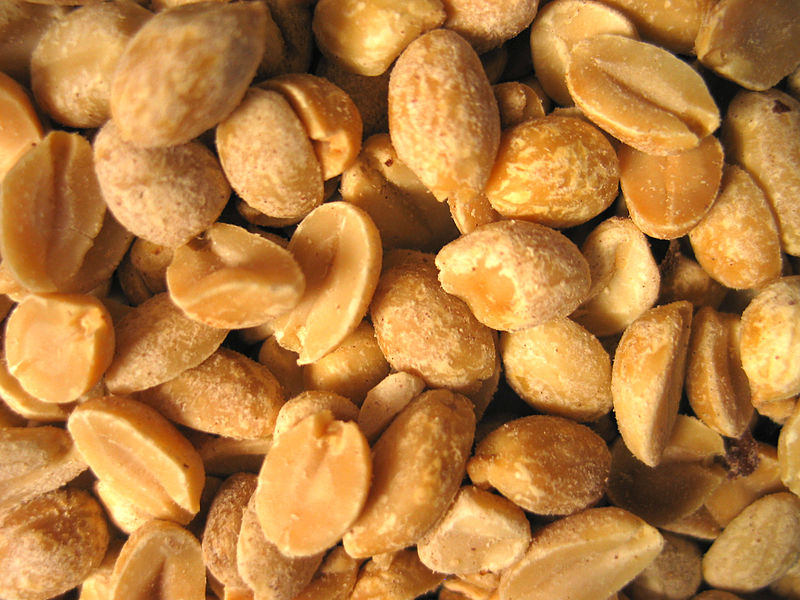
NORWAY – Asian Food Import AS is recalling raw peanuts packaged without shells, because routine test of the product indicated high levels of aflatoxins. Aflatoxins are type of toxins produced by molds. Aflatoxins are generally carcinogenic and can damage the genetic material (DNA) if exposed for a longer period.

Research – Study Warns Kitchens May Carry Multi-Drug Resistant Bacteria

LabSaints

Study warns kitchens may carry multi-drug resistant bacteria

Prefer spicy restaurant food over home-made delicacies? Get alarmed as hands of food preparers and chopping boards remain a source of transmission for multi-drug resistant bacteria such as E coli, a study warns.

“The spread of multi-drug resistant bacteria has been associated with the hospital setting, but new findings suggest that transmission of drug-resistant E coli occurs both in hospitals and kitchens,” explained Andreas Widmer from University Hospital in Basel, Switzerland.