A warning has been issued over a popular seafood dish after a dramatic increase in cases of food poisoning.
Food Safety bosses in South Australia say they have seen a spike in cases of a gastro infection linked to shellfish after people ate raw oysters.
SA Health’s acting director of Food and Controlled Drugs Branch, Joanne Cammans, said there have been 36 cases of Vibrio parahaemolyticus infections linked to eating raw oysters since September.
Quebec , August 18, 2020 – MAPAQ, in collaboration with the Food Inspection Division of the City of Montreal and the company Aux Vivres, located at 5333 avenue Casgrain, in Montreal , is warning the population not to consume the products indicated in the table below, as these foods are likely to contain the bacterium Bacillus cereus .
Product name
Format
CUP
Targeted lot
“Maple-smoked tempeh”
In addition to this, you need to know more about it.200 g
27932500455
Units sold bearing the use-by date (“best before”) of September 8, 2020
“Smoked onion tempeh”
200 g
627932500752
Units sold bearing the expiration date (“best before”) of September 22, 2020
“Veggie burger”
380 g
627932500158
Units sold bearing the expiration date (“best before”) of August 13, 2020
The products that are the subject of this advisory were available for sale at several locations across the province . Tempehs were vacuum-packed in clear plastic wrap and sold refrigerated. The “Veggie burger” was packaged in a clear plastic container with a white plastic lid and was sold refrigerated. The label includes, in addition to the proper name of the products, the words “AUX VIVRES”.
The operator is voluntarily recalling the products in question. He agreed with the MAPAQ and the Food Inspection Division of the City of Montreal to disseminate this notice as a precautionary measure. It should be noted that no case of illness associated with the consumption of these foods has been reported to MAPAQ to date.
People who have a unit of these products in their possession are therefore advised not to consume it. They must either return it to the establishment where they bought it or throw it away. Even if the products do not show any signs of spoilage or a suspicious odor, consuming them may represent a health risk. Symptoms of Bacillus cereus poisoning can occur between 1.5 and 5 hours after consuming the contaminated food and manifest as nausea and vomiting. However, they can also appear 8 to 16 hours after consuming the food. In this case, the main symptoms are nausea, abdominal cramps, diarrhea and sometimes vomiting. Usually, symptoms go away within 24 hours.
Additional information
Source:
Media relations Communications Department Ministry of Agriculture, Fisheries and Food Tel. : 418 380-2100, extension 3512 www.mapaq.gouv.qc.ca
Thailand health officials issued a warning Sunday advising the public against the consumption of contaminated boiled bamboo shoot that are packaged in plastic bags or buckles due to a botulism risk.
The Minister of Public Health, Rajata Rajatanavin has advised the public to re-boil bagged or buckled boiled bamboo shoots prior to consumption for 15 minutes, in order to get rid of Clostridium botulinum bacteria.
He has said that these toxins can be easily destroyed after boiling the food for 15 minutes. However, boiled bamboo shoots with unusual package, color, or smell, should not be consumed, and advises the public to get rid of it by burying it.
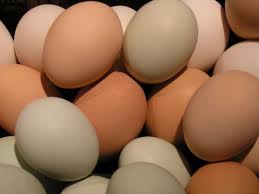
Fresh eggs must be handled carefully to avoid the possibility of foodborne illness, often called “food poisoning.” Even eggs with clean, uncracked shells may occasionally contain bacteria called Salmonella that can cause an intestinal infection.
The U.S. Food and Drug Administration (FDA) estimates that 142,000 illnesses each year are caused by consuming eggs contaminated with Salmonella. FDA has put regulations in place to help prevent contamination of eggs on the farm and during shipping and storage. But consumers play a key role in preventing illness associated with eggs. In fact, the most effective way to prevent egg-related illness is by knowing how to buy, store, handle and cook eggs — or foods that contain them — safely. Follow these safe handling tips to help protect yourself and your family
An analysis conducted by researchers at the Johns Hopkins Center for a Livable Future (CLF) found that the risks of drinking raw (unpasteurized) cow’s milk are significant. Consumers are nearly 100 times more likely to get foodborne illness from drinking raw milk than they are from drinking pasteurized milk. In fact, the researchers determined that raw milk was associated with over half of all milk-related foodborne illness, even though only an estimated 3.5% of the U.S. population consumes raw milk.
The Cost Estimates of Foodborne Illnesses data product provides detailed data about the costs of major foodborne illnesses in the United States, updating and extending previous ERS research. This data set includes:
Detailed identification of specific disease outcomes for foodborne infections caused by 15 major pathogens in the United States
Associated outpatient and inpatient expenditures on medical care
Associated lost wages
Estimates of individuals’ willingness to pay to reduce mortality resulting from these foodborne illnesses acquired in the United States.
Disease outcomes include both acute illness and chronic disease that sometimes follow these acute illnesses. These 15 pathogens account for over 95 percent of the illnesses and deaths from foodborne illnesses acquired in the United States for which the U.S. Centers for Disease Control and Prevention (CDC) can identify a pathogen cause. These estimates build on CDC estimates of the incidence of foodborne disease; peer-reviewed synthesis of data on medical costs, and economic, medical and epidemiological literature; and publicly available data on wages.
This data product provides Federal agencies such as USDA’s Food Safety and Inspection Service (FSIS) with a set of consistent, peer-reviewed estimates of the costs of foodborne illness that can be used in analyzing the impact of Federal regulation. It also provides other stakeholders and the general public with a means of understanding the relative impact of different foodborne infections in the United States. Cost estimates of foodborne illnesses have been used in the past to help inform food-safety policy discussions, and these updated cost estimates will provide a foundation for economic analysis of food safety policy.
This product consists of 15 Excel files detailing disease outcomes for each pathogen together with associated costs, technical notes and documentation, and links to associated research projects and publications.
Anything that touches your food can be a source of contamination and foodborne illness – including cutting boards.
For example, if you cut up a raw chicken, and then use the same cutting board to slice a tomato for your salad, you run the risk of cross-contamination – with bacteria from the chicken being transferred to the tomato. That, of course, would be bad.
And vegetarians aren’t off the hook either. Fruits and vegetables can also carry pathogens (and transfer them to cutting boards).
To reduce the risk of foodborne illness in your kitchen, here are some things you should know about cutting boards.
A study on multiple countries finds that food safety education is lacking. Improving education about food-handling practices may decrease foodborne illness, thus improving food security.
Personally I think that this could be applied to any country!




 FoodWorld