Category Archives: Uncategorized

USA -Oak Leaf Farm E. coli Outbreak, 34 Sick

Food Poisoning Bulletin Ecoli Istock

An E. coli O157:H7 outbreak linked to Oak Leaf Farm in Lebanon, Connecticut has now sickened 34 people, according to the State Department of Public Health (DPH). Officials are advising anyone who recently purchased goats from Oak Leaf Farm to consult with their livestock veterinarian.

The patients, who range in age from 10 months to 45 years old, have a median age of five. Twenty eight of those sickened are children 14 years old and under; 18 of them are five and under.

USA -FDA Updates Dole Leafy Greens Listeria Outbreak

Food Poisoning Bulletin

The FDA has updated its investigation into the multistate outbreak of Listeria monocytogenes in Dole Leafy Greens produced in the facility in Springfield, Ohio. Nineteen people infected with the outbreak strain were reported in nine states. The outbreak stretched from July 2015 through February 2016.

The case count per state is: Connecticut (1), Indiana (1), Massachusetts (1), Michigan (4), Missouri (2), New Jersey (1), New York (6), Ohio (2), and Pennsylvania (1). Seventy-four percent of all ill persons were female. All nineteen people sickened in this outbreak were hospitalized, and one person died as a result of listeriosis. One of the illnesses occurred in a pregnant woman.

USA -Recalls Frozen Broccoli Cuts Because of Possible Health Risk – Listeria monocytogenes

FDA

Alimentos Congelados, S.A. (Pinula) is voluntarily recalling 1,800 cases of Frozen Broccoli Cuts because it has the potential to be contaminated with Listeria Monocytogenes, an organism which can cause serious and sometimes fatal infections in young children, frail or elderly people, and others with weakened immune systems. Although healthy individuals may suffer only short-term symptoms such as high fever, severe headache, stiffness, nausea, abdominal pain and diarrhea, Listeria infection can cause miscarriages and stillbirths among pregnant women.

The Frozen Broccoli Cuts were distributed to stores in the following states: Indiana, Kentucky, Ohio, Tennessee, Virginia, West Virginia, Florida, Georgia, Alabama, South Carolina and North Carolina.

The affected Frozen Broccoli Cuts were distributed in poly bags under the following label and code:

  • WYLWOOD Fresh Frozen Broccoli Cuts, NET WT. 16 OZ (1 LB), UPC 5193300110, with bag code: A25335P and A15335P

The company has not received any complaints in relation to this product and is not aware of any illnesses associated with the product to date.

The recall was the result of retail package of Frozen Broccoli Cuts being tested by the State of Ohio Department of Agriculture. The Frozen Broccoli Cuts had tested positive for Listeria Monocytogenes. The company has ceased distribution of Frozen Broccoli Cuts, and is fully cooperating with regulatory agencies.

Consumers who purchased the Frozen Broccoli Cuts are urged not to consume this product and throw it away. Consumers requiring refund or with questions can contact the company at 1-800-888-4646 and ask for Consumer Affairs Monday thru Friday between 8:00AM and 5:00 PM EST.


USA -Pittsburgh Food Bank Recalls Mandarin Oranges

Food Poisoning Bulletin

Greater Pittsburgh Community Food Bank has issued a recall of one lot of Imperial Choice Mandarin Oranges Broken Segments in Light Syrup because the product may be contaminated by with pathogens, which could lead to serious or life-threatening illness if consumed.

The recall affects cans marked with code 4200/01029. Some of the cans from this lot may leak, bulge or burst open. Others appear normal.


UK -Farm investigated after visitors test positive for parasite which causes a diarrheal disease – Cryptosporidium

Wales Online 763px-Cryptosporidium_parvum_01

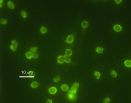
A Monmouthshire farm is being investigated after a number of visitors tested positive for a microscopic parasite that causes a diarrheal disease.

Public Health Wales, Torfaen County Borough Council and Monmouthshire County Council are investigating an outbreak of cryptosporidium at Coleg Gwent’s farm in Usk .

Three people have tested positive for cryptosporidium and eight others are under investigation after a regular attendance at the farm

Research -Campylobacter jejuni Infections Associated with Raw Milk Consumption — Utah, 2014

CDC

In May 2014, the Utah Public Health Laboratory (UPHL) notified the Utah Department of Health (UDOH) of specimens from three patients infected with Campylobacter jejuni yielding indistinguishable pulsed-field gel electrophoresis (PFGE) patterns. All three patients had consumed raw (unpasteurized and nonhomogenized) milk from dairy A. In Utah, raw milk sales are legal from farm to consumer with a sales permit from the Utah Department of Agriculture and Food (UDAF). Raw milk dairies are required to submit monthly milk samples to UDAF for somatic cell and coliform counts, both of which are indicators of raw milk contamination.

Information -Guidance for Industry: Refrigerated Carrot Juice and Other Refrigerated Low-Acid Juices – Clostridium

FDA closta

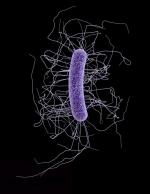
This guidance is intended for processors of refrigerated carrot juice and other refrigerated low-acid juices, which can pose a risk of botulism poisoning if juice that is not processed to eliminate or prevent the growth of Clostridium botulinum spores that may be present is subsequently stored without proper refrigeration.

The recommendations in this guidance only pertain to low-acid juice products subject to the pathogen reduction provisions of the Hazard Analysis and Critical Control Point (HACCP) requirements of 21 CFR Part 120 (the juice HACCP regulations). This guidance does not pertain to low acid and acidified juice products subject to the requirements of 21 CFR Parts 108, 113 and 114. (Such products are not subject to the pathogen reduction provisions in the juice HACCP regulations, 21 CFR 120.24.) Further, these recommendations do not pertain to any other foods that need refrigeration by consumers to maintain product safety. For other foods that need refrigeration by consumers to maintain product safety, see the guidance for the labeling of such foods at http://www.cfsan.fda.gov/guidance.html.

FDA’s guidance documents, including this guidance, do not establish legally enforceable responsibilities. Instead, guidances describe the Agency’s current thinking on a topic and should be viewed only as a recommendation, unless specific regulatory or statutory requirements are cited. The use of the word should in Agency guidances means that something is suggested or recommended, but not required.

UK – FSA Recall -TRS Jeera (Cumin) Powder and TRS Chilli (Extra Hot) Powder Recalled Due to the Presence of Salmonella

FSA

The original Product Recall Information Notice issued on 29 March 2016 can be found at the link above

Risk

Salmonella is a bacterium that can cause food poisoning.

Product details

Product: TRS Ground Cumin (Jeera) Powder
Pack size:  100g
Batch no: P200116
‘Best before’ date:  30 June 2017

​​Product: TRS Chilli Powder (Extra Hot)
Pack size:  400g
Batch no: P160303
‘Best before’ date:  31 March 2018

Action taken by the company

TRS Wholesale Company Ltd is recalling the above products. The company will be displaying point-of-sale notices in all stores. These notices will tell consumers why the products are being recalled and will tell them what to do if they have bought the products.

No further TRS Wholesale Company Ltd products are known to be affected.

Advice to consumers

If you have bought any of the above products, do not consume it. Instead, return it to the store from where it was bought for a full refund.

About product recalls and withdrawals

If there is a problem with a food product that means it should not be sold, then it might be ‘withdrawn’ (taken off the shelves) or ‘recalled’ (when customers are asked to return the product). The FSA issues Product Withdrawal Information Notices and Product Recall Information Notices to let consumers and local authorities know about problems associated with food. In some cases, a ‘Food Alert for Action’ is issued. This provides local authorities with details of specific action to be taken on behalf of consumers.


Research – Salmonella -Efficacy of Traditional Almond Decontamination Treatments and Electron Beam Irradiation against Heat-Resistant Salmonella Strains

Ingenta Connect Salmonellaa

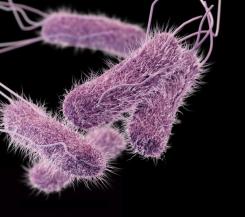
Two outbreaks of salmonellosis were linked to the consumption of raw almonds from California in 2001 and 2004. As a result, federal regulations were developed, which mandate that all almonds grown in California must be treated with a process that results in a 4-log reduction of Salmonella. Because most of the technologies approved to treat almonds rely on the application of heat to control Salmonella, an evaluation of alternative technologies for inactivating heat-resistant Salmonella Enteritidis PT30 and Salmonella Senftenberg 775W was needed. In this study, almonds were inoculated with Salmonella Enteritidis PT30 and Salmonella Senftenberg 775W and then treated with an electron beam (e-beam) or by blanching or oil roasting. The irradiation D 10-values for Salmonella Enteritidis PT30 and Salmonella Senftenberg 775W treated with e-beam were 0.90 and 0.72 kGy, respectively. For heat treatments, thermal D 10-values for Salmonella Enteritidis PT30 and Salmonella Senftenberg 775W strains were 15.6 and 12.4 s, respectively, when subjected to blanching at 88°C and 13.2 and 10.9 s, respectively, when roasted in oil at 127 ± 2°C. No significant differences in irradiation and thermal treatment results were observed between Salmonella Enteritidis PT30 and Salmonella Senftenberg 775W (P > 0.05), indicating that e-beam irradiation may be a feasible technology for reducing Salmonella in almonds. However, the sensory changes resulting from irradiating at the doses used in this study must be evaluated before e-beam irradiation can be used as a nonthermal alternative for decontamination of almonds.

Research – Noroviurs -Norovirus Infection and Acquired Immunity in 8 Countries: Results From the MAL-ED Study

Oxford Journals Norwalk_Caspid

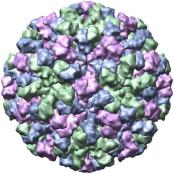
Background. Norovirus is an important cause of childhood diarrhea. We present data from a longitudinal, multicountry study describing norovirus epidemiology during the first 2 years of life.

Methods. A birth cohort of 1457 children across 8 countries contributed 7077 diarrheal stools for norovirus testing. A subset of 199 children contributed additional asymptomatic samples (2307) and diarrheal stools (770), which were used to derive incidence rates and evaluate evidence for acquired immunity.

Results. Across sites, 89% of children experienced at least 1 norovirus infection before 24 months, and 22.7% of all diarrheal stools were norovirus positive. Severity of norovirus-positive diarrhea was comparable to other enteropathogens, with the exception of rotavirus. Incidence of genogroup II (GII) infection was higher than genogroup I and peaked at 6–11 months across sites. Undernutrition was a risk factor for symptomatic norovirus infection, with an increase in 1 standard deviation of length-for-age z score associated with a 17% reduction (odds ratio, 0.83 [95% confidence interval, .72–.97]; P = .011) in the odds of experiencing diarrhea when norovirus was present, after accounting for genogroup, rotavirus vaccine, and age. Evidence of acquired immunity was observed among GII infections only: Children with prior GII infection were found to have a 27% reduction in the hazard of subsequent infection (hazard ratio, 0.727; P = .010).

Conclusions. The high prevalence of norovirus across 8 sites in highly variable epidemiologic settings and demonstration of protective immunity for GII infections provide support for investment in vaccine development.