Category Archives: Uncategorized

Research -Two Linked Enteroinvasive Escherichia coli Outbreaks, Nottingham, UK, June 2014

CDC

Enteroinvasive Escherichia coli (EIEC) outbreaks are uncommon in Europe. In June 2014, two EIEC outbreaks occurred in Nottingham, UK, within 2 days; outbreak A was linked to a takeaway restaurant and outbreak B to a wedding party. We conducted 2 analytical studies: a case–control study for outbreak A and a cohort study for outbreak B. We tested microbiological and environmental samples, including by using whole-genome sequencing. For both outbreaks combined, we identified 157 probable case-patients; 27 were laboratory-confirmed as EIEC O96:H19–positive. Combined epidemiologic, microbiological, and environmental findings implicated lettuce as the vehicle of infection in outbreak A, but the source of the organism remained unknown. Whole-genome sequencing identified the same organism in cases from both outbreaks, but no epidemiologic link was confirmed. These outbreaks highlight that EIEC has the capacity to cause large and severe gastrointestinal disease outbreaks and should be considered as a potential pathogen in foodborne outbreaks in Europe.
 

Research -Risk Assessment of Human Listeriosis from Semisoft Cheeses Made from Raw Sheep’s Milk in Lazio and Tuscany (Italy)

Wiley Online imagesCAE10AJI

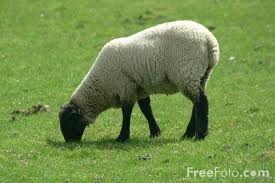
Semisoft cheese made from raw sheep’s milk is traditionally and economically important in southern Europe. However, raw milk cheese is also a known vehicle of human listeriosis and contamination of sheep cheese with Listeria monocytogenes has been reported. In the present study, we have developed and applied a quantitative risk assessment model, based on available evidence and challenge testing, to estimate risk of invasive listeriosis due to consumption of an artisanal sheep cheese made with raw milk collected from a single flock in central Italy. In the model, contamination of milk may originate from the farm environment or from mastitic animals, with potential growth of the pathogen in bulk milk and during cheese ripening. Based on the 48-day challenge test of a local semisoft raw sheep’s milk cheese we found limited growth only during the initial phase of ripening (24 hours) and no growth or limited decline during the following ripening period. In our simulation, in the baseline scenario, 2.2% of cheese servings are estimated to have at least 1 colony forming unit (CFU) per gram. Of these, 15.1% would be above the current E.U. limit of 100 CFU/g (5.2% would exceed 1,000 CFU/g). Risk of invasive listeriosis per random serving is estimated in the 10−12 range (mean) for healthy adults, and in the 10−10 range (mean) for vulnerable populations. When small flocks (10–36 animals) are combined with the presence of a sheep with undetected subclinical mastitis, risk of listeriosis increases and such flocks may represent a public health risk.

UK -Salmonella in Spice

Coventry Telegraph

A popular spice product is being recalled from supermarket shelves across the country – because of fears it may contain SALMONELLA.

TRS Wholesale Company Ltd issued an initial alert in March, after they recalled products after the bacterium was found.

And now the company is extending the product recall to include a new batch.

Salmonella is a bacterium that can cause food poisoning, with symptoms ranging from diarrhoea and a fever to abdominal cramps.

It usually lasts four to seven days, after symptoms develop between 12 to 72 hours post-consumption of contaminated foods.

In extreme cases, diarrhoea and dehydration may be so severe that hospital treatment is required.

In a statement on the Food Standards Agency (FSA) website, it was revealed the company is recalling its Dhania (Coriander) Powder amid health concerns.

USA -Botulism Outbreak at Mississippi Prison

Botulism Blog

The  Centers for Disease Control and Prevention is investigating a botulism outbreak at the federal prison in Yazoo City after 17 inmates became ill from drinking homemade alcohol.

Last week, the inmates consumed alcohol they made in the prison.

Research -Human norovirus transmission and evolution in a changing world

Nature Reviews Norwalk_Caspid

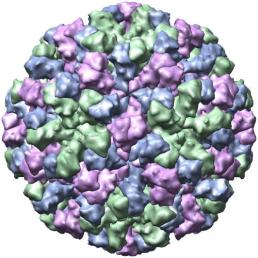
Norovirus infections are a major cause of gastroenteritis, and outbreaks occur frequently. Several factors are currently increasing the challenge posed by norovirus infections to global health, notably the increasing number of infections in immunocompromised individuals, who are more susceptible to disease, and the globalization of the food industry, which enables large norovirus outbreaks to occur on an international scale. Furthermore, the rapid rate of the genetic and antigenic evolution of circulating noroviruses complicates the development of vaccines and therapies that are required to counter these challenges. In this Review, we describe recent advances in the study of the transmission, pathogenesis and evolution of human noroviruses, and consider the ongoing risk of norovirus outbreaks, together with the future prospects for therapeutics, in a rapidly changing world.


USA -Ajuua’s Mexican Restaurant Employees Test Positive for Salmonella

Food Poisoning Journal

The Odessa American reports that Six Ajuua’s Mexican Restaurant employees have tested positive for Salmonella, but officials do not know if they contracted the infection before or after the outbreak was caught by Ector County health officials.

Ector County Health Department Director Gino Solla said the tests for the six employees came to the department Monday, and the number of lab-confirmed tests has increased to 10 since the outbreak was confirmed on June 6. The number of probable cases, he added, was now at 23.

USA -G & M Co. Recalls Beef Products Due To Possible E. Coli O157:H7 Contamination

FSIS

G & M Co., a Newark, N.J. establishment, is recalling approximately 3,586 pounds of beef products that may be contaminated with E. coli O157:H7, the U.S. Department of Agriculture’s Food Safety and Inspection Service (FSIS) announced today.

The bulk beef cuts and trimmings items were produced on June 8, 9, and 10, 2016. The following products are subject to recall:

  • 3,586-lbs. – Various box sizes ranging from 30-195 lb. containing plastic wrapped bulk beef cuts and trimmings marked only with plant identifier “M5476.”

The products subject to recall bear establishment number “M5476” inside the USDA mark of inspection. These items were shipped to retail locations in New Jersey and New York.

The issue was identified on June 14, 2016, when FSIS Inspection Program Personnel (IPP) conducted trace-back and trace-forward activities after the firm received a confirmed positive for Escherichia coli O157:H7 from FSIS sampling and testing. There have been no confirmed reports of adverse reactions due to consumption of these products.

USA -Listeria monocytogenes and Sunflower Seeds

FDA Sunflower_Seeds_Kaldari

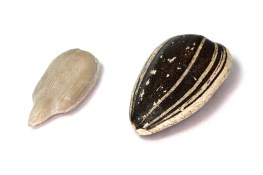
Creative Snacks Co. of Greensboro, North Carolina is expanding their recall of specific lot codes of bulk and packaged sunflower seed products due to the potential presence of Listeria monocytogenes. We have been notified by SunOpta, our sunflower seed supplier, that the company has issued a further expanded voluntary recall for sunflower seeds that were processed in their Crookston, Minnesota facility between May 31, 2015 and January 31, 2016. Listeria monocytogenes is an organism which can cause serious and sometimes fatal infections in young children, frail or elderly people, and others with weakened immune systems. Although healthy individuals may suffer only short-term symptoms such as high fever, severe headache, stiffness, nausea, abdominal pain and diarrhea, Listeria infection can cause miscarriages and stillbirths among pregnant women. It is worth noting that no illnesses have been reported to date and that the recall is a precautionary measure.

Creative Snacks is recalling all products that contain the SunOpta sunflower seeds in question. The product being recalled has been distributed to retailers nationwide and is being sold in a variety of formats including plastic rigid containers, small re-sealable bags and in bulk.

FDA

Longmont, CO. — Honey Bunchie, LLC is initiating a voluntary recall of a limited number of Honey Bunchies Gourmet Honey Bars that contain SunOpta sunflower kernels that have the potential of contamination with Listeria monocytogenes.

The recalled products were distributed directly from Honey Bunchie, LLC to distributors, retailers and online consumers between 08/05/2015 – 03/15/2016.

To date, Honey Bunchie, LLC has not received any reports of illness; however, the company is initiating this voluntary recall in an abundance of caution as part of its commitment to the health and safety of its consumers.


Information -Raw Milk – “Cold Pressure Sterilisation”

Safe Food imagesCAZ9J1WP

Many of you will know that I have written several articles on the dangers of consuming raw milk.  In my opinion, any perceived benefits are greatly outweighed by the real risks.

However, if you will permit me to mix metaphors, you can now have your cake and eat it.

An Australian company, Made by Cow, is offering raw milk processed by “cold pressure”.  There are few details available, but it appears that the company is using an established process (High Pressure Processing, HPP) to make the milk as safe as pasteurised milk.  The process has been approved by the New South Wales Food Authority, and the product can be sold in stores.

India -50 Gujarat police cadets hospitalised after food poisoning

News

Ahmedabad: Fifty cadets of the Gujarat State Reserve Police Force (SRPF) were on Friday admitted to the Maharaja Sayajirao Civil Hospital in Vadodara after a serious bout of food poisoning over the last two days.

Of the 50 police cadets, eight were stated to be in critical condition.

Official sources here said 250 cadets were undergoing training at the Lalbaug premises of the SRPF and of them 50 suffered from severe vomiting and diarrhoea after consuming food served to them at the training camp.

The cadets said they had been complaining to the authorities about poor quality of food at their training camp besides pathetic living conditions but to no avail.

Requesting anonymity, the cadets alleged that the food being served to them was often stale and would smell.