Category Archives: Uncategorized

UK -Public Health England investigating 51 cases of E.coli in Gloucestershire, Avon and Wiltshire

Gloucester Live

Investigations continue into an outbreak of E.coli infections in Gloucestershire, Avon and Wiltshire.

Public Health England is working with Gloucestershire County Council to find out more about the cluster of E.coli 0157 infections
Read more: http://www.gloucestershirelive.co.uk/public-health-england-investigating-51-cases-of-e-coli-in-gloucestershire-avon-and-wiltshire/story-29477015-detail/story.html#ixzz4Dc9w37Zn


Research -Insights into bacteriophage application in controlling Vibrio species

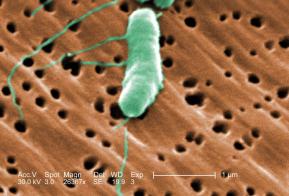
Vibrio_vulnificus_01a

Bacterial infections from various organisms including Vibrio sp. pose a serious hazard to humans in many forms from clinical infection to affecting the yield of agriculture and aquaculture via infection of livestock. Vibrio sp. is one of the main foodborne pathogens causing human infection and is also a common cause of losses in the aquaculture industry. Prophylactic and therapeutic usage of antibiotics has become the mainstay of managing this problem, however this in turn led to the emergence of multidrug resistant strains of bacteria in the environment; which has raised awareness of the critical need for alternative non antibiotic based methods of preventing and treating bacterial infections. Bacteriophages – viruses that infect and result in the death of bacteria – are currently of great interest as a highly viable alternative to antibiotics. This article provides an insight into bacteriophage application in controlling Vibrio species as well underlining the advantages and drawbacks of phage therapy.

http://journal.frontiersin.org/article/10.3389/fmicb.2016.01114/abstract

Canada -Updated Food Recall Warning – Fjord Laks brand fish products recalled due to potential growth of dangerous bacteria if sold refrigerated – Clostridiu botulinum

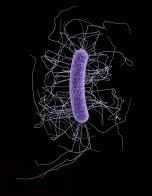
CFIA closta

http://www.inspection.gc.ca/about-the-cfia/newsroom/food-recall-warnings/complete-listing/2016-07-05b/eng/1467767989141/1467767992480

Ottawa, July 5, 2016 – The food recall warning issued on July 4, 2016 has been updated to include additional distribution information. This additional information was identified during the Canadian Food Inspection Agency’s (CFIA) food safety investigation.

A & E Distribution Inc. is recalling Fjord Laks brand fish products from the marketplace because they may permit the growth of Clostridium botulinum if sold refrigerated. Consumers should not consume the recalled products described below.

Recalled products

Brand Name Common Name Size Code(s) on Product UPC
Fjord Laks Irish Smoked Salmon 100 g All Best Before dates up to and including July 16, 2016. Variable
Fjord Laks Royal Smoked Empereur Gravlax Marinated Smoked Salmon 100 g All Best Before dates up to and including July 16, 2016. Variable
Fjord Laks Smoked Rainbow Trout 125 g All Best Before dates up to and including July 16, 2016. Variable
Fjord Laks Scottish Smoked Salmon 100 g All Best Before dates up to and including July 18, 2016. Variable


Canada -fresh chili peppers recalled due to Salmonella

CFIA Salmonella

Recall details

Ottawa, July 5, 2016 – Canada Herb is recalling Canada Herb brand fresh chili peppers from the marketplace due to possible Salmonella contamination. Consumers should not consume the recalled product described below.

Only fresh chili peppers imported by Canada Herb and sold from June 19, 2016 to July 05, 2016, inclusively is affected by this recall. This product has been sold in clear plastic bags bearing the name Canada Herb. Consumers who are unsure if they have purchased the affected product are advised to contact their retailer.

http://www.inspection.gc.ca/about-the-cfia/newsroom/food-recall-warnings/complete-listing/2016-07-05c/eng/1467777440668/1467777443711

Recalled products

Brand Name Common Name Size Code(s) on Product UPC
Canada Herb Fresh chili peppers NA (approximately 454 g) None None

UK -PHE remind about the importance of good hygiene and food preparation practice as they continue to investigate an outbreak of E.coli O157.

PHE

Public Health England (PHE) is investigating an outbreak of a strain of E. coli O157 which may be associated with eating leafy salad. To date 84 cases (figure correct as at 1 July 2016) of this strain of E. Coli have been identified (77 in England, 5 in Wales, 1 in the Channel Islands and 1 in Scotland) with the majority of cases confirmed in the South West of England.

PHE has been working to establish the cause of the outbreak and identified that several of the affected individuals ate salad items prior to becoming unwell, although no individual supplier has been identified as the source. PHE is now reminding people to maintain good hygiene and food preparation practices in response to the current outbreak.

E.coli O157 infection can cause a range of symptoms, from mild diarrhoea to bloody diarrhoea with severe abdominal pain. On rare occasions, it can also cause more serious medical conditions and can be caught by eating infected food or by contact with infected animals. It can also be passed from an infected individual to another person if hand and toilet hygiene is poor.

Dr Isabel Oliver, director of PHE’s field epidemiology service, said:

PHE has put in place heightened surveillance for this strain of E.coli and is and carefully monitoring the reporting of cases across the entire country. To assist with this investigation, we have convened a national outbreak control team to identify the source of infection and to ensure all necessary control measures are put in place.

We continue to stress the importance of good hand and food hygiene practices at all times. It is vital to wash hands thoroughly using soap and water after using the toilet, before and after handling food and after contact with any animal and pets, including farm animals. Small children should also be supervised when washing their hands.

We also urge people to remove any loose soil before storing vegetables and thoroughly wash all vegetables, fruit and salad items that will be eaten raw. These measures may reduce the risk of infection from any E.coli contaminated vegetables, fruit and salad but will not eliminate any risk of infection completely. PHE will work alongside the Food Standards Agency to provide any further necessary public health advice as investigations continue.

The particular strain involved in the outbreak has been identified as phage type (PT) 34.

https://www.gov.uk/government/news/ecoli-o157-investigation-continues

Research -‘Bacteria killer’ found to target Salmonella on poultrymeat

Farmers Weekly

US scientists believe they have found an effective way to cut salmonella rates from meat products using novel virus strains.

The researchers, from the University of Nevada, have reduced salmonella in meat products by up to 90% after using a new pathogen prevention system.

In the research, meat products contaminated with four salmonella strains were infected with myoviridae bacteriophages – a virus that targets and destroys targeted bacteria. They are not considered harmful to human health.


https://www.fwi.co.uk/poultry/bacteria-killer-found-to-target-salmonella-on-poultrymeat.htm

USA -MN Ag: Asia Market Dried Pike, Bony Fish Pose Botulism Risk

Food Poisoning Bulletin

The Minnesota Department of Agriculture (MDA) has issued a consumer advisory for dried, uneviscerated pike and bony fish sold from Asia Market of Spring Lake Park, for potential contamination with Clostridium botulinum, a bacterium which can cause botulism, a life-threatening illness or death.

Symptoms of botulism, a potentially fatal form of food poisoning, include general weakness, dizziness, double vision, and trouble with speaking, swallowing, breathing abdominal distension, and constipation. Anyone experiencing  these problems should seek immediate medical attention.

The product,  dried pike and bony fish, is five inches in length and still contains the viscera (internal organs) of the fish. The product was sold from Asia Market between May 17, 2016 and June 10, 2016.

https://foodpoisoningbulletin.com/2016/mn-ag-asia-market-dried-pike-bony-fish-pose-botulism-risk/?utm_source=feedburner&utm_medium=email&utm_campaign=Feed%3A+FoodPoisoningBulletin+%28Food+Poisoning+Bulletin%29

Canada -Updated Food Recall Warning – Fjord Laks brand Scottish Smoked Salmon recalled due to potential growth of dangerous bacteria if sold refrigerated

CFIA

Ottawa, July 4, 2016 – The food recall warning issued on July 02, 2016 has been updated to include additional product information. This additional information was identified during the Canadian Food Inspection Agency’s (CFIA) food safety investigation.

A & E Distribution Inc. is recalling Fjord Laks brand Scottish Smoked Salmon from the marketplace because it may permit the growth of Clostridium botulinum f sold refrigerated. Consumers should not consume the recalled product described below.

Recalled products

Brand Name Common Name Size Code(s) on Product UPC
Fjord Laks Scottish Smoked Salmon 100 g All Best Before dates up to and including July 18, 2016 Variable

Research -Comparing Characteristics of Sporadic and Outbreak-Associated Foodborne Illnesses, United States, 2004–2011

CDC

Outbreak data have been used to estimate the proportion of illnesses attributable to different foods. Applying outbreak-based attribution estimates to nonoutbreak foodborne illnesses requires an assumption of similar exposure pathways for outbreak and sporadic illnesses. This assumption cannot be tested, but other comparisons can assess its veracity. Our study compares demographic, clinical, temporal, and geographic characteristics of outbreak and sporadic illnesses from Campylobacter, Escherichia coli O157, Listeria, and Salmonella bacteria ascertained by the Foodborne Diseases Active Surveillance Network (FoodNet). Differences among FoodNet sites in outbreak and sporadic illnesses might reflect differences in surveillance practices. For Campylobacter, Listeria, and Escherichia coli O157, outbreak and sporadic illnesses are similar for severity, sex, and age. For Salmonella, outbreak and sporadic illnesses are similar for severity and sex. Nevertheless, the percentage of outbreak illnesses in the youngest age category was lower. Therefore, we do not reject the assumption that outbreak and sporadic illnesses are similar.

http://wwwnc.cdc.gov/eid/article/22/7/15-0833_article?source=govdelivery&utm_medium=email&utm_source=govdelivery

Research -Salmonella in meat products reduced by 90 percent in new research

Science  Direct

An old technology that uses natural bacteria predators, called bacteriophages, is the focus of new research at the University of Nevada, Reno. The technique is being used to reduce salmonella bacteria in meat products.

Assistant Professor Amilton de Mello, from the College of Agriculture, Biotechnology and Natural Resources at the University of Nevada, Reno, presented his research at the international American Meat Science Association’s conference that ends today in Texas.

“We were able to reduce salmonella by as much as 90 percent in ground poultry, ground pork and ground beef,” de Mello reported. “We’re excited to be able to show such good results, food safety is an important part of our work and salmonella is one of the most prevalent bacteria in the nation’s food supply.”

Salmonella is one of the most common causes of food borne illnesses in the United States. The bacteria can cause diarrhea, fever, vomiting and abdominal cramps. In people with weaker immune systems, or in young children and the elderly, it can be fatal. It is estimated to cause one million foodborne illnesses in the United States every year, with 19,000 hospitalizations and 380 deaths, according to the Centers for Disease Control and Prevention.

De Mello’s research treated meat products infected with four types of salmonella by applying Myoviridae bacteriophages during mixing. Bacteriophages are commonly found in our environment. They are viruses that can only harm specific bacterial cells and are harmless to humans, animals and plants.

In the experiments, the salmonella bacteria was inoculated on refrigerated meat and poultry trim, then the treatment was applied to the meat before grinding. The bacteriophages invaded the cells of the bacteria and destroyed them.

“On the final ground meat products, there was a 10-fold decrease of salmonella,” de Mello said. “The results are very encouraging and we’re hoping this can be adopted by the meat industry to increase food safety.”

De Mello was invited to speak about his research at the 69th Annual AMSA Reciprocal Meat Conference in San Angelo, Texas. Overall, his research focuses on positively impacting meat industry operations, production costs, meat quality attributes and animal welfare.

His broad research program approaches important “from farm-to-table” steps such as animal welfare, meat quality and food safety. His current research is related to pre-slaughter physical conditions, value-added products, pre- and post-harvest food safety interventions, effects of physiologic parameters on muscle-to-meat transformation, beef nutritional values and control of salmonella and E. coli during processing.

The meat science program at the University was invigorated with the hiring of de Mello in December 2015 and the opening of his new meat research lab. In addition to his research, he teaches about the meat industry, food safety and quality systems and advanced meat science in the University’s Department of Agriculture, Nutrition, and Veterinary Sciences.

“We are creating a very broad meat science program,” he said. “We have meat-quality projects. We have experiments involving animal welfare and food safety. We offer students research and teaching experiences by using our main meat lab and three collaborating ones here on campus. Students can go to our Nevada Agriculture Experiment Station in the morning, follow animal harvest activities in our USDA-inspected meat processing plant, learn about animal welfare practices and spend the afternoon in the lab developing research.”

The University’s experiment station houses the meat processing plant, feedlot facilities, cattle working areas and 650 acres of irrigated pasture, all just 15 minutes from the main campus in downtown Reno.

“Amilton brings an abundance of energy and expertise to the program,” Bill Payne, dean of the College of Agriculture, Biotechnology and Natural Resources, said. “He’s one of 10 new faculty in the College who will allow us to better connect with and support agricultural producers in ways that have not been possible for many years.”

https://www.sciencedaily.com/releases/2016/06/160623150123.htm?utm_source=feedburner&utm_medium=email&utm_campaign=Feed%3A+sciencedaily%2Fhealth_medicine%2Ffoodborne_illness+%28Foodborne+Illness+News+–+ScienceDaily%29