Category Archives: Uncategorized

Research Europe -Letter to the editor: A norovirus intervariant GII.4 recombinant in Victoria, Australia, June 2016: the next epidemic variant? Reflections and a note of caution

Eurosurveillance

We wish to offer some cautionary remarks concerning the report by Bruggink et al. [1]. From an initial reading of the article, one could get the impression that the GII.P4_New_Orleans_2009_GII.4_Sydney_2012 recombinant form has only been possibly detected once before this study [2] and has – due to indicated novelty – a yet unknown pandemic potential. However, the GII.P4_New_Orleans_2009_GII.4_Sydney_2012 recombinant form has been reported earlier, both by us [3] in 2013 as well as by others [4,5]. The ORF1-ORF2 intergenic sequence (KX064756.1) submitted by the authors is almost identical (99.3%; 748 of 753 bp) to one of the sequences we submitted to the National Center for Biotechnology Information/GenBank in 2013 (KF199164.1), yet the authors only show separate phylogenies of the ORF1 fragment and capsid genes in their manuscript, masking the homology with previously published intergenic sequences.

USA -Citrus Systems Products Not Involved with MN Legionnaires Outbreak

Food Poisoning Bulletin

The Minnesota State Department of Health is telling the public that food products made and packaged at the Citrus Systems facility in Hopkins are not affected by nor involved in the Legionnaires’ Disease outbreak linked to that facility. Consumers have been calling MDH with questions about this outbreak.

Hong Kong – Norovirus outbreak sickens dozens linked to ‘party place’

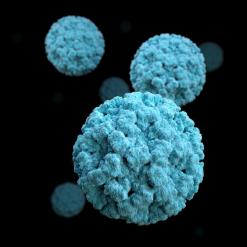
Outbreak News Today Norwalk_Caspid

Health officials with Centre for Health Protection (CHP) of the Department of Health (DH) announced the investigation of a norovirus outbreak that has sickened at least two dozen in a party place in Sham Shui Po.

Research – Global Burden of Norovirus and Prospects for Vaccine Development

CDC Food Borne Illness - Norovirus -CDC Photo

Much progress had been made in the fight against diarrheal diseases. Global deaths have declined dramatically, from 2.6 million annually in 1990 to 1.3 million in 2013. Gains for children under the age of 5 years have been at least as impressive, with rates of decline in deaths at around 5% per year in absolute numbers. Largely, these gains have come about through improvements in water, sanitation and hygiene and use of oral rehydration solution, facilitated by economic development. Recently, rotavirus vaccination has offered a biomedical tool for further reducing child diarrheal deaths. Despite this progress, diarrheal disease remains the fourth most common cause of mortality and second most common cause of morbidity worldwide in children under the age of 5 years.

Norovirus is ubiquitous, associated with 18% (95% CI: 17-20%) of diarrheal disease globally, with similar proportions of disease in high- middle- and low- income settings. Norovirus is estimated to cause approximately 200,000 deaths annually worldwide, with 70,000 or more among children in developing countries. The entire age range is affected, with children experiencing the highest incidence. Severe outcomes, including hospitalization and deaths, are common among children and the elderly. In both high- and middle-income countries with mature rotavirus vaccination programs, norovirus is being unmasked as the most common cause of pediatric gastroenteritis requiring medical care.

Disease occurs across the age range in all settings, but incidence is highest in young children, with higher rates and an earlier age-distribution in lower income settings. Depending on setting, a person will experience an average of three to eight norovirus illness episodes in their lifetime, of which at least one will occur by 5 years of age. Noroviruses are transmitted by multiple routes but person-to-person spread predominates. Noroviruses remain a leading cause of sporadic disease and outbreaks of AGE even in industrialized settings, highlighting that improved hygiene and sanitation alone may not be fully effective in controlling norovirus.

Considering the substantial disease burden and the difficulty in controlling norovirus, vaccines may be an attractive, and, perhaps, the only way to effectively control norovirus in the wider community. There are two overarching questions, answers to which will ultimately determine the fate of a norovirus vaccine:

Does the burden of norovirus represent a compelling need for a vaccination program? Can technical challenges be overcome to develop an effective norovirus vaccine for the populations that stand to benefit most?


Research -CDC Waterborne Disease & Outbreak Surveillance Reports

CDC iStock_000012710183Small

The Waterborne Disease and Outbreak Surveillance System (WBDOSS)(http://www.cdc.gov/healthywater/surveillance/index.html) is the primary source of data concerning the scope and health effects of waterborne disease outbreaks in the United States. CDC and the U.S. Environmental Protection Agency (EPA) periodically review outbreak reports from U.S. states and jurisdictions and report on outbreak characteristics, including the water systems, venues, settings, numbers, and causes of outbreak-related illnesses.

CDC published summary reports in MMWR Surveillance Summaries for outbreaks reported from 1971–2008. Outbreak report data from 2009 forward are published in the MMWR Weekly with supplemental content posted on this website.

Research -CDC Annual Summaries of Foodborne Outbreaks

CDC closta

CDC provides an annual summary of foodborne outbreaks and illnesses by etiology and food categories for the United States. These summaries of outbreak investigations reported to CDC by state and local health departments provide important snapshots of the human health impact of foodborne outbreaks. These summaries help us understand the pathogens, foods, settings, and contributing factors (for example, food not kept at the right temperature) involved in these outbreaks.


USA -Nutrisystem Recalls Nutricrush Bar for Possible Listeria

Food Poisoning Bulletin Food Testing

Nutrisystem Everyday is voluntarily recalling 455 cases of Nutricrush Chocolate Chip Cookie Dough Bar, manufactured by Noble Foods, because it may contain Listeria monocytogenes bacteria. The bar contains chocolate chip cookie dough supplied by a third party supplier which has recalled the product.

The product was sold at ShopRite and Hannaford stores in Connecticut, Delaware, Massachusetts, Maryland, Maine, New Hampshire, New Jersey, New York, Pennsylvania, Rhode Island, Virginia, Vermont. It was also sold online through Amazon.com and Walmart.com.

The recall is for Nutrisystem Nutricrush Chocolate Chip Cookie Dough Bar. It was sold as a 5-count carton. The product has the UPC number 6 32674 85579 4, Enjoy by Aug 22 2017 and Lot Code NF082216A. All code information is found on the back panel of the carton.

USA -FDA warns California firm about pistachios linked to Salmonella outbreak

Food Safety News s_enterica

A California company has been warned by the U.S. Food and Drug Administration to fully document any manufacturing changes it makes so that two Salmonella strains found in its pistachios and linked to a multistate outbreak this past spring will not recur.

The FDA warning letter, dated Oct. 7, was addressed to Stewart Resnick, owner of The Wonderful Company based in Los Angeles, and concerned Wonderful Pistachios processed by Paramount Farms at 13646 Highway 33 in Lost Hills, CA, about 45 miles northwest of Bakersfield.

USA -National Meat and Provisions Recalls Beef and Veal Products Due To Possible E. Coli O26 Contamination

FSIS-USDA ecoli

National Meat and Provisions, a Reserve, La. establishment, is recalling approximately 2,349 pounds of beef and veal products that may be contaminated with E. coli O26, the U.S. Department of Agriculture’s Food Safety and Inspection Service (FSIS) announced today.

The raw non-intact beef and veal items were produced and packaged on Sept. 14-15, 2016. The following products are subject to recall: [View Labels (PDF Only)]

  • 51.40-lb. of VACUUM-PACKED “BEEF GROUND COMPANY BURGER BLEND,” packed on 9/14/2016 with a lot number of “00028584” and case codes of 53085/CB136 in the upper left-hand corner of the label
  • 50.00-lb. of VACUUM-PACKED “BEEF GROUND COURSE STEAK TRIM,” packed on 9/14/2016 with a lot number of “00028582” and case codes of 53080/02300H in the upper left-hand corner of the label
  • 10.00-lb. of VACUUM-PACKED “BEEF GROUND FRESH,” packed on 9/14/2016 with a lot number of “00028583” and case codes of 53110/02300P in the upper left-hand corner of the label
  • 50.00-lb. VACUUM-PACKED “BEEF GROUND CHIMES FINE,” packed on 9/14/2016 with a lot number of “00028581” and case codes of 56660/02300C in the upper left-hand corner of the label
  • 51.46-lb. VACUUM-PACKED “BEEF GROUND COMPANY BURGER BLEND,” packed on 9/15/2016 with a lot number of “00028597” and case codes of 53085/CB136 in the upper left-hand corner of the label
  • 10.00-lb. VACUUM-PACKED “BEEF FAT OF RIB CAP,” packed on 9/15/2016, with a lot number of “00028595,” and case codes of 50010/1138 in the upper left-hand corner of the label
  • 10.83-lb. VACUUM-PACKED “BEEF GROUND CHUCK DAT DOG,” packed on 9/15/2016, with a lot number of “00028593,” and case codes of 56135/02150 in the upper left-hand corner of the label
  • 10.23-lb. VACUUM-PACKED “BEEF GROUND CHUCK BRISKET BURGER,” packed on 9/15/2016 with a lot number of “00028596,” and case codes of 53060/208116120 in the upper left-hand corner of the label
  • 5.00-lb. VACUUM-PACKED “BEEF STEAK CUBED 5#,” packed on 9/15/2016, with a lot number of “00028594,” and case codes of 50565/04902 in the upper left-hand corner of the label
  • 10.00-lb. VACUUM-PACKED “BEEF GROUND CHUCK 10#,” packed on 9/15/2016, with a lot number of “00028592,” and case codes of 53015/02100 in the upper left-hand corner of the label
  • 10.11-lb. VACUUM-PACKED “BEEF STEAK CUBED,” packed on 9/15/2016, with a lot number of “00028591,” and case codes of 50555/1100GJ in the upper left-hand corner of the label
  • 10.32-lb. VACUUM-PACKED “BEEF GROUND CHUCK BRISKET 8 oz.,” packed on 9/15/2016, with a lot number of “00028585,” and case codes of 53050/05M8 in the upper left-hand corner of the label
  • 9.98-lb. VACUUM-PACKED “VEAL SIRLOIN CUBED POLY BAGED,” packed on 9/15/2016, with a lot number of “00028590,” and case codes of 56070/0776 in the upper left-hand corner of the label

The products subject to recall bear establishment number “EST. M-22022” inside the USDA mark of inspection. These items were shipped to a distributor, as well as hotels, restaurants and institutions in Louisiana.

The problem was discovered when the establishment received a positive STEC sample during their quarterly E. coli testing program on Sept. 29, 2016. There have been no confirmed reports of adverse reactions due to consumption of these products.

Many clinical laboratories do not test for non-O157 Shiga toxin-producing E. coli (STEC), such as STEC O26 because it is harder to identify than STEC O157. People can become ill from STECs 2–8 days (average of 3–4 days) after consuming the organism. Most people infected with STEC O26 develop diarrhea (often bloody), and vomiting. Some illnesses last longer and can be more severe. Infection is usually diagnosed by testing of a stool sample. Vigorous rehydration and other supportive care is the usual treatment; antibiotic treatment is generally not recommended.

Most people recover within a week, but, rarely, some develop a more severe infection. Hemolytic uremic syndrome (HUS) is uncommon with STEC O26 infection. HUS can occur in people of any age but is most common in children under 5 years old, older adults and persons with weakened immune systems. It is marked by easy bruising, pallor, and decreased urine output. Persons who experience these symptoms should seek emergency medical care immediately.

FSIS and the company are concerned that some product may be frozen and in consumers’ freezers.

Consumers who have purchased these products are urged not to consume them. These products should be thrown away or returned to the place of purchase.

FSIS routinely conducts recall effectiveness checks to verify recalling firms notify their customers of the recall and that steps are taken to make certain that the product is no longer available to consumers. When available, the retail distribution list(s) will be posted on the FSIS website at www.fsis.usda.gov/recalls.

FSIS advises all consumers to safely prepare their raw meat products, including fresh and frozen, and only consume beef or veal that has been cooked to a temperature of 145° F with a three minute rest time. The only way to confirm that beef and veal are cooked to a temperature high enough to kill harmful bacteria is to use a food thermometer that measures internal temperature, http://1.usa.gov/1cDxcDQ.

Media and consumers with questions regarding the recall can contact Amy Philpott, spokesperson, at (703) 472-6615.


USA -Kuster’s Dairy Recalls Cheese for Possible Listeria

Food Poisoning Bulletin

Kuster’s Dairy of Michigan is recalling 14,238 pounds of several varieties of cheese because it was notified by its supplier, Farm Country Cheese, that the product may be contaminated with Listeria monocytogenes bacteria. No illnesses have been reported to date. The recalled products include shredded, sliced, and cubed cheese.