
RASFF – foodborne outbreak suspected (Salmonella enteritidis) to be caused by chicken eggs from Poland in Croatia
RASFF – foodborne outbreak suspected (Salmonella enteritidis) to be caused by chicken eggs from Poland, via Germany in Belgium

RASFF – foodborne outbreak suspected (Salmonella enteritidis) to be caused by chicken eggs from Poland in Croatia
RASFF – foodborne outbreak suspected (Salmonella enteritidis) to be caused by chicken eggs from Poland, via Germany in Belgium
Posted in Uncategorized

RASFF – shigatoxin-producing Escherichia coli (O113 – stx2+) in soft cheese from France in Norway
Posted in Uncategorized
RASFF -Listeria monocytogenes (presence /25g) in chilled salad with carp eggs from Romania in Italy
Posted in Uncategorized

RASFF – Salmonella typhimurium monophasic (1 ,4, [5], 12:i:-) (presence /25g) in chilled turkey meat from Poland in Belgium
RASFF – Salmonella (presence /25g) in frozen marinated raw chicken wings from the Netherlands in Italy
RASFF -Salmonella (presence /25g) in frozen marinated raw chicken fillets from the Netherlands in Italy
RASFF – Salmonella (3 out of 5 samples /25g) in betel leaves from India in the UK
Posted in Uncategorized

RASFF -too low acidity (pH = 5 – potential growth of Clostridium botulinum) of pate from the United Kingdom in the UK
Posted in Uncategorized

RASFF -aflatoxins (B1 = 32.5; Tot. = 36.5 µg/kg – ppb) and ochratoxin A (8.8 µg/kg – ppb) in rice from Sri Lanka in Siwtzerland
RASFF – ochratoxin A (29.9 µg/kg – ppb) in crushed chilli from the United Kingdom in the UK
RASFF – ochratoxin A (55.27 µg/kg – ppb) in raisins from Turkey in Romania
Posted in Uncategorized

RASFF – aflatoxins (B1 = 32.5; Tot. = 36.5 µg/kg – ppb) and ochratoxin A (8.8 µg/kg – ppb) in rice from Sri Lanka in Switzerland
RASFF -aflatoxins (B1 = 27; Tot. = 72 µg/kg – ppb) in dried figs from Turkey in Sweden
RASFF-aflatoxins (B1 = 2.5; Tot. = 9.3 / B1 = 18.4; Tot. = 22.1 µg/kg – ppb) in almonds from Spain in Germany
RASFF-aflatoxins (B1 = 32.71; Tot. = 34.66 µg/kg – ppb) in roasted pistachios from Turkey in Germany
RASFF -aflatoxins (B1 = 53.44; Tot. = 56.86 / B1 = 8.48; Tot. = 15.65 µg/item) in dried figs from Turkey in Germany
RASFF -aflatoxins (B1 = 11.9; Tot. = 16.6 µg/kg – ppb) in shelled hazelnuts from Azerbaijan, via Turkey in Spain
RASFF -aflatoxins (B1 = 12.66; Tot. = 39.74 / B1 = 5.06; Tot. = 11.56 µg/kg – ppb) in dried figs from Turkey in Germany
RASFF -aflatoxins (B1 = 5.6; Tot. = 6.3 µg/kg – ppb) in pecans from the United States in Greece
RASFF -aflatoxins (B1 = 10.6; Tot. = 11.2 µg/kg – ppb) in roasted and salted pistachio nuts from Turkey in Germany
RASFF -aflatoxins (B1 = 20.3; Tot. = 21,5 / B1 = 3.2; Tot. = 3.4 µg/kg – ppb) in pistachio nuts from Turkey in Germany
RASFF -aflatoxins (B1 = 54,6; Tot. = 58,3 µg/kg – ppb) in pistachio nuts from the United States in Germany
RASFF – aflatoxins (B1 = 22; Tot. = 43 µg/kg – ppb) in dried figs from Turkey in Denmark
RASFF – aflatoxins (B1 = 11.3; Tot. = 13.37 µg/kg – ppb) in hazelnut kernels from Turkey in Austria
Posted in Uncategorized
African Journal of Microbiology
Ibuprofen (IBU) and Diclofenac (DIC) are non-steroidal anti-inflammatory drug which have shown to have broad antimicrobial activity and limit biofilm formation. Aim of this study was to evaluate the effects of IBU and DIC against biofilm formation strong strains Escherichia coli and Klebsiella pneumoniae associated with urinary tract infections (UTIs). Additionally some virulence factors, antibiotic resistance, ESBL production were estimated to find correlation with the biofilm production and acil homoserine lactone (AHL). Our results suggest that IBU and DIC, could be useful in the treatment of urinary tract infections caused by E. coli and K. pneumoniae. IBU with CMIB 8, 30 and 125 mg/L, caused dramatic reductions in some cases and inhibited virulence factors which changes in the morphotypes expressed on congo red agar. DIC with CMIB 30 and 50 mg/L caused reductions in biofilm formation 50.1%. In this study, were evidenced the relationship between virulence factors, production of AHL and multi drugs resistance with biofilm production
Posted in Uncategorized
African Journal of Microbiology 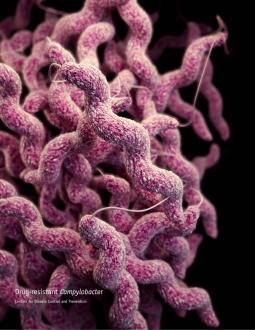
The present study aimed to evaluate the efficiency of the irradiation process in the control of Campylobacter spp. in chilled chicken heart samples, since this microorganism is related to the contamination of meat and chicken giblets and is responsible for enteritis in humans. The methodology and standards recommended by RDC no. 12 (Brazil, 2001) were applied for the bacteriological analyses. The chilled chicken heart samples were acquired in an industry that undergoes sanitary inspection, located in the West Zone of Rio de Janeiro. Samples were divided into two groups, non-contaminated (NC – originally from the industrial plant) and contaminated (CAMPY– contaminated with C. jejuni ATCC 33291/CCAMP/FIOCRUZ 00262 strains by CCAMP/LABZOO/IOC/FIOCRUZ), subsequently separated into four groups: NC and CAMPY control groups and samples irradiated at 1.5, 3.0 and 4.5 kGy. The eight subgroups were analyzed for the presence of Campylobacter sp. No statistically significant difference was observed between the four groups namely the non-irradiated controls and the 1.5, 3.0 and 4.5 kGy irradiated samples (p> 0.05). Elimination of Campylobacter sp. was observed, with no bacterial growth in any of the irradiated, non-contaminated (CN) and infected (CAMPY) samples. Thus, the efficiency of the Co60 irradiation process of chilled chicken heart for the elimination of the surveyed microorganisms was proven. The lowest dose applied was sufficient to eliminate the enteric pathogen which is of great significance in a public health point of view. However, it should be noted that the Brazil legislation determining the microbiological standards for food does not include a microbiological standard for Campylobacter sp. This means that any amount of this enteric pathogen may bring public health risks.
Posted in Uncategorized
The hepatitis A outbreak in Hawaii that has sickened hundreds of people has stopped growing, according to a new post by the Hawaii state Department of Health. From October 6 to October 19, 2016, three new cases were identified. In the last week, no new cases were identified. Illness onset dates have ranged from 6/12/16 – 10/9/16.
Posted in Uncategorized