Category Archives: Uncategorized

Research -Anti-Listerial inhibitory lactic acid bacteria in fresh farmed sea bass (Dicentrarchus labrax) fillets during storage at 4 °C under vacuum-packed conditions

Wiley Online Library

Abstract

The inhibition capacity of four combinations of three lactic acid bacteria (LAB) (Lactococcus lactis, Lactobacillus plantarum and Carnobacterium piscicola) has been demonstrated against Listeria monocytogenes in fresh farmed sea bass fillets artificially contaminated. The four combinations gave promising results, having a significant bacteriostatic effect against all tested microflora, during 21 days of vacuum storage at 4 °C.

Throughout storage, biochemical alteration appeared more pronounced in farmed sea bass fillets inoculated with pure Listeria, with significantly higher levels of total volatile bases (TVB-N) and trimethylamine (TMA-N). Moreover, the inoculation of LAB combinations was efficient in preventing the decrease of lipid and protein contents and preserving a good content of ω-3 fatty acids, particularly the eicosapentaenoic acid (C20:5N3) and docosahexaenoic acid (C22:6N3).

Besides, the proteolytic activity on sarcoplasmic proteins (SP) and myofibrillar proteins (MP) was determined by Sodium dodecyl sulphate–poly-acrylamide gel electrophoresis, comparing the protein profile of control fish fillets with those inoculated with LAB strains or/and L. monocytogenes, during vacuum refrigerated storage.

Practical Applications

Due to the increase of interest in food-grade preservatives of biological origin, food preservation became a challenge since several foodborne pathogens pose a health risk to consumers and cause serious hazard in food products. Listeria monocytogenes is an important food poisoning pathogen that can survive in lightly preserved seafood products stored at low temperatures. Considering this, biopreservation of fresh farmed sea bass (Dicentrarchus labrax) fillets during 21 days of vacuum storage at 4 °C using four combinations of LAB strains originating from fresh seafood and having important antagonistic effect, and low proteolytic and lipolytic activities, is a promising way to inhibit the growth of pathogenic bacteria such as L. monocytogenes without changing the quality of the product and to guarantee adequate product safety.


Research -Sensitivity to Enterocins of Thermophilic Campylobacter spp. from Different Poultry Species

Mary Ann Leibert

campy2

CDC Photo


Campylobacter spp. have been isolated from various animals, including poultry. They are rapidly transmitted throughout broiler sheds by the fecal–oral route. A promising strategy to reduce Campylobacter spp. in poultry may be done due to the beneficial properties of probiotic bacteria and their bacteriocins. In this study, inhibition spectrum/activity of different enterocins was evaluated against Campylobacter spp. (isolated from different poultry) to indicate further practical use of enterocins. Enterocins are antimicrobial proteinaceous substances produced mostly by enterococci. Feces from broiler chickens (10), laying hens (47), ostriches (140), and ducks (40) were screened. Altogether, 23 strains were allotted to the species Campylobacter jejuni and Campylobacter coli using MALDI TOF mass spectrometry and confirmed by genotyping (PCR method). In the feces of ostriches, Campylobacter spp. were not confirmed. Campylobacter spp. isolated from different poultry showed resistance to nalidixic acid, ciprofloxacin, and ampicillin. Interestingly, strains demonstrating antibiotic resistance revealed sensitivity to at least one of the nine enterocins used (except C. coli Kc1, SZ3, and C. jejuni 1/D). Almost 52% strains were inhibited by Ent A (P). Enterocins can therefore be used to prevent or reduce Campylobacter spp.; it is a basis for practical use.

USA – ICAPP Voluntarily Recalls Certain Lots of Frozen Strawberries – Hepatitis A

FDA Hepatitis A kswfoodworld

The International Company for Agricultural Production & Processing (ICAPP) is voluntarily recalling certain lots of its frozen strawberries out of an abundance of caution in response to a U.S. Food and Drug Administration (FDA) investigation of an outbreak of Hepatitis A. For more information about this investigation, please visit FDA’s outbreak investigation website at http://www.fda.gov/Food/RecallsOutbreaksEmergencies/Outbreaks/ucm518775.htm.

The recalled products were all distributed for sale to and use in food service establishments nationwide — not for use in food products offered for retail sale to consumers. Nonetheless, ICAPP is issuing this news release publicly to help mitigate any possible risk to the public health and to fully ensure that all recalled products are recovered. Although none of ICAPP’s own testing through an established surveillance program or through third party testing of retained samples has identified the presence of Hepatitis A in any of its products, ICAPP has decided to recall all frozen strawberries that it has imported into the United States since January 1, 2016 out of an abundance of caution.

No other ICAPP products, frozen or fresh, are covered by this voluntary recall.

ICAPP is conducting this voluntary recall after learning that frozen strawberries that it distributed may be linked to a recent Hepatitis A outbreak in the United States. ICAPP has been engaged with FDA in its investigation of this outbreak and is taking this action in consultation with FDA because Hepatitis A virus was detected in four lots of frozen strawberries that were exported to the U.S. by ICAPP. ICAPP is working closely with all of the U.S. distributors of this product to ensure that this recall is effective.

Hepatitis A is a contagious liver disease that results from exposure to the Hepatitis A virus, including from food. It can range from a mild illness lasting a few weeks to a serious illness lasting several months. Illness generally occurs within 15 to 50 days of exposure and includes fatigue, abdominal pain, jaundice, abnormal liver tests, dark urine and pale stool. Hepatitis A vaccination can prevent illness if given within two weeks of exposure to a contaminated food. In rare cases, particularly consumers who have a pre-existing severe illness or are immune compromised, Hepatitis A infection can progress to liver failure. Persons who may have consumed affected product should consult with their health care professional or local health department to determine if a vaccination is appropriate, and consumers with symptoms of Hepatitis A should contact their health care professionals or the local health department immediately.

ICAPP is fully committed to producing safe and high quality products; consumer safety is its top priority. ICAPP is conducting a comprehensive review of all of its operations and its suppliers to ensure that the food it produces is safe. ICAPP continues to work closely with federal and state authorities and is conducting this recall in cooperation with FDA.

For questions or more information, consumers may contact ICAPP by email at customerservice@icapp.com.eg or by phone, between 9:00 am and 5:00 pm Cairo local time, at +201-541-1624.

Information – Norovirus

Food Saftey News animated-logo-clean-hands-count

It’s estimated that the average person will get norovirus five times during their lifetime. Globally, there are 685 million cases of norovirus each year, with approximately 20 million of those cases occurring in the United States. Norovirus is the number one foodborne illness – and the leading cause of foodborne illness outbreaks – in the United States.

Norovirus is a huge threat within the hospitality industry. According to the Centers for Disease Control and Prevention, the majority of norovirus outbreaks occur in foodservice settings, and 70 percent of infected workers cause 70 percent of those outbreaks. Several recent studies indicate that people work in foodservice industry jobs even when they’re sick.

Information – Myths and Facts about Food Safety in our day-to-day lives

Food Safety Brazil – Portuguese

Food Safety Brazil – English

How many you can answer correctly?

Let’s test your food safety knowledge in the day-to-day?

Research -Staphylococcus aureus Colonization and Long-Term Risk for Death, United States

CDC

MRSA Staphylococcus KSW Food World

CDC Photo


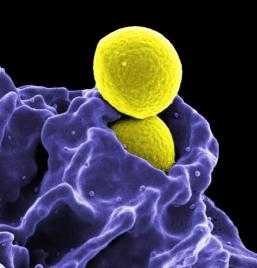
To examine the association of colonization by Staphylococcus aureus and general population mortality, we followed 10,598 adults for 8.5 years on average. Methicillin-susceptible S. aureus colonization was not associated with death. Methicillin-resistant S. aureus carriage predicted death in a crude analysis but not after adjustment for socioeconomic status and co-morbidities.

Staphylococcus aureus is a common cause of mild to life-threatening infections. It is differentiated into methicillin-susceptible S. aureus (MSSA) and methicillin-resistant S. aureus (MRSA); the emergence of isolates resistant to vancomycin has raised concern that the bacterium might become untreatable with current antimicrobial drugs (1). Whether S. aureus colonization influences general population mortality remains unclear (2,3). Therefore, we examined the association in a US population representative sample followed for nearly a decade.

Europe – One child dead; Salmonella outbreak ‘may not have peaked yet’

Food Safety News

A Salmonella outbreak in Europe that may have been ongoing since 2012 is believed to be responsible for the recent death of a child in Croatia and is suspected to be wider spread than originally thought.

The outbreak has been traced by multiple countries to eggs from Poland.

Recalls are ongoing across Europe and in Hong Kong, as seven countries are reporting a total of 260 illnesses between May 1 and Oct. 12 this year. Of those cases, 112 are confirmed and 148 are listed as probable.

A joint technical report issued Thursday by the European Food Safety Authority (EFSA) and the European Centre for Disease Prevention and Control (ECDC) came out as the Centre for Food Safety in Hong Kong was warning consumers and foodservice operators to look for the eggs and discard them.

“The first isolates belonging to one of the (whole genome sequence) WGS clusters associated with this outbreak were identified in 2012. The number of confirmed and probable cases has increased steadily since May 2016,” according to the joint report.


Research -50-year-old bacteria could be alternative treatment option for cancer – Salmonella

Science Daily

16875_lores

CDC Photo


According to the Centers for Disease Control, 48 million Americans contract foodborne diseases annually, with Salmonella being the leading cause of illness. Salmonella has a unique characteristic that allows the bacteria to penetrate through cell barriers and replicate inside its host. Now, scientists at the Cancer Research Center and the University of Missouri have developed a non-toxic strain of Salmonella to penetrate and target cancer cells. Results from this study could lead to promising new treatments that actively target and control the spread of cancer.

Research -Alaskan Gulls Carry Drug-Resistant E. coli

KBBI

As antibiotic-resistant super bugs become more common, they’re beginning to show up in places we wouldn’t expect.

A new study has found antibiotic-resistant E. coli in gulls living on the Kenai Peninsula.


New Zealand -The first public hearing of an inquiry into the campylobacter outbreak that struck down more than 5000 people with gastro in Havelock North has begun.

NZCity

The first public hearing into the gastro outbreak that struck down more than 5000 people in Havelock North has begun.

Water contamination that caused a the widespread outbreak of campylobacter forced the closure of schools, required water chlorination and for fresh water to be trucked into the region in August.

The government announced in September it would hold an inquiry into the contamination incident, to be led by Lyn Stevens, QC.

The preliminary hearing at Hastings District Court on Thursday is open to the public to deal with preliminary and procedural matters and in order to identify “core participants”.

The inquiry set to focus on how the Havelock North water supplies became contaminated, how the contamination was addressed, the response to the public health outbreak, reducing the risk of recurring outbreaks and minimising the risk of future incidents.

It’s expected to report back by March 31 next year.