Category Archives: Uncategorized

Japan – O-157 E. coli detected in 5 of 21 who fell ill after eating cutlets in Kanagawa

Japan Times ecoli

Five of 21 people who fell ill after eating frozen cutlets sold by a company in Hiratsuka, Kanagawa Prefecture, have been found to suffer from food poisoning from the O-157 strain of E. coli bacteria, prefectural health officials said Tuesday.

The patients’ symptoms included stomachaches and diarrhea. The O-157 strain was detected from the cutlets and the patients’ stools.

The frozen cutlets, made of minced beef and pork, were sold by the meat company Niku No Ishikawa, according to the prefectural officials.

USA -SHRI SHIVA Foods Inc. Recalls “MTR Sambar Powder” Because Of Possible Health Risk -Salmonella

FDA

16875_lores

CDC Photo


Long Island City, NY – SHRI SHIVA Foods Inc. is recalling MTR Sambar Powder, Net Quantity: 200 g (LOT NO# 15J27C, MFD.27.10.15) because it may be contaminated with Salmonella, with Salmonella, an organism which can cause serious and sometimes fatal infections in young children, frail or elderly people, and others with weakened immune systems. Healthy persons infected with Salmonella often experience fever, diarrhea (which may be bloody), nausea,vomiting and abdominal pain. In rare circumstances, infection with Salmonella can result in the organism getting into the bloodstream and producing more severe illnesses such as arterial infections (i.e., infected aneurysms), endocarditis and arthritis.

The product was sold between January 2016 to October 2016 thru one NY and one OH via wholesaler.

Product is packed in 200g plastic pouches under MTR Brand stamped with MFD.27.10.15 on the back. No illnesses have been reported to date.

The U.S. Food and Drug Administration discovered the potential contamination through previous product sampling.

Consumers who have purchased the product are urged to return it to the place of purchase for a full refund. Consumers with questions may contact the company’s consumer affairs at 347-581-7931, Monday through Friday 10am-5pm, EST.

South Africa -Over 1000 sickened with links to South African dairy

Barf blog

Malibongwe Dayimani of Dispatch Live reports a King William’s Town dairy that supplied a number of schools in the area with fermented milk, or amasi, was last week ordered to close.

Innesfree Agriculture and Dairy was identified as a supplier of amasi to a number of schools in the area where over 1000 pupils from 12 schools fell sick after eating amasi and pap.

The dairy was told to shut after Buffalo City Metro’s health services found it to be in contravention of regulations relating to the sale of milk and dairy products which state that the selling of raw milk and raw sour milk for human consumption is prohibited.

USA – OLMA-XXI, Inc. Recalls Two Smoked Fish Products Because of Possible Health Risk – Listeria monocytogenes

FDA

OLMA-XXI, Inc. of Brooklyn, NY is recalling Premium Norwegian Salmon Smoked, Sliced 8 oz (227g), Best by 02/23/2017 and Salmon, Turbot, Butterfish, Smoked, Sliced 8 oz (227g), Best by 10/20/2016, because it has the potential to be contaminated with Listeria monocytogenes, an organism which can cause serious and sometimes fatal infections in young children, frail or elderly people, and others with weakened immune systems. Although healthy individuals may suffer only short-term symptoms such as high fever, severe headache, stiffness, nausea, abdominal pain and diarrhea, listeria infection can cause miscarriages and stillbirths among pregnant women.

  • Premium Norwegian Salmon Smoked, Sliced 8 oz (227g), UPC #856687004288, lot  #606002 – best by 02/23/2017
  • Salmon, Turbot, Butterfish Smoked, Sliced 8 oz (227g), UPC #856687004448, lot #529910- best by 10/20/2016

The items were distributed by refrigerated trucks through retail stores and warehouses between December 2015 to October 2016 in NY, NJ, MD, PA, MA, CA VA, FL, CT, TX, IL, GA & WA.

Both items are packaged in a plastic vacuum packed bag.

No illnesses have been reported to date.

The recall was the result of a routine sampling program by the Florida Department of Agriculture and Consumer Services, Division of Food Safety which revealed the presence of Listeria monocytogenes.

Consumers who have purchased the products are urged to return them to OLMA-XXI, Inc. for a full refund. Consumers with questions may contact the company at 718-675-0706, Monday – Friday, 8am – 6pm, ET

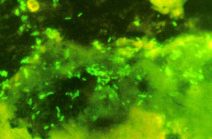
 

USA – Norovirus Outbreak Hits USC Dorms

Laist

The Los Angeles County Department of Public Health has confirmed that they are currently investigating a norovirus outbreak at the University of Southern California. A representative from the Department of Public Health told LAist that 103 cases have been reported since October 26, which is when the university reached out to the department about the situation. Although norovirus is often associated with cruise ships, it’s not uncommon for it to strike college campuses (or, really, anywhere where people are living in close proximity to one another).

The Department of Public Health is currently working with the university to identify the cause of these infections and to prevent new infections, according to a statement issued Thursday.


Armenia -Foodborne botulism with a fatal outcome

1TVAM

A foodborne botulism case has been registered in the capital city. As a result of food poisoning 4 victims have been hospitalized, one of which died. The cause for food intoxication was the use of homemade canned peppers. The family members had eaten the canned peppers on October 26th. 24 hours after the intake, one of the family members felt typical symptoms of botulism, while for the rest of the family the symptoms emerged on the 3rd day. The first victim was taken to Armenia Republican Medical Center, where he died yesterday. The other members of the family are still receiving treatment. 

Research -Inactivation of Salmonella enterica in chicken feces on the surface of eggshells by simultaneous treatments with gaseous chlorine dioxide and mild wet heat

Science Direct

Abstract

The aim of this study was to investigate the lethal effects of simultaneous treatments with gaseous chlorine dioxide (ClO2) and mild wet heat (55 °C at 100% relative humidity [RH]) on Salmonella enterica in chicken feces on the surface of eggshells. Gaseous ClO2 production decreased significantly (P ≤ 0.05) as the RH (23, 43, 68, 85, and 100%) at 25 °C was increased. The lethality of gaseous ClO2 against S. enterica in feces on eggshells increased significantly (P ≤ 0.05) as RH increased. For example, when treated with gaseous ClO2 at 85 and 100% RH at 25 °C, S. enterica (5.9 log CFU/egg) was inactivated within 4 h. In contrast, at 23, 43, and 68% RH, the pathogen remained at 5.1, 5.0, and 2.8 log CFU/egg, respectively, after 6 h. Finally, when eggshells surface-contaminated with S. enterica (5.8 log CFU/egg) were treated with gaseous ClO2 (peak concentration of ClO2: 185.6 ppm) at 100% RH and 55 °C, inactivation occurred within 1 h. These results indicate that treatment of surface-contaminated shell eggs with gaseous ClO2 at elevated RH and temperature is effective in inactivating S. enterica. These observations will be useful when developing an effective sanitation program to enhance the microbiological safety of shell eggs.

Research -Modelling of the microbial inactivation by high hydrostatic pressure freezing

Science Direct

Abstract

This work aimed at investigating the effect of HPF processes on the inactivation kinetics of selected microbial strains, Escherichia coli O157:H7 ATCC 26 and Lactococcus lactis ssp. Cremoris suspended in McIlvine buffer. The effects of different processing conditions, namely pressure level (200–400 MPa), temperature (0, −10, −20 °C), treatment time (0, 2, 5, 7, 10 min) and number of phase transitions (single or multiple transitions) were investigated in the experimental trials. The mechanism of cell inactivation in complex processes, in which pressure and temperature are simultaneously changed, was also studied and the synergistic effect of the two processing parameters, if any, was identified. Experimental data were analyzed and fitted with mathematical models representing the kinetics of microbial inactivation in HPF processes.

The results obtained so far demonstrated that the factor controlling the process efficiency is the pressure level at constant operating temperature. The level of inactivation obtained increased with decreasing the processing temperature at constant pressure or increasing the number of phase transitions, and with decreasing the size of ice crystals formed in the product. Finally, the kinetics of microbial death was described by a modified Weibull model, whose parameters are dependent on processing conditions.

Research -Milk powder risk assessment with staphylococcus aureus toxigenic strains

Science Direct Staph

Abstract

Staphylococcus aureus is the causative agent of staphylococcal enterotoxicosis foodborne illness. Milk powder and whey powder are at risk of contamination by coagulase-positive staphylococci, which reflects the requirement for microbiological examination of foods listed in Regulation (EC) 2073/2005, as amended. Microbiological criteria for coagulase-positive staphylococci are up to 101–102 cfu g−1. This study evaluates the possibility of survival and growth of S. aureus in milk powder after its reconstitution. Powdered milk was inoculated with 102 and 105 cfu g−1 of toxigenic strains of S. aureus and then stored as reconstituted milk for 48 h at 4, 15, and 25 °C. Staphylococcal growth and production of staphylococcal enterotoxins A, B, and C (SEA, SEB, and SEC) was regularly detected during the 48 h storage period. With inoculation of S. aureus high counts at 25 °C, the production of staphylococcal enterotoxins (SEs) was detected as early as after 7 (SEB) or 8 (SEA) hours of storage; at 15 °C as early as after 48 h (SEA, SEB). With inoculation of low counts of S. aureus (complying with legislative requirements) only at 25 °C, SEs production was detected after 24 (SEA, SEB) or 48 (SEA, SEB, SEC) hours. Model experiments evaluated SEs consumer risk resulting from extended storage of reconstituted milk at improper temperatures.


USA -Colorado’s Weld County Adds to the Hepatitis A Warning

Food Poisoning Journal Food Borne Illness - Norovirus -CDC Photo

Several states, the Centers for Disease Control and Prevention (CDC), and the U.S. Food and Drug Administration (FDA) are investigating a multistate outbreak of foodborne hepatitis A. Evidence indicates frozen strawberries imported from Egypt are the likely source of this outbreak. The recall affects all frozen strawberries and frozen strawberry products imported into the United States by the International Company for Agricultural Production & Processing (ICAPP) since January 1, 2016. The products were NOT offered for sale in retail stores such as grocery stores or food warehouses (e.g. Costco or Sam’s Club). The frozen strawberries were distributed to restaurants. Most of the outbreak-related human infections have occurred on the East coast. There are currently no hepatitis A cases in Colorado associated with this outbreak.