Category Archives: Uncategorized

China -2 killed in SW China food poisoning

China.org

Two died and another three were in critical conditions after more than 30 people had breakfast together at a funeral in southwest Sichuan Province on Sunday, local authorities said.

They were helping with the funeral of a villager, named Lu Baode, in Miaoya Village, Bazhou District of Bazhong city. Lu’s family offered them breakfast around 9:40 a.m. Later, some villagers developed symptoms of dizziness, nausea, vomiting, and stomachache.

As of 5 p.m., hospital diagnosis showed that a total of 30 villagers were suffering from food poisoning. Two of them died in hospital. Three others are still being treated in the intensive care unit.

Local government is investigating the case.

Research -DNA markers distinguish between harmless, deadly bacteria

Science Daily

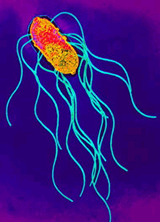
Through a new study of the coccobacillus Francisella, researchers are working to use DNA markers to discern related but relatively harmless species as they are identified and to provide a means to distinguish them from the harmful F. tularensis.

Research – How bacteria survive antibiotic treatment

Science Daily myco

Multiresistant bacteria scientists around the world are working hard to win the battle against multi-resistant bacteria. A new publication now presents how even sensitive bacteria often manage to survive antibiotic treatment as so-called ‘persister cells.’ The comprehensive perspective on this phenomenon may help to improve current options of drug treatment and could even inspire the discovery of novel antibiotics targeting these notoriously difficult-to-treat persister bacteria.

USA -Snyder of Berlin Buffalo Blue Kettle Cooked Potato Chips Recalled Due To Possible Salmonella Contamination

FDA Salmonella kswfoodworld

Berlin, PA – Snyder of Berlin is warning consumers not to consume Snyder of Berlin Buffalo Blue Kettle Cooked Potato Chips after being informed by a supplier that a milk powder used within a spice blend ingredient may contain Salmonella. Consumers should not consume the recalled product with the Product Codes listed below:

Brand Name Common Name Size UPC Product Codes
Snyder of
Berlin
Buffalo Blue Kettle
Cooked Potato Chips
8 oz
(227g)
0 23000 43922 9 FEB2117M77A,
FEB2117H44A,
FEB2117H44B,
FEB2817H77A,
MAR0717H77A,
MAR2117M77A

USA -H-E-B Issues Voluntary Recall On Bakery Products – Salmonella

FDA

San Antonio, TX – In cooperation with Dawn Food Products, Inc., H-E-B announced today that it has issued a voluntary recall for certain bakery products made with Valley Milk Products LLC’s High Heat Nonfat Dry Milk Powder. As part of a larger recall affecting several retailers, Valley Milk Products has recalled the affected product, which was supplied to H-E-B for use in bakery products.

The product is being removed because there is potential it could be contaminated with Salmonella, an organism which can cause serious and sometimes fatal infections in young children, frail or elderly people, and others with weakened immune systems.


Australia -Summer Eating – Food Safety Tips

Food Authority NSW

Summer is a time for spending quality time with family and friends enjoying special summer treats such as BBQs and seafood.

Unfortunately at this time of year there are spikes in food poisoning. Salmonella typically doubles in the summer, compared with the winter months.

Family feasts, eating outdoors and the warmth of summer can offer the ideal environment for bacteria to grow.

When large quantities of food are cooked and left out in the open for long periods, food poisoning bugs can spread and multiply. Fridges that are overfilled with leftovers and kept at 5oC or above also pose a risk.

So this summer when the temperature rises remember the key food safety tips and don’t let food poisoning ruin the fun.

Food safety guide for summer eating:

Europe – The European Union summary report on trends and sources of zoonoses, zoonotic agents and food-borne outbreaks in 2015

ECDC ecdclogo

This report of EFSA and the European Centre for Disease Prevention and Control presents the results of the zoonoses monitoring activities carried out in 2015 in 32 European countries (28 Member States (MS) and four non-MS). Campylobacteriosis was the most commonly reported zoonosis and the increasing European Union (EU) trend for confirmed human cases since 2008 continued. In food, the occurrence of Campylobacter remained high in broiler meat. The decreasing EU trend for confirmed human salmonellosis cases since 2008 continued, but the proportion of human Salmonella Enteritidis cases increased. Most MS met their Salmonella reduction targets for poultry. More S. Enteritidis isolates were reported and S. Infantis was confirmed as the most frequent serovar isolated from domestic fowl. In foodstuffs, the EU level Salmonella non-compliance for minced meat and meat preparations from poultry was low. Despite the significant increasing trend since 2008, the number of human listeriosis cases stabilised in 2015. In ready-to-eat foods, Listeria monocytogenes seldom exceeded the EU food safety limit. The decreasing EU trend for confirmed yersiniosis cases since 2008 continued. Positive findings for Yersinia were mainly reported in pig meat and products thereof. The number of confirmed shiga toxin-producing Escherichia coli (STEC) infections in humans was similar to 2014. In food, STEC was most frequently reported in meat from ruminants. A total of 4,362 food-borne outbreaks, including waterborne outbreaks, were reported. Bacteria were the most commonly detected causative agents, followed by bacterial toxins, viruses, other causative agents and parasites. The causative agent remained unknown in 33.5% of all outbreaks. As in previous years, Salmonella in eggs continued to represent the highest risk agent/food combination. The report further summarises trends and sources for tuberculosis due to Mycobacterium bovis, Brucella, Trichinella, Echinococcus, Toxoplasma, rabies, Coxiella burnetii (Q fever), West Nile virus and tularaemia.

© 2016 European Food Safety Authority. EFSA Journal published by John Wiley and Sons Ltd on behalf of European Food Safety Authority

Image

Happy Holidays and Merry Christmas

Happy-holidays-free-images-at-clker-vector-clip-art.png

Research -Exploring the contribution of bacteriophages to antibiotic resistance

Science Direct

Bacteriophages (phages) are the most abundant and diverse biological entities in our planet. They infect susceptible bacterial hosts into which they either multiply or persist. In the latter case, phages can confer new functions to their hosts as a result of gene transfer, thus contributing to their adaptation (short-term) and evolution (long-term). In this regard, the role of phages on the dissemination of antibiotic resistance genes (ARGs) among bacterial hosts in natural environments has not yet been clearly resolved. Here, we carry out a comprehensive analysis of thirty-three viromes from different habitats to investigate whether phages harbor ARGs. Our results demonstrate that while human-associated viromes do not or rarely carry ARGs, viromes from non-human sources (e.g. pig feces, raw sewage, and freshwater and marine environments) contain a large reservoir of ARGs, thus pointing out that phages could play a part on the spread of antibiotic resistance. Given this, the role of phages should not be underestimated and it should be considered when designing strategies to tackle the global crisis of antibiotic resistance.

Research -Survival and Growth of Probiotic Lactic Acid Bacteria in Refrigerated Pickle Products

Wiley Online Library

We examined 10 lactic acid bacteria that have been previously characterized for commercial use as probiotic cultures, mostly for dairy products, including 1 Pediococcus and 9 Lactobacilli. Our objectives were to develop a rapid procedure for determining the long-term survivability of these cultures in acidified vegetable products and to identify suitable cultures for probiotic brined vegetable products. We therefore developed assays to measure acid resistance of these cultures to lactic and acetic acids, which are present in pickled vegetable products. We used relatively high acid concentrations (compared to commercial products) of 360 mM lactic acid and 420 mM acetic acid to determine acid resistance with a 1 h treatment. Growth rates were measured in a cucumber juice medium at pH 5.3, 4.2, and 3.8, at 30 °C and 0% to 2% NaCl. Significant differences in acid resistance and growth rates were found among the 10 cultures. In general, the acid resistant strains had slower growth rates than the acid sensitive strains. Based on the acid resistance data, selected cultures were tested for long-term survival in a simulated acidified refrigerated cucumber product. We found that one of the most acid resistant strains (Lactobacillus casei) could survive for up to 63 d at 4 °C without significant loss of viability at 108 CFU/mL. These data may aid in the development of commercial probiotic refrigerated pickle products.

Practical Application

The development of probiotic pickled vegetable products will be facilitated by identifying probiotics that can survive in acidified vegetable products with a proposed shelf life of 2 or more months. We analyzed the growth and acid resistance of 10 probiotic lactic acid bacterial cultures and found that cultures selected for acid resistance had superior long-term survival (up to 2 mo) in a simulated refrigerated probiotic vegetable product that included a fermentation step. These data may be useful to aid the development of a commercial process for the manufacture of probiotic pickles.