Category Archives: Uncategorized

Research -Inactivation Strategies for Clostridium perfringens Spores and Vegetative Cells

American Society of Microbiology Clost

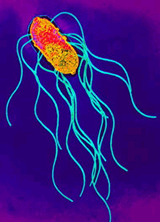
Clostridium perfringens is an important pathogen to human and animals and causes a wide array of diseases, including histotoxic and gastrointestinal illnesses. C. perfringens spores are crucial in terms of the pathogenicity of this bacterium because they can survive in a dormant state in the environment and return to being live bacteria when they come in contact with nutrients in food or the human body. Although the strategies to inactivate C. perfringens vegetative cells are effective, the inactivation of C. perfringens spores is still a great challenge. A number of studies have been conducted in the past decade or so toward developing efficient inactivation strategies for C. perfringens spores and vegetative cells, which include physical approaches and the use of chemical preservatives and naturally derived antimicrobial agents. In this review, different inactivation strategies applied to control C. perfringens cells and spores are summarized, and the potential limitations and challenges of these strategies are discussed.

Canada – Tofino faces shellfish closures after norovirus outbreak hits 120

Westerly News

Oysters are officially to blame for a norovirus outbreak that originated in Tofino last month.

“We do know of at least 120 people who became ill with norovirus and it was because of exposure to raw oysters,” Island Health Officer Dr. Paul Hasselback told the Westerly News on Monday.

The Department of Fisheries and Oceans Canada shut down all shellfish harvesting in a portion of Lemmens Inlet last week and Hasselback suggested further closures could be coming.

“The investigation isn’t quite complete. There are some loose ends and there may be further actions,” he said. “We can’t put every oyster back exactly where it came from but, believe it or not, we can actually track lots of oysters as to where they were processed, harvested and transported and that’s all been part of this investigation.”

Oysters were the primary suspect in Island Health’s investigation from the onset as roughly 30 reports of norovirus cases came in in the immediate aftermath of Tofino’s Clayoquot Oyster Festival.

Canada – Food Recall Warning – Old Dutch brand Cheddar & Sour Cream Potato Chips recalled due to Salmonella

CFIA Salmonella kswfoodworld

Ottawa, December 20, 2016 – Old Dutch Foods Ltd is recalling Old Dutch brand Cheddar & Sour Cream Potato Chips from the marketplace due to possible Salmonella contamination. Consumers should not consume the recalled products described below.

The following products have been sold in Alberta, British Columbia, Manitoba, Saskatchewan and Northern Ontario.

Recalled products

Brand Name Common Name Size Code(s) on Product UPC
Old Dutch Cheddar & Sour Cream Potato Chips 66 g Best Before 2016 AU 10
through
Best Before 2017 FE 24
inclusive
0 66343 17941 4
Old Dutch Cheddar & Sour Cream Potato Chips 255 g Best Before 2016 AU 10
through
Best Before 2017 MR 02
inclusive
0 66343 16783 1

Canada -Correction – Food Recall Warning – Deep River Snacks brand Krinkle Cut Sour Cream & Onion Kettle Cooked Potato Chips recalled due to Salmonella

CFIA

Ottawa, December 20, 2016 – The food recall warning issued on December 12, 2016 has been amended to correctly identify the codes for the affected products. The corrections for these products are marked by an asterisk (*) below.

Industry is recalling Deep River Snacks brand Krinkle Cut Sour Cream & Onion Kettle Cooked Potato Chips from the marketplace due to possible Salmonella contamination. Consumers should not consume the recalled products described below.

Affected products

Brand Name Common Name Size Code(s) on Product UPC
Deep River Snacks Krinkle Cut Sour Cream & Onion Kettle Cooked Potato Chips 57 g All Best By dates from 09 NOV 2016 up to and including 02 JUN 2017* 8 50668 00049 8
Deep River Snacks Krinkle Cut Sour Cream & Onion Kettle Cooked Potato Chips 142 g All Best By dates from 09 NOV 2016 up to and including 01 JUN 2017* 8 50668 00099 3

USA-Altijira Murray Products, LLC Recalls Selected Ice Cream Products Because Of Possible Health Risk – Listeria monocytogenes

FDA

Ventura, CA – Out of an abundance of caution, Altijira Murray Products LLC is undertaking a voluntary recall of selected, 16 oz. (pint size) packages of Foxy’s Thoughtful Ice Cream produced by a contract manufacturer because they have the potential to be contaminated with Listeria monocytogenes.

The six recalled flavors, available only in pints, accounts for approximately 10% of the pint-packaged ice cream products carrying the Foxy’s brand label, equating to less than 4000 pints. All of the recalled products were manufactured and packaged in a facility owned by a contract manufacturer, Dr. Bob’s of Upland, LLC. No other products are being recalled & no illnesses have been reported.

Research -The Emergence of Livestock-Associated MRSA Bears Watching

Food Safety Magazine MRSA Staphylococcus KSW Food World

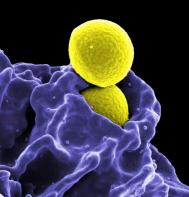
Staphylococcus aureus is a large family of Gram-positive bacteria with many genetically diverse strains that can produce skin and systemic disease in people and are important foodborne pathogens. Indiscriminate use of antibiotics in human medicine probably has played a role in the emergence of methicillin-resistant Staphylococcus aureus (MRSA), which was detected first in Great Britain in 1961. Other factors, however, likely were involved.

While most often thought of as afflicting humans, MRSA strains also have been detected in livestock, including horses, cattle, goats, chickens, pigs and even dogs and cats. Humans are the source of some of these strains, but others are genetically distinct and have been designated livestock-associated MRSA. Well-designed longitudinal studies will be necessary to clarify the public health implications of the emergence of livestock-associated MRSA, which is complicated by the diversity of the strains isolated and the bidirectional nature of transmission of the bacteria between people and animals.

Research -Growth and survival of Salmonella Paratyphi A in roasted marinated chicken during refrigerated storage: Effect of temperature abuse and computer simulation for cold chain management

Science Direct kswfoodworld Salmonella

This research was conducted to evaluate the feasibility of using a one-step dynamic numerical analysis and optimization method to directly construct a tertiary model to describe the growth and survival of Salmonella Paratyphi A (SPA) in a marinated roasted chicken product. Multiple dynamic growth and survival curves obtained under different fluctuating temperature conditions between 4 and 35 °C were used to determine the growth kinetics of SPA. In combination with appropriate secondary models, the study examined both growth and survival of SPA simultaneously by an integrated one-step approach using a set of differential equations.

The estimated minimum growth temperature (Tmin) of SPA was 8.91 °C, matching well with the growth characteristics of this microorganism. The growth at temperatures above Tmin and the survival below Tmin was accurately simulated by the predictive models. For model development, the root mean square error (RMSE) was 0.26 log CFU/g.

The predictive models and kinetic parameters were validated using two dynamic growth and survival curves along with one isothermal thermal growth curve. The validation also showed that the models were accurate in predicting the growth and survival of the bacterium, with the RMSE of predictions only 0.52 log CFU/g. The errors of predictions were within normal experimental errors. The results of this work may be used to predict the change in the population of SPA in the marinated roasted chickens in the cold chain and during temperature abuse and to conduct risk assessment of this pathogen.


USA -Golden Ponds Outbreak May Be From One of Three Different Pathogens

Food Poisoning Bulletin

The food poisoning outbreak at Golden Ponds restaurant at 500 Long Pond Road, in Greece, New York on Thanksgiving Day, 2016 may have been caused by one of three pathogens. The usual suspects in this type of outbreak include Salmonella, E. coli, norovirus, and Campylobacter.

Information UK -What is food poisoning?

bbcgoodfood

Everything you need to know about the causes and symptoms of E. coli, salmonella, campylobacter and other types of food poisoning, plus common food culprits.

bbcgoodfood

Discover the Food Standards Agency’s food safety tips including how to freeze and defrost food, how to prepare vegetables and how to organise your fridge.

Kenya -2 dead, 200 in hospital over food poisoning

TUKO

– Two children have died after consuming poisoned food

– Another 200 people have been admitted in hospital over the same

An initiation ceremony turned tragic after two children died after eating contaminated food in Bomet county.